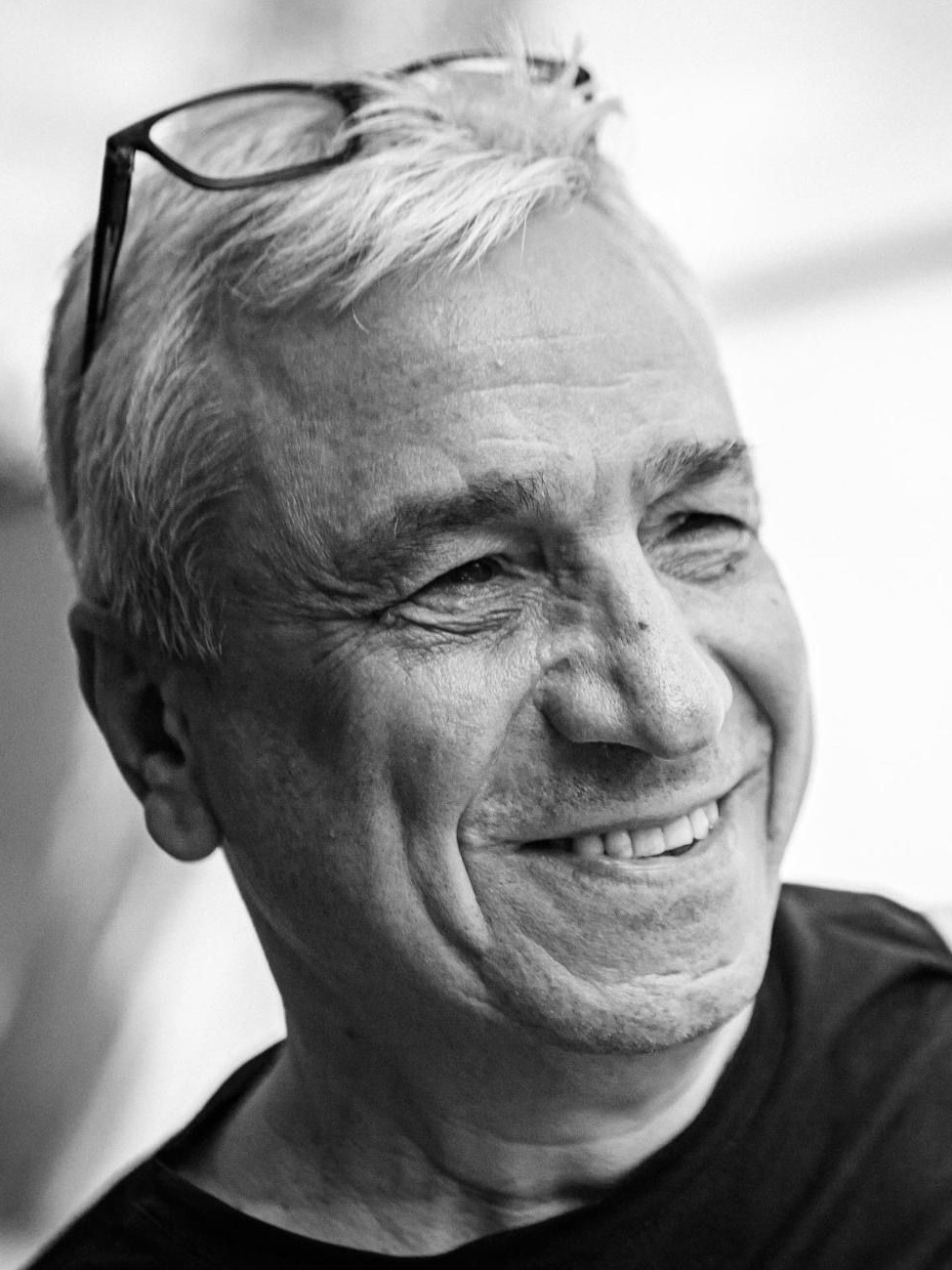
Leyla Dakhli: Étudier les mondes arabes et musulmans, un métier à risque?, in: Le Club de Mediapart, 18 Novembre 2025, https://blogs.mediapart.fr/leyladakhli/blog/181125/etudier-les-mondes-arabes-et-musulmans-un-metier-risque.
The cancellation of the colloquium on Palestine and Europe, organized by the Chair of Contemporary History of the Arab World at the Collège de France and the Centre Arabe de Recherches et d’Études Politiques de Paris (CAREP) on November 13-14, is, we are told, a matter of academic freedom. That is true, but what does it mean in this specific case?
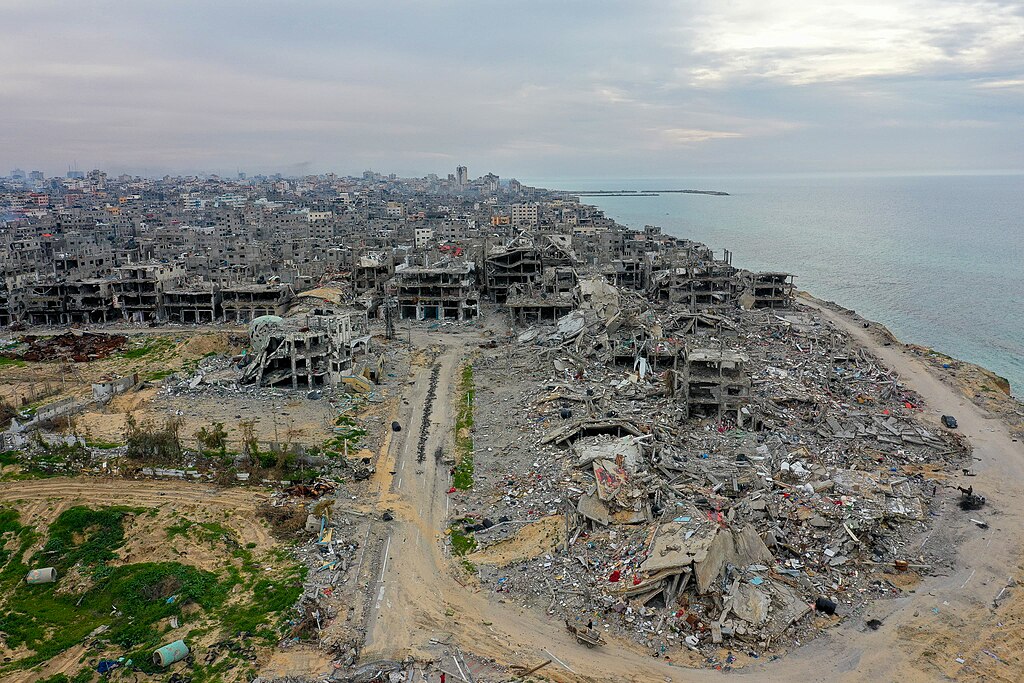
Reducing this debate to a question of academic freedom causes me, and perhaps some of my colleagues, a certain amount of frustration. Because it allows us to sidestep another, more fundamental question, namely that of the limits within which it is possible at all to address the current situation and history of the contemporary Arab world. What is being discussed today in connection with the war against Gaza, the settlement of the West Bank and the Golan Heights, and the numerous attacks by the Israeli army on sovereign territories is nothing new.
For us “specialists in the region,” dealing with the media is often an exercise in bewilderment, in the face of the self-assurance coupled with ignorance of our journalistic interlocutors—and I’m not even talking about our numerous academic colleagues who specialize in other topics and want to explain to us that we are concealing or exaggerating aspects of the region’s history just because they have read something about it somewhere. Far be it from me to be a know-it-all, but I note that the same journalists show more openness and curiosity when it comes to other regions of the world and other periods of history. It is as if the channel of communication between the production of verified, proven, and validated knowledge and the general knowledge available in society and public opinion has been disrupted; as if something has fundamentally gone awry in science communication.
For us “experts on the region,” dealing with the media is often an exercise in bewilderment, given the self-assurance coupled with ignorance of our journalistic interlocutors—and I’m not even talking about our numerous academic colleagues who specialize in other topics and want to explain to us that we are concealing or exaggerating aspects of the region’s history just because they have read something about it somewhere. Far be it from me to be a know-it-all, but I note that the same journalists show more openness and curiosity when it comes to other regions of the world and other periods of history. It is as if the channel of communication between the production of verified, proven, and validated knowledge and the general knowledge available in society and public opinion has been disrupted; as if something has fundamentally gone awry in science communication.
After all, it cannot be said that people do not talk and write about the Middle East. And perhaps that is why everyone thinks they know what is going on. Nor can it be said that there are not many specialists on the Arab world, including some of the highest caliber, for example in France. These specialists do indeed debate among themselves, and the debates reflect some of the tensions that are stirring up the world of research and French society. However, they are about establishing the truth; about methods and research questions. (Here, academic freedom is exercised in the strict sense, within the limits of scientific review and objection.) These scientific discussions also make it possible to reach agreement. In the academic sphere, the Israeli occupation and Israeli colonization are simply established facts and not a subject of polemic. Here, it is possible to discuss the connection between Zionism and European colonialism, or to use the term apartheid to describe how Jewish and non-Jewish societies are separated from each other in the spatial unity of Israel-occupied territories. Here, it is permissible to describe the armed wing of Hamas as armed resistance. Saying this does not mean denying the nihilistic violence of jihadist groups or putting everything on the same level. But it also allows for a comparison between situations of occupation and responses to occupation worldwide. Focusing on peaceful movements is one option, but the reality on the ground is different and confronts us with the fact that armed struggle has always been part of the history of resistance, in Palestine as elsewhere. In a discussion, one can highlight differences between the armed Ukrainian resistance fighters, the Kurdish resistance forces in Rojava, and the jihadist groups. But it is not honest to categorically reject any comparison between them, to banish terms such as “resistance” in the case of Hamas and reserve them only for experiences elsewhere. Yet this is one of the boundaries that is impossible to cross in public debate.
So what happens to us, who are accused of wrongdoing simply because we reported on the state of research and the current scientific consensus? What are we supposed to understand? That every word we say is now to be the subject of a court case?
Observing what has been happening for months and years, it seems to me that a few lessons can be learned from the many controversies:
First, we are told that not everyone is entitled to participate in the production of this scientific consensus discourse. The same analysis produced by a Palestinian or Arab researcher from the region will often go unheard until it has been validated by a European or Israeli researcher. This was the case with the investigations into the massacres of 1948, which were documented and described by Palestinian historians and witnesses, but only became acceptable thanks to the work of so-called revisionist Israeli historians. This also applied, of course, to the use of the term “genocide” to describe the massacres in Gaza, first denounced by Palestinian witnesses and journalists, then by international NGOs, and finally by Israeli figures and Western specialists in genocide studies. Why are Palestinians not considered worthy of determining and naming what is happening to them? Would this situation be understandable if a European society were affected by the crimes?
Then we are told, and perhaps this is where the academic question is most central, that the truth does not really matter. What matters is balance. A somewhat strange notion, when you think about it. In fact, whenever we describe and explain what we have studied about a sociological or historical reality, we should always consult someone who holds the opposite view. This is something I experienced regularly myself when I occasionally spoke in the media about Syria in the 2010s. When I explained how power or the Syrian society work based on the available research, I was contradicted by pseudo-experts who spouted nonsense about “confessionalism” and “radicalization” and who knows what else, all in the name of balance and confrontation of viewpoints. And, of course, without any distance, without attributing this view of society to what it was, namely the regime’s propaganda. When I hear today how cautiously my colleagues are questioned on the subject of Ukraine and Russia, even if nothing is perfect, I can gauge the distance.
So is it really academic freedom that is at stake here when the scientific nature of a colloquium at the Collège de France is called into question? Or is it rather the recognizable ultimate, undisguised (and thankfully scandalized) contempt with which scientific work produced in this cultural area is viewed? This work is certainly not all perfect, but it is based on knowledge, on skills that have often been painstakingly acquired, on familiarity with often difficult and demanding fields to which the researchers sometimes also have a personal, emotional connection. And this is the final point that I draw from observing the controversies: For researchers working on the Arab world, having strong ties to their “field of research” arouses suspicion. Yet it is this familiarity that constitutes one of the riches on which French and European research can draw. Empathy is a necessary quality for good research, as much as criticism, reading sources in their original language, and deduction. These different qualities, which are in tension with each other in the pursuit of scientific truth, are precisely those that ensure the only meaningful balance. Once again there are numerous examples from other fields that underscore the importance of proximity to the field of research. Would we be surprised if a French researcher specializing in Germany (or vice versa) spent extended periods of time there, established collaborations and friendships, and sometimes even made their lives there?
If research as a whole is threatened today by all kinds of relativism and attacks on truth, when it comes to scientific production on the Arab world, these attacks are exacerbated by the suspicion of “collaboration” with an internally constructed enemy, of which we are supposedly the fifth column. The name of this enemy varies: Islam, “Muslim Brotherhood,” new anti-Semitism, wokism… Or a combination of all of these, which literally tramples on our work, the establishment of facts and investigation of mechanisms, and casts suspicion on the very foundation of our libido sciendi, i.e., our desire to understand these societies, to describe them and make them familiar, with all their complexities and contradictions.
Both in internal KriSol debates and, for example, in an interview with Omer Bartov in German-language Jacobin, it has recently become clear that there are considerable reservations about the term “war” within movements in solidarity with Palestine. Instead, the preference is to link the moral and political assessment of the mass violence against Gaza and its population to the legal concept of genocide—even though for some time now, members of the German federal government have been deliberately using this term as an opportunity to avoid drawing any conclusions from the violence. They point out that the courts have yet to decide whether genocide has actually been committed, or they ignore journalistic inquiries about consequences of genocide altogether. The latter was the case, for example, at a government press conference shortly after the fragile ceasefire began in October 2025, which dealt, among other things, with the German chancellor’s considerations regarding the resumption of unrestricted arms exports to Israel. Obviously, the term “genocide” alone is not enough to build political pressure. Moreover, it is by no means certain that the courts will actually rule in a few years’ time that the Israeli government has committed genocide in Gaza.
There is therefore ample reason to fear that a discursive narrowing to the term genocide could be used not only now, but especially in the future, to ward off responsibility and deny mass violence. Against this background, we advocate the strategic revaluation of an empirical-analytical concept of war that refers to observable reality, thereby emphasizing the political significance of empirical evidence and not making itself dependent on legal judgments.
Genocidal war is no less cruel than genocide
The term “war” is often considered inappropriate, especially by those who strongly condemn the mass violence against Palestinians and urgently demand political consequences. They criticize that “war” implies symmetry—a conflict between sides with at least roughly equal capacity to act—and thus could enable both-sidesism in the assessment of mass violence against Gaza (this is also roughly the reasoning behind the rejection in the interview with Bartov linked above). We share the criticism of both-sidesism. At the same time, as peace and conflict researchers, we disagree with the impression that wars are symmetrical per se. Empirically, this is definitely not the case.
“War” primarily refers to the circumstance that violence is exercised and suffered on a massive scale. Admittedly, in quantitative research, the term is indeed mainly attached to the number of battle-related deaths, suggesting that war consists primarily of combat between opposing sides. The idea here is that armed actors (at least one of them a state army) fight each other and that both combatants and (unintentionally or acceptably) civilians are killed in the process (see, for example, the Uppsala Conflict Data Program). However, such definitions have long been criticized within peace and conflict research and are considered overly simplistic and insufficiently reflective of the actual dynamics of war. The concept clearly does not apply to Gaza, for example, where civilians and civilian infrastructure were directly and immediately attacked, killed, and destroyed. Direct attacks on the civilian population also occur in wars for which no genocidal logic can be empirically identified, i.e., wars that do not specifically destroy the living and survival conditions of members of a national, ethnic, racial, or religious group, to stay close to the Genocide Convention. Examples of non-genocidal violence against civilian populations can be found, for example, in the context of military interventions – think of the US drone wars and the unspeakable term “collateral damage” – and also in civil wars, where non-state armed actors sometimes use violence against the civilian population to obtain food, labor, and forced recruits.
When we nevertheless speak and write of “war” in such situations, this takes into account the fact that, from a global and historical perspective, mass violence has rarely been symmetrical and that it has very often been and continues to be directed against civilian populations. All forms of colonial, and often genocidal, violence since the 16th century could serve as examples here. In this respect, unilateral mass violence is not actually a special case. Rather, the symmetrical struggle between uniformed armies, which has mistakenly (only thanks to Eurocentrism) shaped the image of war in Western minds, should be considered to be a special case.
We therefore propose not rejecting the concept of war outright, but using it free of Eurocentric assumptions of symmetrical violence in order to bring the relevance of empirically proven violence to the fore. The advantage of such a term is that it can be used to characterize mass violence in very different forms as morally and politically relevant—because “war” is a man-made catastrophe, and the term signals that action is needed here. The second step is to empirically clarify the central characteristics of the war in question. One suggestion for the empirical description of mass violence in Gaza is “genocidal war”: that is, mass violence that, based on empirical observations, can plausibly be interpreted as an intent to destroy. Compared to genocide, “genocidal war” has the advantage that it does not have to be confirmed by courts, but is based solely on extensively documented empirical observations – which in politics is usually sufficient as a basis for decision-making and action! The use of the term “war” can and should therefore be used to counter arguments that court proceedings must be awaited before decisions can be made about consequences in relation to the Israeli government. Whatever the courts decide, the empirical evidence alone should be proof enough that a genocidal war has been waged and that this is just as unacceptable as genocide established by a court of law.
This brings us finally to the de facto hierarchization of suffering, which also concerns Dirk Moses and is undoubtedly a core problem of the legal concept of genocide. This concept is intended to describe the worst of all crimes, but is so narrowly defined that the vast majority of mass violence cannot be covered by it and is thus inevitably labeled as “less serious.” Here, too, the concept of war could have a corrective effect in the long term by counteracting such a hierarchy.
Taking a multi-pronged discursive approach
Of course, it still makes sense to use the concept of genocide, especially to demand the application of international law. Our central point is only that it is unwise for movements in solidarity with Palestine to put all their political and moral eggs in one basket—especially in the case of international law, which is known to be selectively effective and permeated by colonial logics! We should pursue a multi-pronged discourse in order to escape a situation in which key actors deny responsibility for the most serious crimes and in which moral and legal condemnation are so closely intertwined that future acquittals would, in the worst case, amount to whitewashing. The term “genocidal war” allows us to do this.
The wave of recognition of Palestine by Western states, in which Germany did not participate, owes itself to France’s initiative. President Macron is isolated domestically, has failed in many respects and is unpopular, but his foreign policy shows diplomatic leadership. That has also contributed to the discourse in France once again being broader and more open than in Germany. In France, it is already possible to criticize something that has not yet been achieved in Germany. A group of lawyers and professors, most prominently Rafaëlle Maison, professor of international law at the University of Paris-Saclay, is concerned with the potentially negative consequences that threaten to arise from the purely symbolic recognition of a de facto non-existent state—the state’s territory is eroded by Israeli settlements, its authority is undermined, and its people are exposed to genocide. Rafaëlle Maison published an article on September 11 spelling out the pitfalls of recognition, and gave an interview to the Le Média platform on September 13 to shed light on the “shadow zones” of Macron’s plan. Any policy of recognition should be measured by whether it serves or harms the right of peoples to self-determination, which is fundamental to international law.
In the interview, Maison quotes from the letter Macron wrote to Netanyahu on August 25, 2025. Macron justifies his decision : “Our determination to ensure that the Palestinian people have a state is rooted in our conviction that lasting peace is essential for the security of the State of Israel.” The Palestinians’ right to self-determination is not mentioned in the letter. The horse is being put before the cart: the rights of the Palestinians are understood only as a function of the security of an ethnically and nationally defined Israel; not as an end in itself, but as a means to an end. Diplomatic restraint towards Netanyahu alone cannot explain this. In his speech to the UN General Assembly on September 22, Macron explicitly acknowledged, unlike in the letter, the “legitimate rights of the Palestinian people” and spoke of “a people who draw strength from their history, their roots and their dignity.” And yet, here too, he cited French loyalty to Israel as the main reason for recognition: “Precisely because we are convinced that this recognition is the only solution that can bring peace to Israel.”
Macron’s speech suggests that recognition should lead to an end to genocide aka war. But if the rights of Palestinians are always viewed as merely instrumental, then there can be no lasting peace. Maison exposes Macron’s recognition and his commitment against violence as lip service. The “normalization” he desires for Israel, which continues to violate (mandatory) international law, is to be imposed violently, with or without a Palestinian state. This is already evident in the first half of the letter, where Macron refers at length to France’s official acceptance of the IHRA definition of antisemitism. The adoption of the IHRA definition, “which condemns anti-Zionism as a form of anti-Semitism,” was one of his first official acts in 2017 and forms the basis for his policy of recognition. Macron’s interpretation of the IHRA definition, equating any opposition, however legitimate, to an exclusionary and ethnically defined state with hostility toward Jews as Jews, must automatically declare all Palestinians who have been expatriated and expropriated by Israel, and who naturally have a problem with this statehood, to be enemies of the Jews (not to mention that this equation itself is anti-Semitic). Macron’s letter to Netanyahu shows that the violent instrumentalization of the fight against anti-Semitism and the blanket defamation and exclusion of Palestinians as anti-Semites is far more than just a side effect or collateral damage of the current policy of recognition; it is inherent to it.
But Rafaëlle Maison is interested in recognition primarily from the perspective of international law. She analyzes the “New York Declaration” of July 29, initiated by France and Saudi Arabia and also signed by Germany, as well as the “New York Call” issued on the same day by the foreign ministers of 15 Western states (Germany was not among them) as a reaction and a kind of diversionary tactic to distract attention from the opinion of the International Court of Justice “on the legal consequences of Israel’s occupation policy.” Exactly one year earlier, the ICJ had ruled that Israel’s occupation of the Palestinian territories was illegal, that Israel must withdraw from the territories and pay reparations. On September 18, 2024, the UN General Assembly then adopted Resolution ES-10/24 by a large majority (with Germany abstaining), which stipulates a halt to arms deliveries if they are used in the occupied territories and calls for a boycott of goods from Israeli settlements. Instead of following the ICJ opinion (which everyone, including the German Foreign Office, claims to respect), France and Saudi Arabia convened the UN conference on the recognition issue for July 2025.
Rafaëlle Maison sees the results as “potentially in violation of international law as outlined by the ICJ in 2024.” The Palestinian state should, in the unlikely future that it is actually allowed to materialise, only exist under certain conditions: under the conditions that Hamas surrenders its weapons to the Israeli-controlled Palestinian Authority, which would effectively mean demilitarization (para. 11 of the declaration), the respect of anyone standing for election for the “international obligations” of the PLO (para. 22), the exclusion of Hamas, and the pursuit of a liberal reform agenda. On the latter, Maison writes: “These recipes sound a lot like a free-market program, compromising the sovereign choices of the state-to-be and requiring—incongruously in appearance, but in reality quite significantly—control over freedom of expression.” Lip service is paid to the right of return guaranteed under international law, but in fact they envision a “just solution” to the refugee problem through a “regional and international framework” (para. 39). And the future state would have to work on security arrangements that were “beneficial to all parties” (para. 20) – which, given the unequal power relations, could only mean that Israel would once again assume police and military power and authority in the weak state structure. The outcome would be a state without sovereignty, an “entity under control.”
According to Maison, the “New York Call” in particular makes it clear what is really at stake: normalizing relations between all states and Israel despite the ongoing crimes – and not, as the ICJ actually prescribes, finally responding to these crimes with consequences. Thus, conditional recognition while the genocide continues is “indeed the latest stage in the ‘war against Palestine,’ as chronicled by historian Rashid Khalidi.”
In fact, the situation will not be pacified, no matter what “solution” the international community finds to show Israel the “red lines” so that it abandons its annexation plans and finally ends the genocide; certainly not under a transitional governor Tony Blair in Gaza. Nevertheless, voices have been raised in France in recent days arguing that we should not stop at Rafaëlle Maison’s despairing analysis, but make the best of the new situation. The ongoing genocide, the daily mass deaths, killings, and murders must end immediately, and recognition facilitates the willingness to intervene. On Médiapart, Ilyes Ramdani credits the French initiative with at least putting enormous pressure on the US; the “Riviera” plans seem to be finally buried.
On September 24, Ardi Imseis, professor of international law at Queen’s University in Canada, spoke to French MPs at the initiative of lawyer and member of the French National Assembly Gabrielle Cathala, and gave a lecture at the Sorbonne the following day. He advocates a “realistic,” “pessimistic” stance, insisting that both the legal fact of recognition and the fact of continuing legal obligations established by the ICJ opinion can be used to make demands on governments. It is a bitter reality, he says, that almost all countries in the world do not care about the survival and right to self-determination of the Palestinian people. The Palestinians themselves have no resources to defend themselves against the occupation. But when it comes to statehood, Imseis sees the glass as half full, where others see it as half empty. Almost independently of the situation on the ground, international law has also created its own reality over the years and decades. “It is clear that today, the State of Palestine already exists as a matter of both state practice and law, with or without recognition by France and other Western states.” Palestine was already recognized by 160 states before France’s initiative, was admitted to UNESCO as a full member in 2011, and can be a party to multilateral treaties. Precisely because attaching conditions to recognition conflicts with international law, it is possible to fight against these conditions. Recognition would make it easier to put pressure on states to correct their relationship with Israel and to respond to the occupation, apartheid, and war crimes with sanctions. In his analysis of the New York Declaration, Imsais thus comes to a very different conclusion than Maison: The Western governments that have recognized Israel are well aware that states are sovereign and that it is not possible to impose conditions on statehood; accordingly, their statements are formulated in a soft and ultimately non-binding manner. “Sovereignty is a curious thing. But as France so intimately knows (…), states have the perfect right to do whatever is not prohibited by international law.”
Maison concluded her text with the fear that governments would use the UN General Assembly “under cover of the recognition of a Palestinian pseudo-state” to further undermine international law by disregarding the ICJ opinion, and that international law as a whole would be buried here. Imrais’ realism, on the other hand, sees “the contingency and disenfranchisement of the Palestinian Arabs” as enshrined in UN law itself, together with the “so-called two-state framework” of the 1947 partition plan. In the absence of other resources, the Palestinians could and must now work with this law.
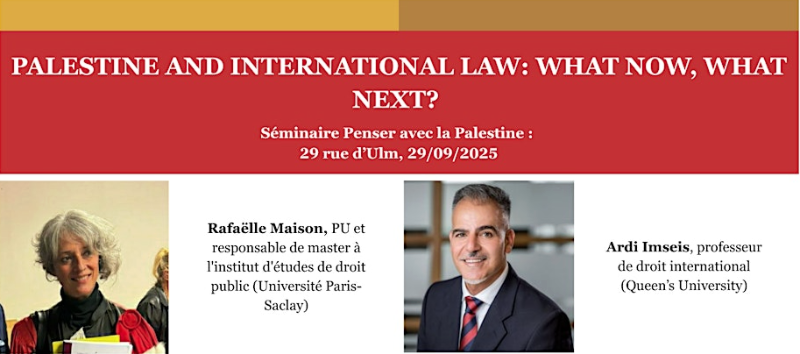
On Monday (September 29, 2025), Ardi Imseis and Rafaëlle Maison will talk to each other in the Jean Jaurès amphitheater in Paris. In Germany, one should listen carefully. Admittedly, the discourse has shifted in Germany as well, with the federal government distancing itself significantly from Netanyahu’s government. It is now even almost possible to say “genocide” without being slandered as anti-Semitic. But the totalitarian “Staatsräson” and the media’s windmill battles in its shadow still obscure the actual lines of conflict. The fruitless pros and cons of German provenance basically revolve around whether Israel should be allowed to do as it pleases or whether it should be forced to do what is best for it; whether the failure of Oslo gives Israel carte blanche or whether Israel must be brought back on the path of Oslo toward “peaceful coexistence.” And whether Germany is isolating itself internationally or whether the world “understands” Germany’s Sonderweg. What is still hardly debatable is the question of recognition in light of the failure of Oslo, from the perspective of what is right and just. In retrospect, Oslo was a serious mistake—a policy of appeasement that ignored all the important issues, shirked international legal obligations, and, in the long term, shifted the balance of power increasingly to the detriment of the Palestinians. This applies to the settlements, it applies to apartheid, it applies to the right of displaced Palestinians to return and to compensation for stolen property.
Germany has decided against recognizing Palestine and, as always, will try to compensate for its lack of responsibility with financial payments. But it is also paying another price: that of ignorance, in Arendt’s sense. In the end, there might even be a case for saying that international law itself, through the partition plan, makes lasting peace impossible. But this discussion is also more likely to take place in France than in Germany.
Naomi Klein: „How Israel Has Made Trauma a Weapon of War“, The Guardian, 5. Oktober 2024, https://www.theguardian.com/us-news/ng-interactive/2024/oct/5/israel-gaza-october-7-memorials.
Ben Ratskoff: „Prosthetic Trauma at the Nova Exhibition: Holocaust Memory, Reenactment, and the Affective Reproduction of Genocidal Nightmares”, Journal of Genocide Research, 2. September 2025, https://doi.org/10.1080/14623528.2025.2551946.
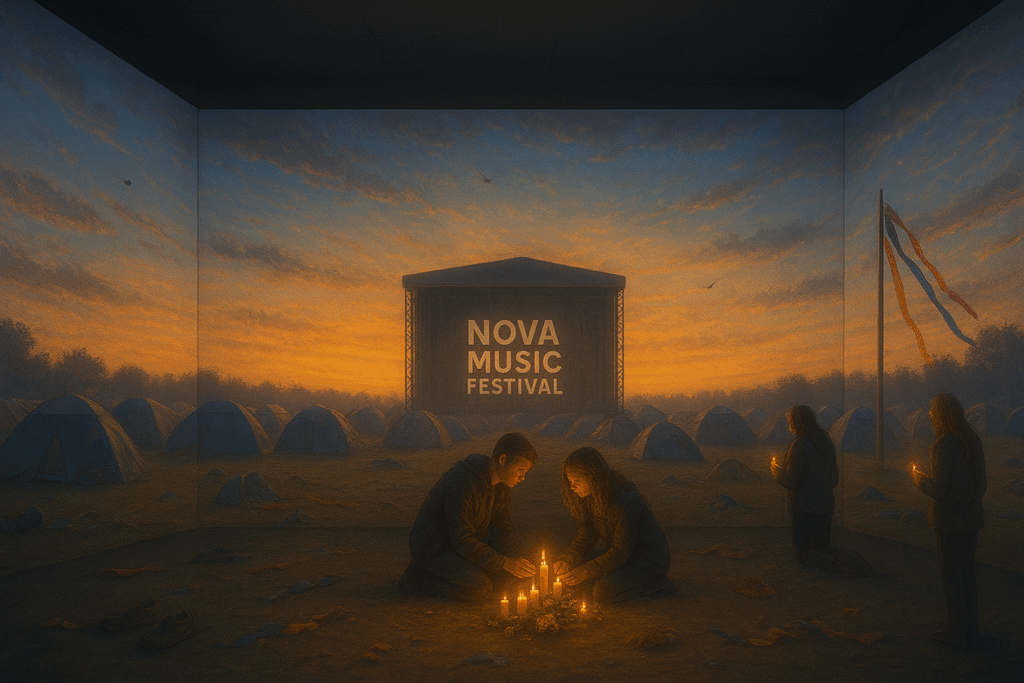
There are no public domain images of the exhibition’s immersive performance, but ChatGPT suggests this one.
The traveling exhibition “The Nova Music Festival Exhibition” (motto: “06:29 –The Moment the Music Stopped”) has been touring the world since the end of 2023. Previous stops were: Tel Aviv, New York, Los Angeles, Miami, Toronto, Boston. According to the website of exhibition and theme park designers Breeze Creative, it “reconstructs” the massacre of Palestinian combatants among the participants of the open-air trance party near Kibbutz Re’im on the morning of October 7, 2023 (in which an estimated 378 people died and another 44 were taken hostage), “using authentic objects collected shortly after the events — including burned cars, bullet-riddled portable toilets, abandoned camping tents with personal belongings inside, and the possessions of those murdered or kidnapped. Alongside these are gripping visual media: survivor testimonies, videos, and images capturing the horror.” “The Nova Music Festival Exhibition” was produced by the founders of the Nova Music Festival and the companies of Israeli cultural event organizer and festival founder Yoni Feingold. The Israeli government provided support from the outset, as did politicians in the host cities and many Jewish organizations. However, large sections of the Israeli population and the families of the hostages were and remained less unanimous. It is all too obvious that the Nova exhibition is enlisted as part of the Israeli government’s public diplomacy work, which it itself refers to as Hasbara, or Zionist propaganda. On the other hand, the exhibition is set in a context in which propaganda, information, documentation, and serious research are often difficult to distinguish from one another.
Now “The Nova Music Festival Exhibition” is coming to Berlin-Tempelhof, to the former airport building, under the patronage of Governing Mayor Kai Wegner, as announced in the local press on September 5. The announcement and the media coverage that is expected to be following makes it seem sensible to prepare by taking a closer look at the history, ideological implications, and curatorial strategies of this enterprise. Two texts are particularly recommended: “How Israel Has Made Trauma a Weapon of War” by Naomi Klein, published last year in The Guardian, and the essay “Prosthetic Trauma at the Nova Exhibition: Holocaust Memory, Reenactment, and the Affective Reproduction of Genocidal Nightmares,” published in early September of this year by Ben Ratskoff, a researcher in memory culture and the politics of the past. Klein and Ratskoff situate the exhibition project in the broader context of historical politics and memory culture activities in response to the Hamas attack of October 7, 2023, both within and outside Israel. Plays, films, a television series, VR online videos (such as the “Gaza Envelope 360 tour”) and themed tours of the dark tourism variety transform the traumatic events into various forms of visceral, immersive entertainment. Most of these products aim to draw views and visitors emotionally into the events of that day. The primary goal is to identify with the victims, to empathize with their suffering and death. At the same time, the effort involved in detailed documentation is often very impressive, and there are also more nuanced attempts to respond to the events of that day and its aftermath. However, as Klein argues, these products and the discourse surrounding them, consistently fail considering the research conducted in recent decades on the “ethics of memorializing real-world atrocity” and its eminently political dimension. Instead, the memory industry seeks to unilaterally dissolve the “difference between inspiring an emotional connection and deliberately putting people into a shellshocked, traumatized state, ” namely in the direction of “immersion”: “offering viewers and participants the chance to crawl inside the pain of others, based on a guiding assumption that the more people there are who experience the trauma of October 7 as if it were their own, the better off the world will be.” Another, similar yet crucial difference is that between “understanding an event, which preserves the mind’s analytical capacity as well as one’s sense of self” and “feeling like you are personally living through it.” The latter can be called “prosthetic trauma,” using a concept introduced by the historian Alison Landsberg (Prosthetic Memory: the Transformation of American Remembrance in the Age of Mass Culture) and the sociologist Amy Sodaro (Exhibiting Atrocity: Memorial Museums and the Politics of Past Violence).
Ben Ratskoff likewise draws on the concept of “prosthetic trauma.” His meticulous description and analysis of the Nova exhibition leads to the conclusion that Klein’s criticism of the historical-political instrumentalization of October 7 is just as valid as her objections to the breakdown of reflective distance in the mode of immersion: “Offering the pain and suffering of real victims as a simulated experience for public consumption, the Nova Exhibition underscores concerns that reenactment as a discursive mode and exhibitionary strategy obliterates the critical distance necessary for ethical reflection and contextualized understanding while nourishing destructive (and self-destructive) narrative panics and existential anxieties.” Ratskoff further emphasizes that such treatment of the memory of atrocities tends to reproduce rather than prevent genocidal nightmares, especially when the rhetoric and formats of Holocaust remembrance are transferred to the events of October 7, 2023: “Tropes and patterns drawn from Holocaust memory and the memorial museum form construct a powerful apparatus of emotional identification that blurs the figurative and the real, and memory and actuality.”
Wherever individual and collective acts of violence and experiences are “commemorated” institutionally, a gap has been widening for decades. State agencies and private-sector companies, often operating in public-private partnerships (as in the case of the Nova exhibition), that are involved in (trans)national remembrance and political education are torn between, to put it simply, education and explanation on the one hand, and emotionalization and identification on the other. Increasingly, the decision is being made in favor of the latter, of immersion. Since renowned historical museums such as the Imperial War Museum in London began staging the trenches of World War I and the bombing nights of the Blitz like ghost trains, hardly any major institution believes it can do without gamified exhibition concepts. Museums and memorials dedicated to the Holocaust, above all Yad Vashem in Jerusalem, have long been confronted with these expectations of immersive re-experiencing of the trauma and are giving in to them.
Regardless of the particularly charged events of October 7, 2023 and their commemoration, one might therefore ask: What are the functions and effects of the methods and technologies aimed at immersion and reenactment, which are increasingly being used in various contexts of memory culture, education, and therapy? When does the offer of identification turn into propaganda, empowerment into mobilization? How may the collapse of (critical) distance brought about and practiced in this way affect entire societies? For the making-immersive of history and politics, as practiced (not only) in the Nova exhibition, entails a deceptive unambiguity. Immersion has become the default mode of remembrance, the formula for political communication that rhymes participation with passivity, agitates by staging trauma. Now, “The Nova Music Festival Exhibition” will be open to visitors in Berlin. Where else but in this city would there be an opportunity to reflect on the fact that the aestheticization of violence and the instrumentalization of trauma have already had devastating effects in the past?
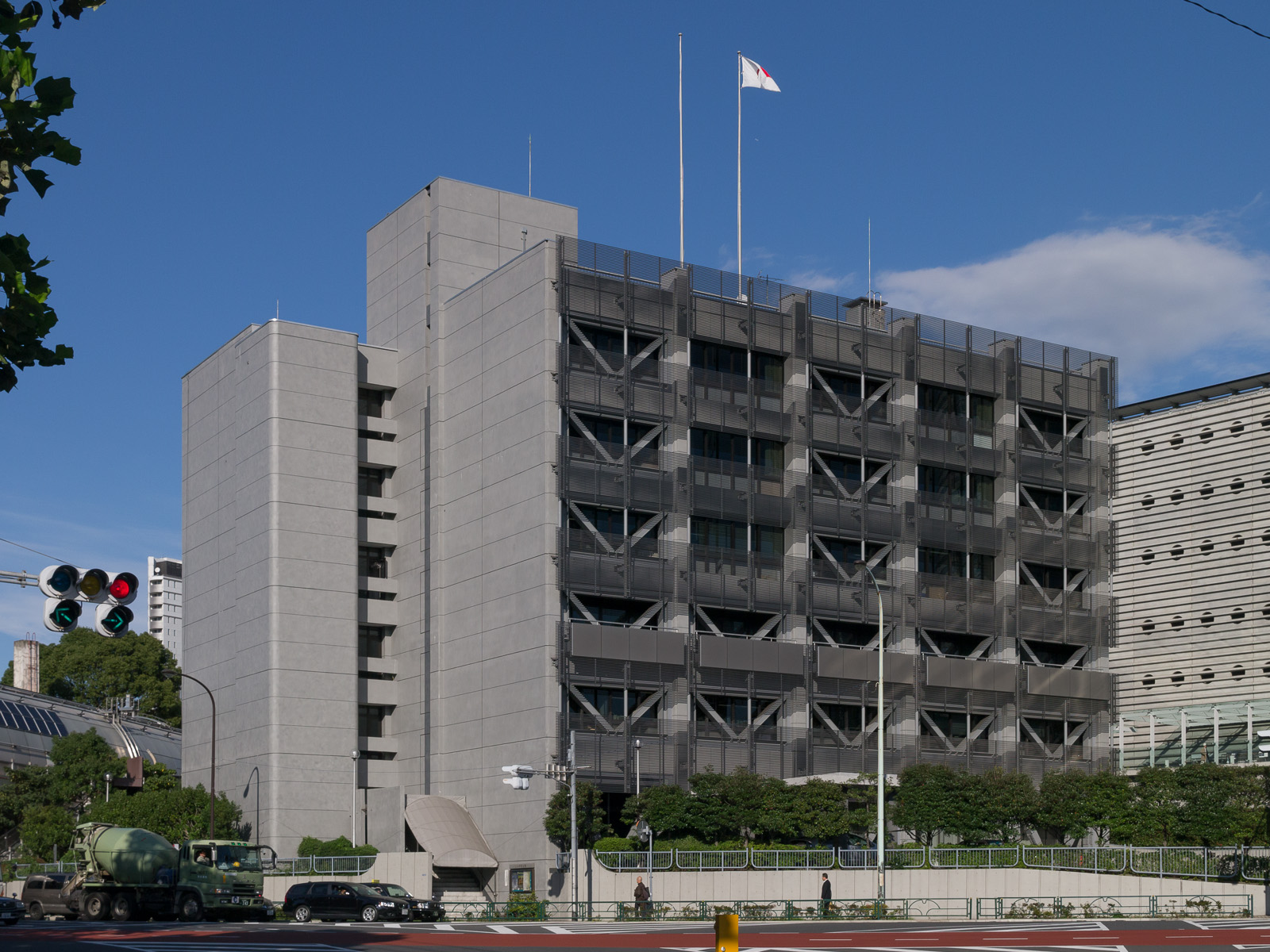
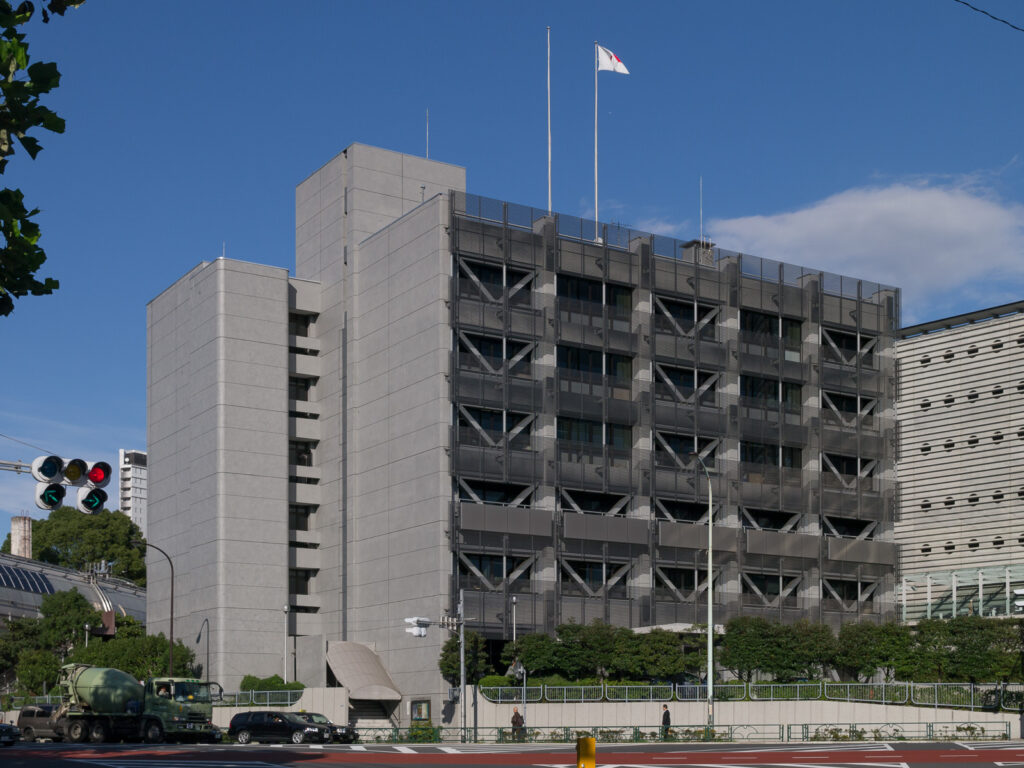
The Science Council of Japan in Tokyo; BY-SA 3.0, https://commons.wikimedia.org/w/index.php?curid=22331698
The Science Council of Japan (SCJ) was founded in 1949 as Japan’s national academy. Despite being a state institution, it operates independently of the government and maintains autonomy in its administration and its activities.
Its working principles were a result of the bitter experience of wartime Japan when scientists had been mobilized for military purposes. Against this historical background, the SCJ was established “under the consensus of the entire scientific community, with the mission to contribute to the peaceful reconstruction of Japan, the welfare of human society, and to academic progress, in coordination with the global academic communities”, as the preamble of the current Act on the SCJ reads. The SCJ’s duties are: to deliberate important issues concerning science and to help to implement them; to promote and to improve the efficiency of coordination of scientific research; to respond to governmental consultation on academic policies and important policies that require special examination by expert scientists; and to provide scientific recommendations and suggestions to the Japanese government and society.
Ever since its inception the SCJ has played an active role, for example, by issuing hundreds of reports and recommendations to the public. It consists of 210 scientists, each serving a six-year term, and encompasses all academic fields. Faithful to its sobriquet, “the Scientists’ Parliament”, the members were initially elected by Japanese scientists, until reforms were made in the 1980s and 2000s upon the government’s initiative, and a co-optation system was introduced. Thereby, current members nominate the next members, as most national academies do. While it is the Prime Minister who appoints the members, this procedure was just a formality, comparable to the British monarch’s appointment of the British Prime Minister upon nomination by Parliament. This consensus was upheld by all Japanese governments until the Japanese Prime Minister in 2020/2021, Mr. Yoshihide Suga, quite unlawfully broke it and refused to appoint the new candidates that had been nominated by the SCJ in 2020.
The SCJ’s Executive Committee has emphasized five requirements indispensable for a national academy: the status as an institution representing the country academically; granting public qualifications for that purpose; a stable financial base through national financial expenditure; independence from the government in terms of activities; and autonomy and independence in membership selection. As a reaction to the bill, the SCJ’s General Assembly passed a resolution and issued a statement, expressing serious concerns and demanding substantial amendments from the Legislature.
Background to the introduction of the bill
But the present crisis cannot be understood without the conflict in 2020 and Prime Minister Suga’s refusal to appoint the nominated new candidates, in violation of the consensus of the Act. When Akahata, the Communist Party’s daily newspaper, broke the news, hundreds of academic associations and societies, as well as numerous civil society organizations, protested and issued statements asking Mr. Suga to withdraw his decision and to explain his refusal. The International Science Council supported them and sent an official letter expressing concern to the SCJ president. Mr. Suga and his successors, however, continued to refuse to provide any explanations on the grounds that it was “a personnel matter”.
Meanwhile, the ruling party, the LDP, changed the subject as if the SCJ’s organizational form had been the issue and had caused the incident. In December 2020, a task force within the LDP published a proposal that suggested the SCJ’s transformation into a corporation to allegedly ensure its independence from the government. But when the government set about to revise the Act on the SCJ in December 2022, the SCJ started fighting back. Its General Assembly demanded the government to suspend the revision and to establish a forum for open consultation in order to review the entire Japanese academic system comprehensively and fundamentally (see here and here). As a result, the government gave up on the bill, for the time being.
It did not, however, abandon its plan to reorganize the SCJ. In August 2023, it established an “Advisory Panel” on the role of the SCJ in the Cabinet Office, the executive office under the Prime Minister that supports him and the other ministers. The panel consisted of representatives from pro-government academic circles, from the Cabinet Office, from the business community, and some SCJ ex-members, and others. The SCJ president was asked to attend, but not as an official member. The panel released an interim report on December 21, 2023, which proposed that the SCJ should cease to be a state institution and become an organization with a separate legal personality. Based on this report, the State Minister for Special Missions declared, on December 22, 2023, that it was the government’s policy to incorporate the SCJ.
Evaluating the panel’s interim report and the Minister’s decision, the SCJ General Assembly issued a statement on April 23, 2024 expressing concern about the incorporation of the SCJ. Former SCJ presidents, as well as dozens of academic societies and associations, issued a statement demanding that the government cancel the submission of the bill. However, the government did not withdraw the decision, and the bill was finally submitted to the Legislature in March 2025.
Suspected purposes of the bill– Shadow of the military-industrial complex
Why does the Japanese government insist in making the SCJ a corporation? The official explanation is still to “strengthen the independence of the SCJ”. However, many suspect that the real, hidden aim of the bill is to help and to promote the military-industrial complex in Japan.
The Japanese government has been pursuing, for some decades, a “science, technology, and innovation policy” (STI) aimed at economic growth. The main organization to promote this policy is the Council for Science, Technology and Innovation (CSTI), an agency in the Cabinet Office chaired by the Prime Minister. It’s clear that SCJ has been pushed further and further to the sidelines. However, while the SCJ no longer has real power to set the STI policy, it still has a strong influence on Japanese scientists’ code of conduct. Also, its recommendations to the government and its scientific proposals to the public still have a social impact. The government expects the SCJ to cooperate with or to implement the STI policy, while not meddling with its contents. Therefore, in the eyes of the government it is indispensable that its influence and that of industry and business over the SCJ should be enhanced, to make science contribute more to what is euphemistically called “innovation”. Not only the government, also the business community has for a long time demanded the incorporation of the SCJ. As early as in 2015, the Japan Business Federation (Keidanren) proposed that the SCJ should be “diversified”, i.e. that the number of researchers from industry, business managers, and attorneys should be increased.
The second hidden, suspected purpose of the incorporation apparently is to remove obstacles to the promotion of military and dual-use research. After the Second World War, most Japanese scientists never wanted to be involved in military research anymore, due to the detrimental utilization of science to serve the war of aggression. The fact that the current Constitution of Japan, put into effect in 1947, renunciates war and military force also supports the aversion against military research among Japanese scientists. The SCJ, since its establishment, has always clearly opposed scientific research aimed at war and for military purposes, most recently with its Statement on Research for Military Security in 2017.
However, against the background of “changes in the security environment” over the past decade, the tendency towards collaboration between the military and academia has increased. The National Security Strategy (NSS), which the Cabinet adopted without substantial discussion in the Legislature in 2013, emphasized strengthening technological capabilities, including the so-called “dual-use” technology, and advocated collaboration between industries, academia, and the government. The new NSS in 2022 and the Defense Building Program further advanced this policy. Business circles, such as Keidanren, keep demanding that the government should foster collaboration with industry and academia for military technology research, as well as enhance defense capabilities and export defense equipment.
Putting the NSS in practice, the Acquisition, Technology & Logistics Agency (ATLA), an external bureau of the Ministry of Defense, started a research fund for defense technologies in 2015. Many scientists were concerned about this new policy. The SCJ organized a task force to examine the possible effects of ATLA’s research fund on academic freedom and university autonomy. The SCJ’s Statement on Research for Military Security, issued in 2017, pointed out that ATLA’s fund “has many problems due to these governmental interventions into research”. It also recommended that universities and academic institutions should establish a system to critically review proposals for research that can be used for military security research as for their appropriateness, both technologically and ethically. The statement endorsed previous statements issued by the SCJ on military research (from 1950 and 1967) as well. Thus, although the statement did not directly call for the prohibition of military research, it certainly frustrated the government, as well as right wing parties and politicians. The SCJ, in their eyes, is a serious obstacle to the promotion of military technology research. In the legislative deliberation of the bill, a minister in charge of the Cabinet Office answered to a right-wing populist party member that the bill “would allow for the exclusion of members who repeat certain ideological or partisan positions”.
Similar constellations can be found worldwide. All over Europe and also in Germany, there has been growing pressure on universities to participate in military research. The European Commission is increasing spending on dual-use research in response to a “more threatening geopolitical context”. While German universities and institutes have long adopted the principle of restricting research to peaceful purposes, parts of the German government would like them to abandon this principle.
Incorporation as a means of controlling academia
In Japan, the “incorporation” has not only been limited to the SCJ. National universities were already incorporated in 2004 as a part of new public management reforms, and for the past two decades Japanese scientists have been experiencing difficulties caused by the accompanying budget cuts and enhanced government interference. Universities face numerous predicaments. For example, they cannot replace retired faculty members, are compelled to rely on part-time staff, the research budget for teachers has been cut, and tuition fees have increased. University autonomy has constantly been weakened. They are obliged to draw up a medium-term “management, academic and educational achievement plan” and detailed key goal indicators (KGIs) every six years. Since the Ministry of Education, Culture, Sports, Science and Technology (MEXT) reviews the plan and the KGIs, and the result of this review is directly linked to the grants that universities depend on, universities seemingly voluntarily bow to the government’s direction and policy.
Furthermore, the university faculty gets less and less involved in decision-making. The power is concentrated in a small number of people, mainly the university presidents and executive committee members, that include also corporation executives and former MEXT bureaucrats. The president used to be elected by the faculty’s vote, but nowadays, a “president selection committee,” consisting of both members and non-members of the university, decides who will be the president. The faculty council was deprived of all decision-making power, including faculty’s employment and promotion, and has now been reduced to a mere liaison council.
As a result, Japan’s position in international science is declining, based on criteria such as the number and quality of articles published in international journals. Students who witness the current situation of universities and professors are not attracted to Japanese academia when choosing their career. The number of students enrolling in PhD programs is decreasing. An ex-Minister of the MEXT, Dr. Akito Arima, a nuclear physicist and also ex-president of the University of Tokyo, admitted in a newspaper interview in 2020 that the “incorporation of national university was a mistake.” Many scientists express concern that incorporating the SCJ would now repeat the same mistake.
Protest movement against the bill
Worried scientists and citizens campaigned against the bill. They held mass rallies around the Parliament and lobbied Parliamentarians. Around 65,000 people have signed an online petition. More than a hundred academic societies and associations, citizen organizations, trade unions, and lawyers’ associations issued statements against the bill. As a result, in the House of Representatives, not only progressive or democratic parties, but also centrist or center-right parties, who had initially been undecided or in favor, voted against the bill. Only the ruling coalition and a right-wing populist party voted in favor of it. The bill, however, was passed without any amendments in the House of Councillors and enacted on June 11. The law will take effect, and the “new” SCJ, with new membership and new regulations, will commence on October 1, 2026.
Against the crisis of academic freedom and the promotion of military research
The bill was passed although the government’s representative during the Legislative deliberations had repeatedly assured the opposition parties that the government would respect the SCJ’s independence and autonomy. As many as 11 and 14 supplementary resolutions were adopted in the House of Representatives and House of Councillors, respectively. These legally non-binding resolutions ask the government to take SCJ’s independence and autonomy into account and to provide adequate financial support. They may be a reflection of the fact that the government and the ruling coalition could not ignore the campaign against the bill and the many opposing voices. We are not powerless. To prevent these assurances and resolutions from becoming empty promises, it is essential that scientists and citizens continue to monitor the government and SCJ closely, and take immediate action if the SCJ’s independence and autonomy are threatened again. Moreover, a new campaign and the amendment of the law will be needed to restore genuine independence and autonomy to the SCJ as the national academy.
Finally, it is critical to take precautions against academia’s further involvement into military research. The day after the bill was passed, the Ministry of Defence announced the establishment of a new organisation, the Defence Science Technology Board, whose mission is to contribute to the ministry’s planning of policies and measures related to science and technology. Eight of 16 board members are university professors. To prevent further military research in academia, taking action not to permit the “new” SCJ to overturn the “former” SCJ’s policy is crucial. If we fail, military research in academia will accelerate.
Statement “Refusal on grounds of conscience. For human rights and compliance with international law,” https://uppsaladeclaration.se/germany/.
While the systematic and targeted starvation of the population in Gaza, with Western and especially German support, is making the genocide of the Palestinians an undeniable fact for more and more people, the question of a boycott of Israel is still taboo, especially in Germany. The so-called BDS movement, co-founded by the Palestinian Campaign for the Academic and Cultural Boycott of Israel (PACBI), was launched in 2004 in response to the failure of Oslo and the question of what nonviolent options for action remained against occupation and disenfranchisement. In Germany, it is indiscriminately considered antisemitic and partly watched by the Office for the Protection of the Constitution as a “suspected extremist case.” But now even the German government can no longer avoid dealing with sanctions and the suspension of cooperation in certain areas. And an increasing number of international scientists are signing letters calling on their governments and employers to stop ignoring the consequences of the situation in Gaza for scientific work – most prominently the letter from more than 1,000 physicists and scientists to the leadership of CERN.
In early summer, Swedish scientists, and scientists working in Sweden, published the so-called Uppsala Declaration, in which they commit themselves, on grounds of conscience, to no longer cooperate with Israeli institutions that have made themselves complicit in illegal occupation, apartheid, genocide, and other crimes under international law. This declaration has well over 2,000 signatures.
The German version has now been published on the same website and is identical to the Swedish version in form and many of its formulations. It explains the decision to boycott Israeli institutions in great detail, citing overwhelming evidence of Israeli universities’ involvement in crimes, and formulates the same principles:
“1. We will not support cooperation with the State of Israel or with its institutions that bear responsibility.
2. We will not promote or publicly support institutionalized exchange with Israeli institutions that bear responsibility.
3. We will not participate in activities organized and/or co-organized by the State of Israel or its complicit institutions.”
In addition, it also addresses the situation in Germany, citing examples of how German universities are disregarding their obligation to comply with international law, institutional links, and how existing cooperation is even to be expanded. And it clarifies at the end: “We explicitly do not call for severing relations with individual Israeli academics. Rather, we firmly reject cooperation with Israeli institutions involved in illegal occupation, apartheid, genocide, and other violations of international law on grounds of conscience.”
I myself hesitated for a while before signing the statement: firstly, because I do not wish to cooperate with non-Israeli institutions that are involved in violations of international law, either, and would prefer to adopt a general demand for universities to commit themselves to human rights. Like the Human Rights Policy of Ghent University in the Netherlands: “In a nutshell: Ghent University does not cooperate with organizations involved in serious or systematic human rights violations, nor does it want projects to lead directly or indirectly to human rights violations.” Secondly, I can imagine ethical dilemmas in which it is unavoidable to enter into undesirable cooperation. However, my main concern at this point is to put pressure on German institutions, the German government, and the German public to immediately cease all military and police cooperation with a state led by right-wing extremists, and to save Palestinian lives and the lives of the hostages. That is why I am signing this letter.
On June 4, 2025, the Federal Association of the Research and Information Centers on Antisemitism (RIAS) presented its 2024 annual report in Berlin at the Federal Press Conference. RIAS is an organization that continuously monitors antisemitic incidents in Germany, on the basis of which government agencies and politicians take measures to combat antisemitism. It emerged from the “antisemitism-critical” contexts of a strongly victim-centered fight against racism in the 2000s, when the Amadeu Antonio Foundation and other so-called “antideutsche” players abandoned power-critical analyses, succumbed to the temptations of state proximity, and began to participate in the state’s instrumentalization of the concept of victimhood.
According to the RIAS 2024 report and statistics, the number of antisemitic incidents in Germany has risen dramatically, as in previous years. No one can doubt that antisemitism, even in its narrowest sense—as hostility toward Jews because they are Jews—has increased and continues to increase. Nothing would be more necessary than careful statistics, a reliable database, and appropriate monitoring to better understand the forms, causes, extent, and locations of contemporary antisemitism, regardless of its political camp, and to combat it more effectively.
However, RIAS works with premises and under conditions that conflict with good scientific practice—and this is not remedied by the president of the German University Rectors’ Conferenceembracing it. The association uses a definition of antisemitism—the IHRA working definition—that is legally and academically controversial, if not rejected as unsuitable because it conflates things that should be differentiated. Instead of in dubio pro reo, it operates on the principle that a finding of “Israel-related antisemitism” is justified even in cases of strong doubt – in the alleged interest of the actual, supposed, or potential victims. It equates any form of anti-Zionism with antisemitism almost without hesitation, dehistoricizes and essentializes it, and imposes often bizarre interpretations on ambiguous and debatable statements. And it does not reflect on the fact that by deciding who or what is antisemitic, it exercises power and can destroy lives without granting the possibility of appeal.
I will quote here from the 2024 annual report just two passages that, in my view, show how irresponsibly RIAS handles this power and how little it cares about empirical evidence and accuracy:
“RIAS classified just under 7% of all [antisemitic] gatherings as having a left-wing anti-imperialist background. On the occasion of the so-called Nakba Day—a Palestinian and Islamist campaign day against the founding of the State of Israel—the Marxist-Leninist Party of Germany (MLPD) held a rally in Erfurt in May. One speech stated: ‘Israel is no longer the land of persecuted Jews, but a great power […]. Israel has become the perpetrator.’ In the spirit of an antisemitic perpetrator-victim reversal, Jews are denied their status as victims of the Shoah and instead accused of comparable crimes. With reference to the accusation that Israel is committing genocide, the Shoah was relativized: “If you take the definition of genocide so narrowly that the entire people is destroyed, then there was no genocide against the Jews either.” RIAS includes accusations of genocide against Israel as antisemitic incidents according to the IHRA working definition if they deny the Jewish right to self-determination, if they use symbols or images associated with traditional antisemitism, or if they draw comparisons between current Israeli policy and Nazi policy.” (p. 23)
The contradictions and distortions of fact are obvious: 1) Nakba Day may be misused in some contexts, but the Nakba – the expulsion and flight of over 700,000 Arab Palestinians in the wake of the founding of the State of Israel and the Palestine War (1947–1949) – did happen, and it can and should be remembered. 2) It is a fact that Israel as a state, and not just with its current government, is a major power and, since 1967, has also been a “perpetrator” under international law. 3) The incriminated sentence does not relativize the Shoah, it clearly acknowledges it as a genocide. Nor does it rule out that it was more than genocide, that it was singular even. 4) One may not find the statements particularly sensitive, but they neither deny the Jewish right to self-determination, nor do they use traditional antisemitic symbols or images, nor do they compare Israeli policy with National Socialism.
A second example: “Meanwhile, German politics seems to respond to the outlined increase in antisemitic incidents in particularly political contexts in 2024 with increasing habituation to antisemitic incidents and their normalization. For example, it took over a year for the Bundestag to pass an antisemitism resolution that was not supported by all democratic factions and groups.” (p. 6)
On the one hand, the criticism of the Bundestag’s antisemitism resolution had well-considered, substantive reasons that RIAS fails to mention. There was an alternative resolution drafted by a group of renowned professors that the Bundestag did not admit to the vote and that some members of parliament would have liked to support, who then abstained from voting. On the other hand, the fact that the Bundestag resolution—passed, unfortunately, by an overwhelming majority—received two handfuls of abstentions and not 100 percent approval, indicates above all that there is a normalization of authoritarian discourse and a growing acceptance of authoritarian politics. 100 percent approval in votes and elections may have been the norm in the totalitarian GDR, but it should not be expected from a free parliament.
One cannot help but get the impression that such passages in the RIAS reports are not solely attributable to intellectual weakness and institutional irresponsibility. Rather, a straw man is being constructed. The “Israel-related antisemitism” that RIAS has declared war on is largely an insinuation and primarily serves to stigmatize the growing protests against Israeli actions in Gaza and the West Bank, and to justify authoritarian policies in Germany. The straw man argument works all the better as indeed genuine Israel-related antisemitism does exist.
That is why it is important to insist on differentiation: it is not antisemitic to address the problematic genesis of the State of Israel – and thus also the problems of its “existence”; rather, the crimes of the current right-wing extremist government in Israel cannot be understood without knowledge of the State’s fundamental problems. On the other hand, it is very much antisemitic to shift the blame for this problematic genesis onto “others” – onto the Israeli citizens alone, not to speak shifting it onto the Jews. Instead, it must be recognized how our state system as a whole bears responsibility––and especially Germany. It is equally antisemitic to reduce Jews to an exclusive and expansive state defined by ethnicity and religion; yet this is precisely what the RIAS report suggests.
At least RIAS seemed to be adapting to the small changes in discourse and the shift in sentiment that the German government showed temporarily in the first half of June. At its press conference on June 4, RIAS moved away from categorizing it as antisemitic without further ado when Israel’s occupation is described as “apartheid” or Israel’s warfare in Gaza as “genocide.” Now, it says, context should be the determining factor. However, the 2024 report shows that talking about “Israeli apartheid” was included in the statistics without taking into account the context. The slogan “No Pride for Apartheid” was counted as an antisemitic incident, even though it explicitly referred to repression in the West Bank and Gaza. One can only speculate whether in the 2025 annual report, accusations of “apartheid” and “genocide” will still appear as antisemitic incidents or not. However, rather than inconsistently and tacitly abandoning untenable positions, it would be better to abandon the IHRA definition’s short-sightedness altogether or to open up a balanced discussion of different definitions and ensure transparency in monitoring. RIAS should also apologize to those who have been and continue to be defamed as antisemitic without justification, especially Palestinians and “left-wing” Jews.
A few days before the presentation of the RIAS report, probably not by chance, the Jewish organization Diaspora Alliance published a counter-report by Israeli journalist and data analyst Iltay Mashiach. It is the only systematic investigation and critique of RIAS as an institution, and of its reports to date, but only covers the years up to 2022, as it was completed in September 2023. The massacre of October 7, with all its consequences, which also affected Iltay Mashiach personally, made it impossible to publish it earlier. The fact that the German discourse is unable to criticize RIAS and once again leaves the criticism to outsiders, may also have contributed to the long delay in publication.
The counter-report shares the RIAS reports’ diagnosis of growing, threatening antisemitism and supports the basic aim of the monitoring. However, it criticizes RIAS’s methods, in particular the decontextualization of “incidents,” the lack of transparency in data collection, and what it calls an “eternalist” understanding of antisemitism. This refers to the essentializing and ahistorical assumption that antisemitism is always the same everywhere—and potentially equally dangerous—and that intention plays no role. As an example of the absurd results of this approach, Mashiach reconstructs in the introduction an “incident” classified as antisemitic by RIAS, namely a speech given by Israeli-Jewish historian Moshe Zimmermann on Holocaust Remembrance Day 2020 before the state parliament of Saxony-Anhalt:
“Zimmermann’s lecture to German parliamentarians that day examined the 200 years of what he termed ‘the twisted road to Auschwitz.’ It aimed to show that it is the early moments of looming atrocities––those moments that are hard to discern in real time because developments are too slow and their accumulation too gradual––that should really alarm us. ‘Never again Auschwitz? This is too obvious,’ Zimmermann said. It is rather, he continued, the modest beginnings that could eventually lead to Auschwitz that deserve the warning never again.’ He further emphasized that his speech, being about ‘ubiquitous human behavior and universal history,’ applied to the entire world, including Israelis––and, in their case, ‘not only from a victim perspective.’” (p. 9)
In the RIAS Report 2020, this speech was anonymized as an incident because it suggested an equation of “Israeli policy toward the Palestinians with the antisemitic policy of National Socialism.” RIAS spokesman Daniel Poensgen recently confirmed in an interview with the taz that this misinterpretation was not a slip-up: “Here, in a German parliament, only Israelis were mentioned as a group that must be careful not to repeat German crimes. We gave particular weight to the context of the statement [made before a German parliament] and included this situation in the statistics as an incident.”
RIAS claims that Zimmermann referred “exclusively to Israelis,” even though he explicitly had addressed his speech to the “whole world” and had applied his conclusions “also to Israelis”, as part of the world. The mechanism that makes such disregard for evidence possible is a victimization that has been made compatible with state and power interests. RIAS wants to strengthen the “perspective of Jews,” and reduced it to a victim’s perspective. The perspectives of Jews who do not share RIAS’s premises—Moshe Zimmermann, the Diaspora Alliance, Iltay Mashiach, and many others—are not only ignored, but are inadvertently placed on the other side, the side of the perpetrators. Moshe Zimmermann’s speech became an “antisemitic incident” because its universalization of the lessons of Auschwitz, before a German parliament, questioned the victim’s perspective as the only possible perspective for Jews. With this understanding, even non-Jews who defend this mono-perspectivism can become “victims” of antisemitism. The fact that Moshe Zimmermann, as a universalist and, incidentally, a descendant of Holocaust survivors, is certainly not an antisemite was irrelevant to RIAS: “In principle, the intention behind antisemitic statements does not play a major role in our assessment,” Poensgen said in the interview.
From there, we can also explain the discrepancy that, according to RIAS, German universities are allegedly a hotbed of antisemitism, with a disproportionate number of “antisemitic incidents”; although a study by the University of Konstanz in April 2025 came to the opposite conclusion that “antisemitic attitudes are less pronounced among students than in the general population.” According to the Konstanz study, 20 percent of the population exhibits “general antisemitism,” but only six percent of students do. The proportion of “Israel-related antisemitism,” as defined by the IHRA, is 10 percent of the population and seven percent of students. However, RIAS does not care whether the students are actually antisemitic or not. It suffices to count a high number of red triangles and Intifada slogans, and to combine them with the serious assault on Lahav Shapira by a fellow student, to create a murderous scenario that is seemingly highly dangerous for all Jewish students.
Mashiach works through all the methodological problems of RIAS’s reports and their consequences: the disregard for intentions and the “eternity argument”; the “overemphasis on Israel-related antisemitism in external communication”, without that emphasis being supported by the data; the bias in the interpretation of Israel-related statements or symbols; the thin and one-sided justifications; the decontextualization and lack of transparency; the unresolved question of how the power of interpretation in “decoding antisemitic codes” can actually be legitimized and made accountable; the discrediting and stigmatization of Palestinian narratives and the general suspicion against them; and, as the flip side of this, the strengthening of the nationalist Israeli settler narrative and the concealment of political and propagandistic objectives by branding protests against it as antisemitic; and finally, the promotion of anti-Muslim, anti-Arab, and anti-Palestinian racism.
RIAS has not yet commented on the content of the Diaspora Alliance’s counter-report, but has merely defamed it as a baseless and malicious attempt to discredit its findings. It is apparently unable to respond to the points of criticism in a factual and substantive manner. Indeed, it is not even able to spot the minor inaccuracies in the counter-report that it could exploit. At one point, the counter-report refers to a foreword by Josef Schuster, President of the Central Council of Jews in Germany, in the 2021 annual report of RIAS Bavaria, which allegedly contained anti-Arab or anti-Muslim statements. However, Schuster’s statement, which was slightly misquoted, came from an interview in 2015.
But instead of burdening a freelance Israeli journalist with the hard work and responsibility, researchers in Germany should take on the job, critically examine the work of RIAS and ensure that a viable data set is finally created using open, debatable definitions of racism and antisemitism. We must put an end to an understanding of antisemitism that uncritically and indiscriminately subsumes anti-Zionism under antisemitism and denounces criticism—even fundamental criticism—of Israel as inherently antisemitic. Above all, transparency must be established, and intransparency must not be justified with alleged victim protection: 80 percent of the “incidents” recorded by RIAS in 2024 were not directed against individuals; there is therefore no reason not to publish them. Fears that criticism of pro-Zionist institutions––be it Israel, the Central Council of Jews in Germany, RIAS, or the antisemitism commissioner Felix Klein––might negatively affect the protection of Jews must be addressed in ways other than authoritarian, reality-distorting assertions. For while human rights violations and serious war crimes in Gaza and the West Bank are taking on genocidal proportions, but continue to be supported by Germany with weapons and propagandistic justification, antisemitic conspiracy theories are indeed also proliferating. The dubious methods employed by RIAS feed these theories, rather than combat them.
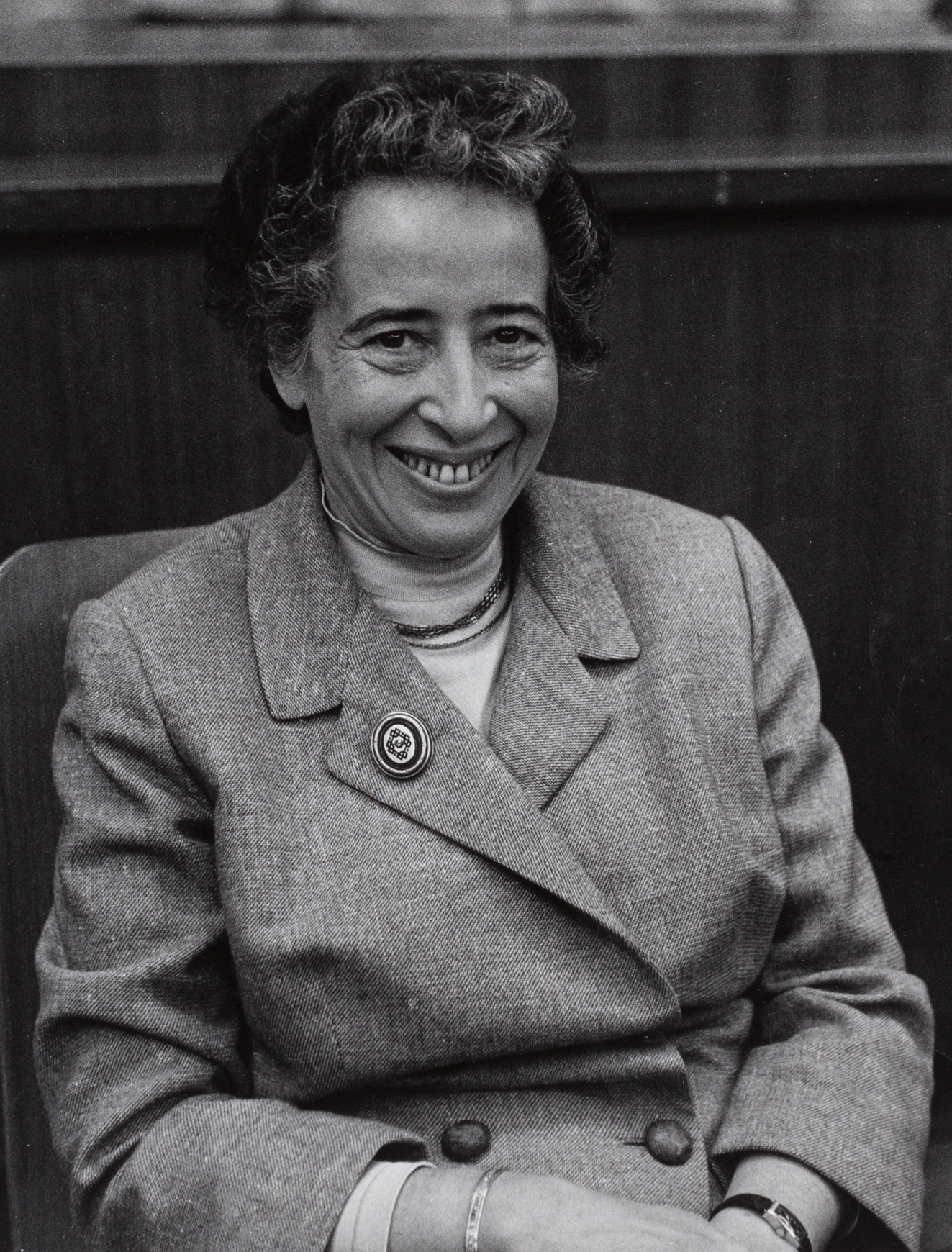
Hannah Arendt 1958 CC BY-SA 4.0; Münchner Stadtmuseum, Archiv Barbara Niggl Radloff
Immediately after the end of the war in 1945, Hannah Arendt wrote a text entitled Organized Guilt. It was one of the first attempts to politically and conceptually grasp what could no longer be denied: the “administrative mass murder” of millions of people and the systematic and industrially operated attempt to destroy European Jewry. As Arendt wrote, this did not require “thousands of selected murderers” because “total mobilization” implied everyone and thus resulted in the “total complicity of the German people.”
Arendt did not write as a historian or impartial witness, but as a political thinker. As someone who looks – and judges. “To live truly is to realize this present,” she noted a few years later. She asked how it had been possible for so many to participate and so few to object – and why, after unconditional surrender, so many simply wanted to forget.
Her thesis: under Nazi rule, guilt was not covered up or suppressed, but organized. It was divided up, depersonalized, morally gutted—in order to destroy responsibility. The line separating the guilty from the innocent, Arendt writes, was blurred so effectively that it became almost impossible to distinguish between those who committed the crimes and those who opposed the killings. It is not the individual who bears the burden of injustice, but everyone—and thus no one.
“Everyone just did their duty,” said the perpetrators—without cynicism, without remorse. The real achievement of totalitarianism lay in the production of fellow perpetrators. They know and feel no responsibility and perceive themselves merely as part of an apparatus, an order. Arendt quotes a camp accountant: “Did you personally help kill people? Not at all. I was just the camp’s paymaster. What did you think about what was happening? At first it was bad, but we got used to it.”
When guilt becomes a function, thinking becomes a disturbance. That is precisely Arendt’s point. Conscience was not eliminated, it was reshaped. Language was not destroyed, but recoded. Words such as “Final Solution,” “evacuation,” and “resettlement” served not to deceive, but to exonerate. It was possible to participate in the conversation—without knowing. Or rather, without wanting to know.
This diagnosis points to the essence of the modern state and its bureaucracy, which integrates every action into a system in such a way that no one needs to say, “I am responsible.” That was Arendt’s early warning—and it is more relevant today than it has been in a long time. Today, we find ourselves in a situation in which we are no longer just witnesses, but accomplices, participants in the blurring of the boundaries of violence and the obfuscation of responsibility.
It is not only since October 7, 2023, that we have been caught up in a dynamic that eludes any moral language—and at the same time is legitimized by language. International law guarantees the right to self-defense—for Israel as well as for the people of Palestine. It obliges states and armed groups to protect the lives of civilians. The Hamas attack on civilians, which has not yet been fully investigated, and the abduction of hostages to Gaza were crimes against humanity and must be punished as such. However, the fact that the shock and threat to Israeli society – and to Jewish communities worldwide – has been taken as a blank check to respond with further escalation of violence is driving the dynamic into the abyss.
In Gaza, it can no longer be denied that systematic efforts are being made to destroy the Palestinian people’s right to life, both as a whole and in parts, through the complete destruction of all infrastructure, the starvation of the population, the mass killing of civilians, and the destruction of their natural resources. A besieged death zone—without refuge, without escape, without a future. An ever-growing number of genocide researchers and international law experts have concluded that the criteria for genocide have been met.
And the language? It works perfectly. It speaks of “precise strikes” or “surgical operations” where civilians are dying in their thousands. Every child killed is potentially a “human shield” or a terrorist in the making. It repeats like a mantra: “Israel has the right to defend itself” – and allows us to sidestep the question of how far this right extends, what it outweighs, where it ends. It asserts: “We are doing what is necessary,” and makes us forget that we are the ones who continue to supply weapons.
Once again, responsibility is being organized so that no one is responsible. The US supplies weapons, resources, infrastructure, and propaganda support, and during Joe Biden’s presidency, it sometimes declared that it had “red lines,” but these could be crossed without consequence. The UN warns, counts, documents—but its resolutions fall on deaf ears. The EU struggles to find the right words and is divided. The German government also supplies weapons, stands in solidarity with the Israeli government even where civilian life is systematically devalued and destroyed, and only expresses “criticism” when international isolation threatens—criticism that remains largely without consequence.
Responsibility is not openly denied—it is distributed, blurred, relinquished: through participation, through language, through silence. Structural violence—decades of occupation, blockade, the systematic destruction of infrastructure and resources long before October 7—gets ignored. Instead, a rhetoric of necessity and moral self-assurance dominates.
Arendt knew that anyone who wants to defend political thought must defend language. Not as ornament, but as a place of judgment. She showed how dangerous it is when terms lose their moral core—and how necessary it is to maintain distinctions: between perpetrator and victim, attack and defense, proportionality and the will to destroy.
Today, we are experiencing a linguistic regression: criticism is dismissed as mere worldview, and naming violence is considered a threat. Anyone who draws attention to the injustice against the Palestinians is suspected of anti-Semitism. Those who insist on injustice are supposedly endangering security. This reversal narrows the scope of what can be said—until defending the world in Arendt’s sense becomes impossible. For what does not appear cannot become the object of collective action. Where the sayable dwindles, the real is redefined—in the language of war, reality is not described, but made. Terms such as “human shields” ultimately place the blame on the victims. Those who describe a complete siege as “self-defense” shift the blame to where the dead were buried.
This language is functional. It creates distance, moral relief, approval. In press releases, government statements, and social media, it becomes ammunition: “terror infrastructure,” “safe zones,” “precise operations.” Each of these words stands between us and reality and prevents us from realizing it, as Arendt demanded.
And this is where history and the present intersect: Arendt’s text was written when the images from the camps were still fresh and Auschwitz was not an abstraction but an immediate reality. She wrote against collective blindness, against the willingness to move on to the agenda of the day. Not in the name of the past, but in the name of a future that was to be different. Today, historical guilt is frozen, without leading to any present political responsibility. Auschwitz has become moral property. The descendants of perpetrators now act as guardians of memory—and derive from this a responsibility that relates solely to Jewish life, not to the Palestinian life under bombs. This is not a lesson from history—it is its instrumentalization.
Arendt rejected any sacred inaccessibility of history. Memory that does not lead to judgment and action becomes a moral pose: “Never again.” Arendt would have asked critically: Never again what? Only Auschwitz? Or any dehumanization, expulsion, deprivation of rights? She argued for a plural and differentiated conception of responsibility—not exclusive, but inclusive: Those who learn from Auschwitz cannot legitimize disenfranchisement anywhere. Auschwitz must remain a radical ethical warning: Every form of dehumanization must be named, even if it originates from a state to which Germany has a historical obligation. Especially then.
Arendt distinguished between guilt and responsibility. Guilt concerns perpetrators. Responsibility concerns everyone who is part of a political order and obliges them to think critically, to differentiate, and to exercise judgment. It does not arise from identity, but from being part of the world. Those who live in a political order bear shared responsibility—not because they are all perpetrators, but because they are all members of that order.
Arendt would not have asked for solutions, but for spaces for action in which responsibility is shared, violence is named, and alternatives become audible. Such spaces exist on both sides, Israeli and Palestinian, and in the best case also connect both sides. But their existence is also threatened. In 2021, Israel banned six Palestinian human rights NGOs, including Al Haq in Ramallah, an organization that has documented human rights violations in the occupied territories for many years – committed by both Israel and Palestinians. The language of “security” and “counterterrorism” has been and continues to be used to justify the ban on these NGOs. This language has long been extended to Israeli NGOs that advocate for the rights of Palestinians. Breaking the Silence and B’Tselem were accused of being “traitors” as early as 2016. A new Israeli tax law seeks to impose an 80 percent penalty tax on foreign (Western!) donations to Israeli NGOs. In April, the Israeli police banned the organization Standing Together from showing pictures of Palestinian children killed in a demonstration. And in January, the former German federal government revoked the foreign policy clearance and eligibility for funding of the peace activist organizations Zochrot and New Profile in the middle of their ongoing project period.
None of this serves Israel’s security – quite the contrary – but it suppresses opposition to human rights violations. The language that obscures those weakens our judgment. Being able to judge is perhaps the most important political virtue, wrote Arendt. It is not loyalty that protects democracy, but the ability to distinguish. Those who want to learn from history must not be content with remembrance. Now is the time to act. To speak anew. To speak clearly. Because reality must not be defused by euphemisms. Arendt knew this. Those who speak of Gaza today should take her at her word.
Syria, a few months after the fall of the Assad dictatorship: well over 100,000 victims of regime kidnappings are still missing and new mass graves are discovered almost every day. Most of them tortured to death; at least the relatives of the disappeared must assume this. Tens of thousands of those involved in the torture and murder, enabling the “politicide”, are still at large. For “transitional justice” – be it court cases or truth tribunals – resources, strength, structures remain unavailable for the foreseeable future. Most of the population, oppressed and plundered by Assad for decades, lives in indescribable poverty. The West maintains its sanctions, and no one protests against Israel’s invasions and bombings in violation of international law. Assad supporters who have lost their privileges repeatedly carry out attacks on the new regime’s security forces. The new regime is unable or unwilling to prevent its own people and rival gangs from exacting revenge on the communities from which Assad’s supporters mainly come. And even if new massacres are stopped, a new genocide is looming on the horizon, this time against the Alawites.
Germany has offered refuge to over a million people from Syria, but Germans have no idea about the political situation in the country. They are quick to settle for the most convenient explanation: Syria being a multi-ethnic state in a civil war that is sometimes latent and sometimes open. After all, the Assad regime has allegedly long offered minorities a certain degree of protection, but now the Sunni majority is threatening Alawites, Christians and Druze in an “unprecedented Islamization”. This explanation fits with the justifications for Germany’s failed Syria policy, which as early as 2013 refused to take a stand against the murderous regime, pointing to “jihadists, terrorists and extremists in Syria” and how they are endangering “Alawites and Christians”.
But Syrian intellectuals and students who supported the democratic resistance against the Assad regime in 2011/12 and fled to Europe after 2013 tell a different, more complicated story; a story in which Europe and the USA have always been entangled. They speak of “sectarianism” and see the causes of it not, or at least not primarily, in the claim to dominance of Sunni Islam, but in the techniques of domination that the Assad regime has perfected over more than 50 years. These can be read in detail in a black book of Assad‘s regime, published in French in 2022.
These techniques of rule, based on division and repression, and the simultaneous instrumentalization of identities, were accompanied by systematic, inventive torture as a ubiquitous possibility. Since the early 1970s, torture had gradually taken hold of Syrian society in “Suriya al-Assad”, the totalitarian police state identified with Assad, and since the beginning of the revolution in 2011, it could affect anyone, including women and children. The embodied knowledge of torture and its omnipresent possibility, in the Assadian form, came to Germany with the mass exodus from Syria starting in 2013. When I had my first encounters with Syrian refugees in 2015, what most profoundly changed my view of the world – including my world in Germany and Europe – was the confrontation with the omnipresence of the possibility of torture in their stories and in their bodies. Syrian students told me nightmares that I will never forget. Film producer Orwa Nyrabia showed the documentary Silvered Water.Syria Self-Portrait, which uses countless cell phone recordings not only of bombings and war scenes, but also of prison torture, to create a work of art; at great personal risk to herself, Syrian-Kurdish documentary filmmaker Wiam Simav Bedirxan and the director of the film, Ossama Mohamed, who fled to Paris. Later, I read Mustafa Khalifa’s autobiographical novel The Shell House.
An outstanding witness and thinker of this state terror is the political author and journalist Yassin Al-Haj Saleh. In 2023, Matthes & Seitz published a German translation of his book about torture in Syria and its representation at a time when the Assad dictatorship, which called itself “eternal”, seemed to be more firmly in the saddle than ever. But the fact that Assad is now a thing of the past does not make the book any less relevant. The texts compiled into a unified work in the book had initially appeared in Arabic in different contexts. They show connections between torture, confessionalism and Salafism that are still in effect and also point to the so-called West. Yassin Al-Haj Saleh was himself tortured during his 16 years in prison (between 1980 and 1996, under the rule of Assad’s father), convicted of being a member of a communist party. The torture he was subjected to was not so severe as to cause irreversible damage; he was able to overcome it. But he witnessed the most terrible and horrific torture used to break the supporters of the Muslim Brotherhood: torture from which no one can return to life.
The book offers nothing less than a political anthropology of torture. Saleh differentiates between torture that does not preclude survival and torture that inevitably results in death; death under torture and death by torture; torture committed against individuals and torture that affects a collective. The book is full of such distinctions, which allow for a systematic understanding of torture. Saleh probably developed the concepts and typologies during his detention and after his release in order to process his experiences from a political and social science perspective. He is a well-read autodidact who is not part of the academic community, but he is also not a journalist in the strict sense. His writing is not reporting or commenting, but always analytical, organizing, conceptual. He wants to encourage his readers to face the ubiquitous possibility of torture coolly and soberly and to understand it as an extreme manifestation of political violence that, through the collective implicit knowledge of it, sets in motion a cycle of destruction.
He distinguishes phenomenologically between three types of torture in terms of the boundaries they transgress and their intended effects: firstly, the classic investigative or interrogative torture, which transgresses the boundaries of the tortured in order to extort confessions or information. In this case, submission and betrayal help to end the torture. Secondly, there is humiliation and revenge torture, or deterrence torture, which is arbitrary and unpredictable, designed to teach an unforgettable lesson, aimed at society as a whole, to instill unconditional obedience and break any resistance. And thirdly, there is extermination torture, which not only crosses the boundaries of society, but also the boundaries of humanity, where there is no longer any room for discretion, and where an organized murder industry is required. For this kind of torture it is enough to be an offense that the tortured person even exists.
Saleh also differentiates between the various levels of torture: the level of the relationship between the torturer and the tortured, where the act of torture takes place; the level of the apparatus, the organisation required for the torture; the system level – torture as state and as economy; and finally the level of the world that allows the torture to happen, is aware of it and is destroyed by the torture. The intimate knowledge of how torture worked in Assad’s Syria and what it does is revealed in the book in numerous observations that vividly depict the horror of torture without ever going into gory details. Saleh describes the psychology of torture, where the fear of the tortured faces the hatred of the torturer. Both are dehumanized, with the torturer becoming God-like through his power over the body, while the tortured person becomes an object. In order for the torturer to stand firm in the torture relationship and to muster cold or hot hatred for the tortured person, he must accuse them of a crime, and that crime lies in deviating from the will of Assad. To deviate from the will of Assad, it is enough to be human. The torturer claims unconditional love for Assad, is totally identified with Assad and demands a submission that is never enough. Paradoxically, torture allevaites the guilt of the murderer; Saleh quotes Primo Levi: “Before the victim died, he had to be humiliated so that the murderer would not feel the weight of his guilt so much.”
The aim of destroying communities, making human lives dispensable, and destroying worldliness in general is a common feature of all genocidal regimes. Saleh describes Assad-Syria’s killing machines below an industrial level, a “manufacturing system”, not impersonal and systematic as under the Nazis, but carried out with devotion, creatively, requiring direct physical contact, combining routines and reinventions. While the Nazi death economy was capitalist and irrational, the Assad one, also highly bureaucratized, served the rentier economy of a family dictatorship, taken to its extreme consequence. Torture, including in the form of starvation and denial of access to essential goods, as well as in the form of aerial bombardment and the arbitrary infliction of pain through attacks directed against civilians, has a curious relationship with genocidal extermination. At first glance, extermination torture seems to be unnecessary, since the victims will die either way; its purpose is to make the community that is to be exterminated know that torture is worse than death. But it also recognizes that it is dealing with people who must first be dehumanized before they are killed. By contrast, torture was not a necessity for the Holocaust, even if it occurred frequently: “the Nazis felt no need to torture the Jews, since their racist theory asserted a priori that they knew the Jews’ malicious nature, thus excluding them from the outset from any equality and considering them ‘like lice’, so unequal and already dehumanized that they were not worth the trouble of torture, so to speak.”
Saleh also writes about the connection between torture and rape: Both give absolute power over the body. The torture of men in Syria was driven by the same chauvinism, took place in the same macho gender order as the rape of women, with an idea of masculinity that seeks to eliminate the male competitor through torture and to possess the woman without limits through rape. Rape is part of genocidal annihilation; it is intended to make the community incapable of reproduction, as a “deferred murder”. Saleh sees two variants of systematic rape in the IS and the Assad state: While in the IS, religiously veiled, one man owns and rapes many women, in the supposedly secular terrorist state many men assault one woman. (Whether these distinctions are always empirically tenable is another question; they must be understood as ideal types.) In any case, the gradual increase in the veiling of women in Syria since the 1970s is not only a concomitant of increasing Islamization, but also a reaction to the growing threat of rape in a state that practices torture.
Saleh sees the Syrian revolution in its early days as a struggle of the Syrians for the “dignity of their bodies”: to set limits to a state violence that was capable of violating the dignity of bodies in every way and then demonstrated precisely this in excess in its fight against the revolution.
The so-called West, North America and Europe, has largely stood idly by and watched the brutal suppression of the Syrian revolution. The “red lines” that Barack Obama drew in 2012 in the event of the use of chemical weapons were crossed in 2013 with the sarin attacks on Ghouta and with many other chemical attacks, without the US even setting up a no-fly zone over Syria. But the “West’s” role in creating and stabilizing the Assad regime goes far beyond merely standing by and watching war crimes. The destabilization of young democracies in the Middle East after the Second World War, came as a result of Western colonialist and imperialist power politics and wars. The Nakba, the successive mass refugee movements from Israel/Palestine, and the insistence on a confessionally bound Jewish state, which was allied with Western interests, undermined the legitimacy of the constitutional and democratic aspirations in the Arab countries. Since 1946, Syria had been a non-sectarian republic in both name and constitution. Sectarian affiliations and identities were denied and suppressed. It was precisely this alleged secularism that made Syria and its rulers acceptable in the West after the end of the Cold War. Since coming to power in 1970, the Assad family had filled the Syrian security apparatus and most important positions with loyal Alewites, systematically pitting the denominations against each other, fueling confessionalism and using it as a weapon. After the generational change from father to son Assad, it was precisely this form of “minority privilege” and the dual state that made the Assad regime under the London-trained Bashir al-Assad appear modern and potentially open to the West.
The “war on terror” since 9/11 gave the Assad regime’s fight against the Muslim Brotherhood and Islamists a real boost. Even though it was Iran and Russia that provided the military support without which the regime would not have been able to hold out in 2013 and without which it promptly collapsed in December 2024: The anti-Muslim racism produced in the West helped the regime to establish and maintain the murderous kleptocracy. For kleptocracies, ethnicity, affiliation and religion are only a tool to divide the population and curry favor with external powers; a pretext for suppressing any stirrings of freedom and plundering the subjugated population. The Assad regime has done this through extortion, hostage-taking and robbery on an unprecedented scale. The kleptocratic regime was able to present itself to the outside world as a protector of minorities, that were privileged and, for this reason above all, hated by the Sunni majority, as intended from the outset. The anti-Muslim overtones of the fight against terrorism and the omnipresent racism in the Western world provided Assad with international legitimacy or at least tolerance for his crimes: as a well-shaven and well-dressed mass-murdering Bashar al-Assad with his pretty, English-educated wife still seems more “civilized” than a bearded Islamist, who can be heard shouting Allahu Akbar even without TV sound.
Yassin Al-Haj Saleh calls this the “confessional-racist complex”: “the world of identities and origins” that forms the environment for genocide. The book makes clear that the Assad state was not just an exceptional case, but has a “structural equivalent” in international relations. International law itself shows its asymmetrical side here, finding arrangements with dictatorships on the periphery of the powers that uphold it. The Assad regime’s tortures can flourish anywhere. These tortures are only the last consequence of a “modern” attitude that ruthlessly and predatorily enforces its own interests, and uses racism to do so. They are ultimately a new version of the torment and torture of colonialism, while the remaining ties to any notions of justice dissolve. Islamism reacts to this development by “salafizing” itself and forging its own confessional-racist complex. The history of the Assad torture state can teach those of us who do not – or not yet – have to fear torture to no longer externalize torture as the problem of others, but to understand it as the signature of a dysfunctional modern (nation) state that has been taken hostage by an “elite”/gang of robbers.
The last text in the book, and perhaps the most interesting, is devoted to the problem of representing torture and communicating pain. Only representation can make pain collectively, and thus politically, processable. Saleh understands representation as a “combination of expression (the axis of experience and ideas) and formation (the axis of tradition)”. Formation, or composition, formal creation, is not possible without a tradition in which it can be inscribed. But tradition itself cannot provide the new forms of representation needed to express new experiences. The “representation of the terrible” is dependent on existing forms of political-social thought on the one hand, but on the other hand it must creatively develop them further. How can contemporary Arab political thought achieve this? Saleh sees the real problem of Islamism here: like every traditionalist ideology, it is certainly capable of formation and composition, but its expression, its subjectivity, is limited to conflict and negation. It cannot give meaning or expression to the experience of suffering, of being tortured, of trauma, because that would challenge the Islamist understanding of tradition. Ideology demands that everything suffered must only be expressed within the framework of tradition, it is not allowed to go beyond the scope of that framework. Saleh quotes the Moroccan philosophers Mohammed Abed Al-Jabri and Abdallah Laroui: In Arabic thought, there is a special mechanism that always measures the “hidden”, the “unsolved”, the “problem” – all those things that makes one suffer – against a “proof”. “In Islamic jurisprudence, the ‘proof’ is a topic on which a religious judgment already exists.” This thinking in analogies validates all experience only on the basis of an existing, authoritative text. If there is no suitable text for an experience to be processed, the experience becomes a deviation and must be abandoned and marginalized. A “refusal to represent”; and Laroui had assumed that it “originates from a historical trauma perceived as unbearable.” Laroui speculated about a historical disaster dating back to pre-Islamic times, a “disgrace and humiliation” associated with the emergence of the Sunna itself. In Old Arabic, the Sunna is the customs, practices and norms that are supposed to hold the scattered Arab tribes together. Islam has given them a religious dimension: the “Sunna” of the Prophet is the second source of Islamic law after the Qur’an.
Saleh sees, in line with Laroui, the history of the Arab world as full of failed representations. He also sees his own adherence to communism, from which he only broke away during his imprisonment, as a case of this failure. And today? “It seems that we are once again confronted with enormously hurtful events, which this time are again causing strong defensive effects with the purpose of self-protection.” The Sunna is breaking apart once again. The collective identity of Sunni Muslims is only held together by an extremely violent ideology that ignores reality. All the suppressed experiences and events of generations are released in the break-up, “they emerge as formless beasts, demons and monsters, which in turn are not contained by any Sunna.”
What would it take for political thought in Germany and Europe to turn to this chain of traumas and crises of representation in the Arab world, caused also by Western influence, with love, listening, and humanity? And to stop contributing to its continuation through our racism? Saleh describes – without ever resorting to easy psychology – the psychological situation of Islamism as a hopeless state of amorphousness, “a naked, extremely painful existence”. He refers to Hannah Arendt’s reflections on thinking: only through the inner dialogue of the thinking individual with themselves, the creative thought process, the beginning of representation, can the self discipline itself and develop a conscience. In Sufism, Islam has developed traditions for this. At the other end of the scale of possibilities offered by Islam between humanity and inhumanity is the “extreme case” of “homo islamicus, that Islamists strive to mass-produce: a robot that does not think and whose operating system is called Sharia,” and that only finds expression in killing. Another extreme case is the Auschwitz invention of the “Muselman” tortured to death, who wastes away in Assad prison and who, in complete self-abandonment, “has nothing human left.”
At one point, Saleh does make a cultural comparison: ”The Arab cultural heritage offers fewer options for representation than Western modernism with its multilingualism and wealth of forms (…).” The extent to which the “West” offers ways out of the crisis of representation and the extent to which it is responsible for the suffering and the crisis of representation was hotly debated among the tortured and imprisoned in Mustafa Khalifa’s autobiographical novel. The betrayal that Muslims and Arabs who fled to Germany and Europe from Syria and other Arab countries have to endure in the West is all the more bitter. It is one thing to see the Western plans for the real estate “riviera” in Gaza, the helpless and dishonest hand-wringing, the Western support for and participation in the genocide of the Palestinians, and the unchallenged toleration of the invasions and bombing raids in Syria. But equally bad is the threat to the possibilities of representing this horror itself. The possibilities for representation and processing are being increasingly curtailed by political interference in science, art and culture and the failure of the public. The “shame and disgrace” and the “trauma perceived as unbearable” at the root of the crises of representation in the Arab and Muslim world do have their counterparts with us in the Western world – and perhaps, if we are serious about the uniqueness of the Holocaust, they are even more shameful and disgraceful than anything that could ever have happened in pre-Islamic or Islamic Arabia. Assad is gone – but the horror remains. We can learn from Yassin Al-Haj Saleh how to face it and remain human, or become human.