Tag: France

  • Knowledge under general suspicion

    Knowledge under general suspicion

    Leyla Dakhli: Étudier les mondes arabes et musulmans, un métier à risque?, in: Le Club de Mediapart, 18 Novembre 2025, https://blogs.mediapart.fr/leyladakhli/blog/181125/etudier-les-mondes-arabes-et-musulmans-un-metier-risque.

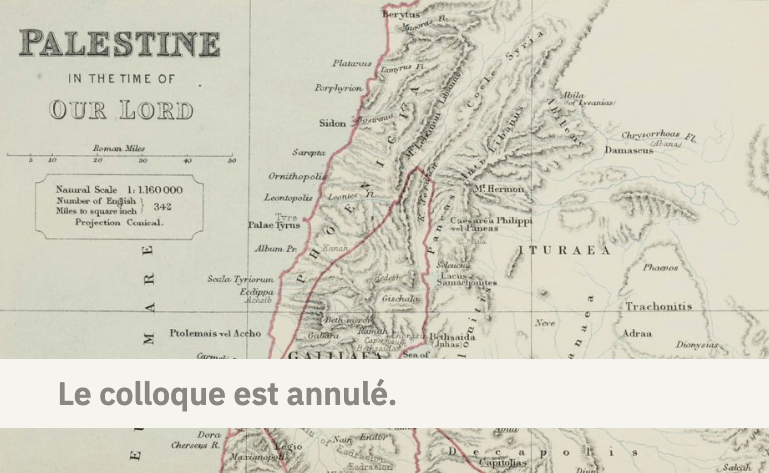
    The cancellation of the colloquium on Palestine and Europe, organized by the Chair of Contemporary History of the Arab World at the Collège de France and the Centre Arabe de Recherches et d’Études Politiques de Paris (CAREP) on November 13-14, is, we are told, a matter of academic freedom. That is true, but what does it mean in this specific case?

    Reducing this debate to a question of academic freedom causes me, and perhaps some of my colleagues, a certain amount of frustration. Because it allows us to sidestep another, more fundamental question, namely that of the limits within which it is possible at all to address the current situation and history of the contemporary Arab world. What is being discussed today in connection with the war against Gaza, the settlement of the West Bank and the Golan Heights, and the numerous attacks by the Israeli army on sovereign territories is nothing new.

    For us “specialists in the region,” dealing with the media is often an exercise in bewilderment, in the face of the self-assurance coupled with ignorance of our journalistic interlocutors—and I’m not even talking about our numerous academic colleagues who specialize in other topics and want to explain to us that we are concealing or exaggerating aspects of the region’s history just because they have read something about it somewhere. Far be it from me to be a know-it-all, but I note that the same journalists show more openness and curiosity when it comes to other regions of the world and other periods of history. It is as if the channel of communication between the production of verified, proven, and validated knowledge and the general knowledge available in society and public opinion has been disrupted; as if something has fundamentally gone awry in science communication.

    For us “experts on the region,” dealing with the media is often an exercise in bewilderment, given the self-assurance coupled with ignorance of our journalistic interlocutors—and I’m not even talking about our numerous academic colleagues who specialize in other topics and want to explain to us that we are concealing or exaggerating aspects of the region’s history just because they have read something about it somewhere. Far be it from me to be a know-it-all, but I note that the same journalists show more openness and curiosity when it comes to other regions of the world and other periods of history. It is as if the channel of communication between the production of verified, proven, and validated knowledge and the general knowledge available in society and public opinion has been disrupted; as if something has fundamentally gone awry in science communication.

    After all, it cannot be said that people do not talk and write about the Middle East. And perhaps that is why everyone thinks they know what is going on. Nor can it be said that there are not many specialists on the Arab world, including some of the highest caliber, for example in France. These specialists do indeed debate among themselves, and the debates reflect some of the tensions that are stirring up the world of research and French society. However, they are about establishing the truth; about methods and research questions. (Here, academic freedom is exercised in the strict sense, within the limits of scientific review and objection.) These scientific discussions also make it possible to reach agreement. In the academic sphere, the Israeli occupation and Israeli colonization are simply established facts and not a subject of polemic. Here, it is possible to discuss the connection between Zionism and European colonialism, or to use the term apartheid to describe how Jewish and non-Jewish societies are separated from each other in the spatial unity of Israel-occupied territories. Here, it is permissible to describe the armed wing of Hamas as armed resistance. Saying this does not mean denying the nihilistic violence of jihadist groups or putting everything on the same level. But it also allows for a comparison between situations of occupation and responses to occupation worldwide. Focusing on peaceful movements is one option, but the reality on the ground is different and confronts us with the fact that armed struggle has always been part of the history of resistance, in Palestine as elsewhere. In a discussion, one can highlight differences between the armed Ukrainian resistance fighters, the Kurdish resistance forces in Rojava, and the jihadist groups. But it is not honest to categorically reject any comparison between them, to banish terms such as “resistance” in the case of Hamas and reserve them only for experiences elsewhere. Yet this is one of the boundaries that is impossible to cross in public debate.

    So what happens to us, who are accused of wrongdoing simply because we reported on the state of research and the current scientific consensus? What are we supposed to understand? That every word we say is now to be the subject of a court case?

    Observing what has been happening for months and years, it seems to me that a few lessons can be learned from the many controversies:

    First, we are told that not everyone is entitled to participate in the production of this scientific consensus discourse. The same analysis produced by a Palestinian or Arab researcher from the region will often go unheard until it has been validated by a European or Israeli researcher. This was the case with the investigations into the massacres of 1948, which were documented and described by Palestinian historians and witnesses, but only became acceptable thanks to the work of so-called revisionist Israeli historians. This also applied, of course, to the use of the term “genocide” to describe the massacres in Gaza, first denounced by Palestinian witnesses and journalists, then by international NGOs, and finally by Israeli figures and Western specialists in genocide studies. Why are Palestinians not considered worthy of determining and naming what is happening to them? Would this situation be understandable if a European society were affected by the crimes?

    Then we are told, and perhaps this is where the academic question is most central, that the truth does not really matter. What matters is balance. A somewhat strange notion, when you think about it. In fact, whenever we describe and explain what we have studied about a sociological or historical reality, we should always consult someone who holds the opposite view. This is something I experienced regularly myself when I occasionally spoke in the media about Syria in the 2010s. When I explained how power or the Syrian society work based on the available research, I was contradicted by pseudo-experts who spouted nonsense about “confessionalism” and “radicalization” and who knows what else, all in the name of balance and confrontation of viewpoints. And, of course, without any distance, without attributing this view of society to what it was, namely the regime’s propaganda. When I hear today how cautiously my colleagues are questioned on the subject of Ukraine and Russia, even if nothing is perfect, I can gauge the distance.

    So is it really academic freedom that is at stake here when the scientific nature of a colloquium at the Collège de France is called into question? Or is it rather the recognizable ultimate, undisguised (and thankfully scandalized) contempt with which scientific work produced in this cultural area is viewed? This work is certainly not all perfect, but it is based on knowledge, on skills that have often been painstakingly acquired, on familiarity with often difficult and demanding fields to which the researchers sometimes also have a personal, emotional connection. And this is the final point that I draw from observing the controversies: For researchers working on the Arab world, having strong ties to their “field of research” arouses suspicion. Yet it is this familiarity that constitutes one of the riches on which French and European research can draw. Empathy is a necessary quality for good research, as much as criticism, reading sources in their original language, and deduction. These different qualities, which are in tension with each other in the pursuit of scientific truth, are precisely those that ensure the only meaningful balance. Once again there are numerous examples from other fields that underscore the importance of proximity to the field of research. Would we be surprised if a French researcher specializing in Germany (or vice versa) spent extended periods of time there, established collaborations and friendships, and sometimes even made their lives there?

    If research as a whole is threatened today by all kinds of relativism and attacks on truth, when it comes to scientific production on the Arab world, these attacks are exacerbated by the suspicion of “collaboration” with an internally constructed enemy, of which we are supposedly the fifth column. The name of this enemy varies: Islam, “Muslim Brotherhood,” new anti-Semitism, wokism… Or a combination of all of these, which literally tramples on our work, the establishment of facts and investigation of mechanisms, and casts suspicion on the very foundation of our libido sciendi, i.e., our desire to understand these societies, to describe them and make them familiar, with all their complexities and contradictions.
  • How the recognition of Palestine is being debated in France

    How the recognition of Palestine is being debated in France

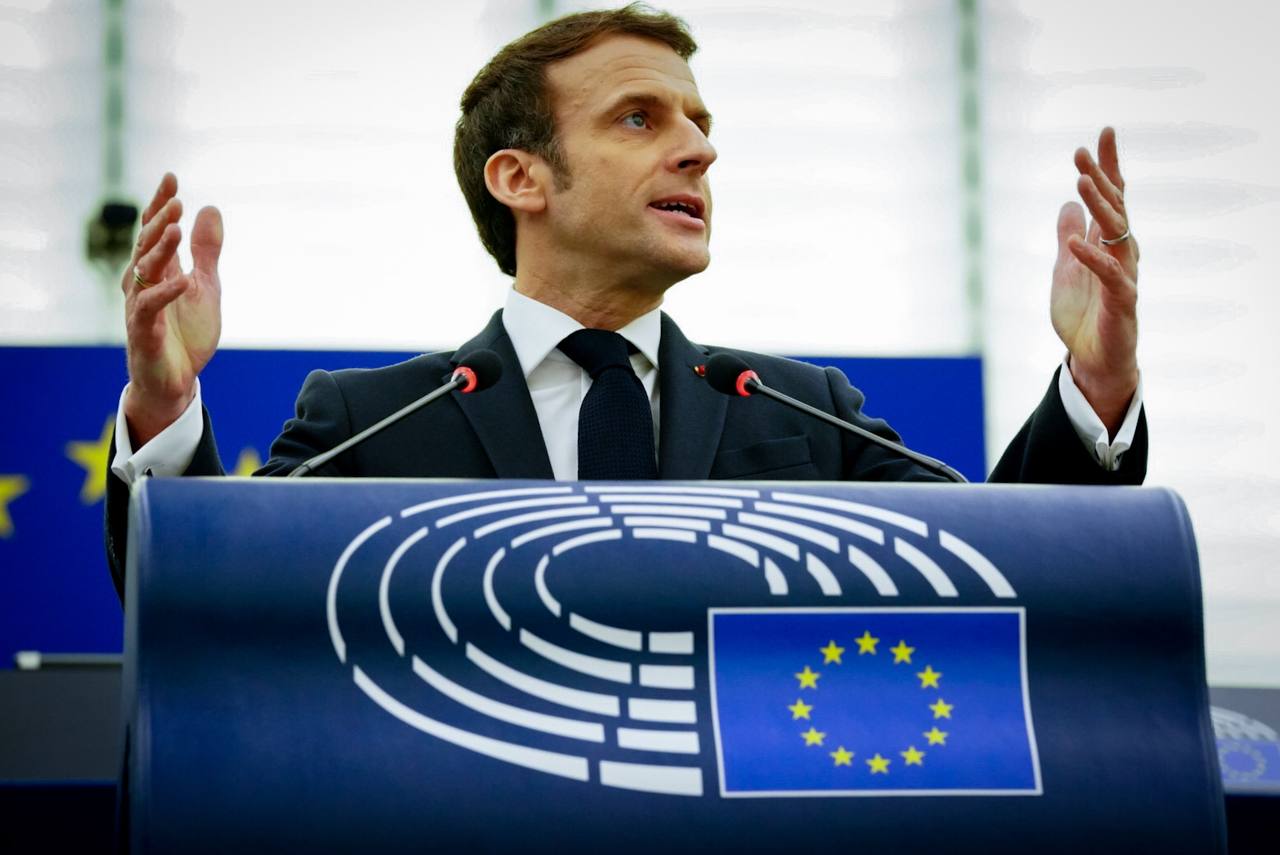
    The wave of recognition of Palestine by Western states, in which Germany did not participate, owes itself to France’s initiative. President Macron is isolated domestically, has failed in many respects and is unpopular, but his foreign policy shows diplomatic leadership. That has also contributed to the discourse in France once again being broader and more open than in Germany. In France, it is already possible to criticize something that has not yet been achieved in Germany. A group of lawyers and professors, most prominently Rafaëlle Maison, professor of international law at the University of Paris-Saclay, is concerned with the potentially negative consequences that threaten to arise from the purely symbolic recognition of a de facto non-existent state—the state’s territory is eroded by Israeli settlements, its authority is undermined, and its people are exposed to genocide. Rafaëlle Maison published an article on September 11 spelling out the pitfalls of recognition, and gave an interview to the Le Média platform on September 13 to shed light on the “shadow zones” of Macron’s plan. Any policy of recognition should be measured by whether it serves or harms the right of peoples to self-determination, which is fundamental to international law.

    In the interview, Maison quotes from the letter Macron wrote to Netanyahu on August 25, 2025. Macron justifies his decision : “Our determination to ensure that the Palestinian people have a state is rooted in our conviction that lasting peace is essential for the security of the State of Israel.” The Palestinians’ right to self-determination is not mentioned in the letter. The horse is being put before the cart: the rights of the Palestinians are understood only as a function of the security of an ethnically and nationally defined Israel; not as an end in itself, but as a means to an end. Diplomatic restraint towards Netanyahu alone cannot explain this. In his speech to the UN General Assembly on September 22, Macron explicitly acknowledged, unlike in the letter, the “legitimate rights of the Palestinian people” and spoke of “a people who draw strength from their history, their roots and their dignity.” And yet, here too, he cited French loyalty to Israel as the main reason for recognition: “Precisely because we are convinced that this recognition is the only solution that can bring peace to Israel.”

    Macron’s speech suggests that recognition should lead to an end to genocide aka war. But if the rights of Palestinians are always viewed as merely instrumental, then there can be no lasting peace. Maison exposes Macron’s recognition and his commitment against violence as lip service. The “normalization” he desires for Israel, which continues to violate (mandatory) international law, is to be imposed violently, with or without a Palestinian state. This is already evident in the first half of the letter, where Macron refers at length to France’s official acceptance of the IHRA definition of antisemitism. The adoption of the IHRA definition, “which condemns anti-Zionism as a form of anti-Semitism,” was one of his first official acts in 2017 and forms the basis for his policy of recognition. Macron’s interpretation of the IHRA definition, equating any opposition, however legitimate, to an exclusionary and ethnically defined state with hostility toward Jews as Jews, must automatically declare all Palestinians who have been expatriated and expropriated by Israel, and who naturally have a problem with this statehood, to be enemies of the Jews (not to mention that this equation itself is anti-Semitic). Macron’s letter to Netanyahu shows that the violent instrumentalization of the fight against anti-Semitism and the blanket defamation and exclusion of Palestinians as anti-Semites is far more than just a side effect or collateral damage of the current policy of recognition; it is inherent to it.

    But Rafaëlle Maison is interested in recognition primarily from the perspective of international law. She analyzes the “New York Declaration” of July 29, initiated by France and Saudi Arabia and also signed by Germany, as well as the “New York Call” issued on the same day by the foreign ministers of 15 Western states (Germany was not among them) as a reaction and a kind of diversionary tactic to distract attention from the opinion of the International Court of Justice “on the legal consequences of Israel’s occupation policy.” Exactly one year earlier, the ICJ had ruled that Israel’s occupation of the Palestinian territories was illegal, that Israel must withdraw from the territories and pay reparations. On September 18, 2024, the UN General Assembly then adopted Resolution ES-10/24 by a large majority (with Germany abstaining), which stipulates a halt to arms deliveries if they are used in the occupied territories and calls for a boycott of goods from Israeli settlements. Instead of following the ICJ opinion (which everyone, including the German Foreign Office, claims to respect), France and Saudi Arabia convened the UN conference on the recognition issue for July 2025.

    Rafaëlle Maison sees the results as “potentially in violation of international law as outlined by the ICJ in 2024.” The Palestinian state should, in the unlikely future that it is actually allowed to materialise, only exist under certain conditions: under the conditions that Hamas surrenders its weapons to the Israeli-controlled Palestinian Authority, which would effectively mean demilitarization (para. 11 of the declaration), the respect of anyone standing for election for the “international obligations” of the PLO (para. 22), the exclusion of Hamas, and the pursuit of a liberal reform agenda. On the latter, Maison writes: “These recipes sound a lot like a free-market program, compromising the sovereign choices of the state-to-be and requiring—incongruously in appearance, but in reality quite significantly—control over freedom of expression.” Lip service is paid to the right of return guaranteed under international law, but in fact they envision a “just solution” to the refugee problem through a “regional and international framework” (para. 39). And the future state would have to work on security arrangements that were “beneficial to all parties” (para. 20) – which, given the unequal power relations, could only mean that Israel would once again assume police and military power and authority in the weak state structure. The outcome would be a state without sovereignty, an “entity under control.”

    According to Maison, the “New York Call” in particular makes it clear what is really at stake: normalizing relations between all states and Israel despite the ongoing crimes – and not, as the ICJ actually prescribes, finally responding to these crimes with consequences. Thus, conditional recognition while the genocide continues is “indeed the latest stage in the ‘war against Palestine,’ as chronicled by historian Rashid Khalidi.”

    In fact, the situation will not be pacified, no matter what “solution” the international community finds to show Israel the “red lines” so that it abandons its annexation plans and finally ends the genocide; certainly not under a transitional governor Tony Blair in Gaza. Nevertheless, voices have been raised in France in recent days arguing that we should not stop at Rafaëlle Maison’s despairing analysis, but make the best of the new situation. The ongoing genocide, the daily mass deaths, killings, and murders must end immediately, and recognition facilitates the willingness to intervene. On Médiapart, Ilyes Ramdani credits the French initiative with at least putting enormous pressure on the US; the “Riviera” plans seem to be finally buried.

    On September 24, Ardi Imseis, professor of international law at Queen’s University in Canada, spoke to French MPs at the initiative of lawyer and member of the French National Assembly Gabrielle Cathala, and gave a lecture at the Sorbonne the following day. He advocates a “realistic,” “pessimistic” stance, insisting that both the legal fact of recognition and the fact of continuing legal obligations established by the ICJ opinion can be used to make demands on governments. It is a bitter reality, he says, that almost all countries in the world do not care about the survival and right to self-determination of the Palestinian people. The Palestinians themselves have no resources to defend themselves against the occupation. But when it comes to statehood, Imseis sees the glass as half full, where others see it as half empty. Almost independently of the situation on the ground, international law has also created its own reality over the years and decades. “It is clear that today, the State of Palestine already exists as a matter of both state practice and law, with or without recognition by France and other Western states.” Palestine was already recognized by 160 states before France’s initiative, was admitted to UNESCO as a full member in 2011, and can be a party to multilateral treaties. Precisely because attaching conditions to recognition conflicts with international law, it is possible to fight against these conditions. Recognition would make it easier to put pressure on states to correct their relationship with Israel and to respond to the occupation, apartheid, and war crimes with sanctions. In his analysis of the New York Declaration, Imsais thus comes to a very different conclusion than Maison: The Western governments that have recognized Israel are well aware that states are sovereign and that it is not possible to impose conditions on statehood; accordingly, their statements are formulated in a soft and ultimately non-binding manner. “Sovereignty is a curious thing. But as France so intimately knows (…), states have the perfect right to do whatever is not prohibited by international law.”

    Maison concluded her text with the fear that governments would use the UN General Assembly “under cover of the recognition of a Palestinian pseudo-state” to further undermine international law by disregarding the ICJ opinion, and that international law as a whole would be buried here. Imrais’ realism, on the other hand, sees “the contingency and disenfranchisement of the Palestinian Arabs” as enshrined in UN law itself, together with the “so-called two-state framework” of the 1947 partition plan. In the absence of other resources, the Palestinians could and must now work with this law.

    On Monday (September 29, 2025), Ardi Imseis and Rafaëlle Maison will talk to each other in the Jean Jaurès amphitheater in Paris. In Germany, one should listen carefully. Admittedly, the discourse has shifted in Germany as well, with the federal government distancing itself significantly from Netanyahu’s government. It is now even almost possible to say “genocide” without being slandered as anti-Semitic. But the totalitarian “Staatsräson” and the media’s windmill battles in its shadow still obscure the actual lines of conflict. The fruitless pros and cons of German provenance basically revolve around whether Israel should be allowed to do as it pleases or whether it should be forced to do what is best for it; whether the failure of Oslo gives Israel carte blanche or whether Israel must be brought back on the path of Oslo toward “peaceful coexistence.” And whether Germany is isolating itself internationally or whether the world “understands” Germany’s Sonderweg. What is still hardly debatable is the question of recognition in light of the failure of Oslo, from the perspective of what is right and just. In retrospect, Oslo was a serious mistake—a policy of appeasement that ignored all the important issues, shirked international legal obligations, and, in the long term, shifted the balance of power increasingly to the detriment of the Palestinians. This applies to the settlements, it applies to apartheid, it applies to the right of displaced Palestinians to return and to compensation for stolen property.

    Germany has decided against recognizing Palestine and, as always, will try to compensate for its lack of responsibility with financial payments. But it is also paying another price: that of ignorance, in Arendt’s sense. In the end, there might even be a case for saying that international law itself, through the partition plan, makes lasting peace impossible. But this discussion is also more likely to take place in France than in Germany.