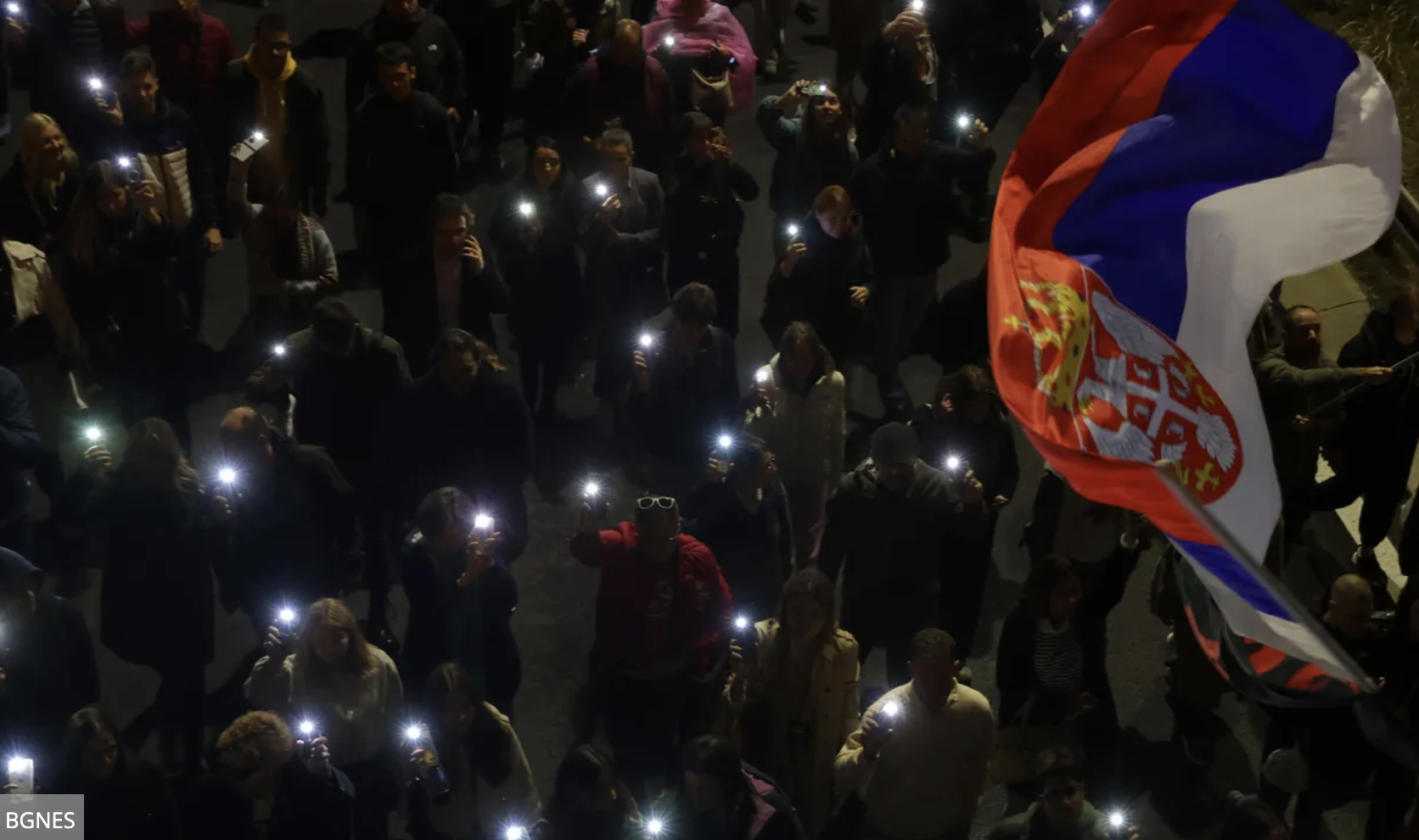
Student protest at the anniversary of the tragedy of Novi Sad.
More than a year has passed since the Serbian 2024 student uprising, sparked by the collapse of the canopy in Novi Sad that killed 16 people. What began as a call to hold those responsible accountable for the tragedy evolved into a broader social struggle against corruption, criminality, and the ruling regime’s authoritarianism. Universities—alongside secondary schools—became key hubs of resistance, with blockades backed not only by faculty but by society at large. Over the past year, the regime has used a range of tactics to not only crack down on protest but to intimidate and suppress both students and professors and deans who supported them. Those who resisted—or even expressed solidarity—risked repercussions.
In April 2025, the government of Serbia adopted a regulation that punished academic staff who had joined the blockades and suspended their teaching. The regulation changed the previous distribution of working time—20 hours per week allocated to research and 20 hours to teaching—by reducing research time to five hours. On that basis, the government was able to penalise faculty by cutting their pay to 12.5% of the full salary.
However, after classes resumed, the government went further, using financial threats to weaken university autonomy altogether. Unlike last year’s punishments, a special system of financial oversight enables the government to exert pressure on faculties in a far more subtle way. In an interview for KriSol, Professor Biljana Stojkovic describes the latest measure introduced by the government: “What has now been implemented, more broadly and systematically, is a mechanism called SPIRI, under which funds held by faculties and universities are no longer treated as ours: they are transferred to a centralized account, and decisions on spending are made by the Ministry of Finance. This applies as well to international projects and research funding. In that sense, we have lost our autonomy. It discourages anyone from pursuing research in the context of international cooperation. The specific problem is not so much the technical question of how the system will operate or how long it will take to release funds to faculties and different accounts. The most important point is that this effectively creates a kind of ‘kill switch’ for the entire university system. If we are not ‘good,’ the regime can now very easily suspend all payments, because the Ministry of Finance directly controls our finances. And without money for the university to function at all, there can be no independence.”
In addition to financial pressure, the regime has moved to target teaching staff more directly: a large number of secondary-school teachers were not offered contract renewals, and some sources report that around 100 people were dismissed in September last year. The most prominent case is that of the University of Novi Pazar, where about 30 staff members did not have their contracts renewed, and where some students reportedly lost their student status.
On this, professor Stojkovic says: “We also fear that this will open the door to a systematic way of dismissing ‘undesirable’ professors. Up to now, what we have seen is that for each individual, they have had to devise a specific method to remove them. In the cases of Jelena Kleut and two professors at the Faculty of Medicine, for example, they waited for the reappointment/re-election process and then simply did not re-elect them—that is one method. And we will see how that unfolds, unless they decide to amend the law, so that they can dismiss anyone they want. In terms of legislation—legal solutions—they are working on that intensively. Until they finalise it, they target people individually. Those in the most precarious position are those who are not full professors, because full professors no longer go through reappointments, so it is harder to find a way to dismiss them. But associate professors, assistant professors, and teaching assistants who stood with the students are at risk, because they are waiting for the moment when these staff members are due for a new appointment or reappointment.”
Financial pressure, coupled with the risk of dismissal through the manipulation of appointment and reappointment procedures, has deepened fears and made continued resistance feel increasingly costly. Despite impressive and strong mass protests and university blockades, the climate of fear has not eased but steadily intensified. Alongside institutional and legal measures, the regime also relies on tabloids and mainstream media to expose and target professors who speak out publicly and support the students. Last year, Professor Biljana Stojković was among those singled out in this way.
We also interviewed Natalija Stojmenović, an MP from the Green-Left Front. She notes that such attacks on the university are not new and describes the pattern as follows: “These attacks begin with staffing infiltration, then move on to materially worsening the position of both school and university workers, and ultimately to hollowing out the very purpose of education itself. For years, the authorities have worked to control student parliaments, to place their people on faculty councils and at the Rectorate. Then, during the blockades, they kept university staff without pay for months, and afterwards tried to undermine the entire system through a regulation that changed the way teaching and research are assessed. This is a trend in Serbia, and I believe we can also see traces of this trend in other countries. We are witnessing a wave of authoritarian tendencies that, I would say, is putting even the minimum requirements of democracy to the test. I would like to believe that this wave is trying to redefine the conditions and processes we associate with democracy, but there is also a real danger that the rise of authoritarianism is attempting to dismantle education and reduce it to a market function rather than an educational one.”
Asked how the student uprising expanded into a broader push for political change, Stojmenović says: “In terms of mobilised citizens, I would say that a crucial generational mobilisation has taken place thanks to the student movement. I wouldn’t highlight only the past year, because I think some processes need to be viewed over the longer term. Over the past five years in Serbia, citizen mobilisation around key issues has been steadily increasing—from the protests over lithium, to the ‘Serbia Against Violence’ protests, and then over the past year. This shows that the government can no longer control the consequences of a system built on corruption, and, on the other hand, that the number of citizens who believe the authorities are acting in Serbia’s interest is shrinking. The canopy collapse laid this bare, because it tragically showed that the consequences of their actions can cost any one of us our life. Still, the student movement’s greatest contribution has undoubtedly been the mobilisation and organisation it brought. ”
Although the regime appears to be entering one of its most repressive phases, these dynamics also seem to be pulling different social groups and political parties toward a common front of resistance. Whether this will translate into a unified opposition—and whether the regime can withstand it—remains to be seen. What is clear, however, is that the university has become a key site of collective mobilisation and democratic struggle, and that the defence of university autonomy has emerged as a baseline point of agreement across ideological and political divides.
Since last year, UN member states have been negotiating the UN tax convention between Nairobi and New York. In view of the growing challenges posed by an increasingly dehumanizing, extractive global capitalism that exploits and oppresses the vast majority of people for the benefit of the few, this seems to be a step in the right direction. After all, tax justice is about nothing less than fundamental systemic issues of global social justice, climate justice, and equality.
In November 2024, the United Nations General Assembly voted overwhelmingly to adopt the resolution Promotion of inclusive and effective international tax cooperation (A/RES/79/235) and thus to fundamentally overhaul the current international tax system. This decision was based on an initiative by the so-called Africa Group. With its Terms of Reference (ToR), the resolution sets the framework for negotiations on the UN Tax Convention, or more precisely, the United Nations Framework Convention on International Tax Cooperation (UNTC), which is intended to serve as the basis for a new system of global taxation and international cooperation in this area, integrated into the structures of the UN. A key innovation is that principles 9(c), (d), and (f) of the ToR establish a functional relationship between taxes and human rights, as well as taxation for the purpose of sustainable development. It states:
Efforts to achieve the objectives of the framework convention should therefore:
(…)
(c) Be aligned, in the pursuit of international tax cooperation, with States’
obligations under international human rights law;
(d) Take a holistic, sustainable development perspective that covers in a
balanced and integrated manner economic, social and environmental policy aspects;
(f) Contribute to achieving sustainable development by ensuring fairness in
allocation of taxing rights under the international tax system
The UN tax convention thus calls into question the current OECD regime, which has long been (rightly) criticized by various parties. It addresses issues of international cooperation, fair taxation of economic activities, profits, aassets of both private individuals (especially high net worth individuals, HNWIs) and companies (especially multinational enterprises, MNEs), and the fight against tax abuses, i.e., tax avoidance and tax evasion. The question of a wealth tax for the super-rich is also to be covered by the UN tax law convention, yet is a highly contested topic.
It is significant that only nine countries voted against the resolution, including the UK, Australia, Canada, and the US. EU countries such as France and Germany abstained. Economically powerful countries and companies, especially from Europe and the US, have since been trying to halt or dominate the process in their favor. They are keen to maintain existing bilateral treaty regimes and the OECD system. This position has been repeatedly evident in the negotiations and objections that have been taking place since 2025, e.g., against the superimposition of new and legally binding obligations from the UNTC on existing tax law principles such as the arm’s length principle, as well as existing bilateral treaty agreements and/or regulations within the framework of the OECD.
Not only, but especially from a decolonial perspective, this opposition is not surprising. Even in the days of the League of Nations, cooperation in tax matters was an international issue that fell under the jurisdiction of the League of Nations and later the United Nations. Decolonization processes and the establishment of newly independent states in formerly colonized regions of the world threatened the economic supremacy of former colonial powers in particular. Together with other Western states such as the US, they therefore decided to outsource these issues to the OECD, which was newly founded for this purpose in 1961. Scholars such as Steven Dean (“ Racial Capitalism and International Tax Law“) have impressively traced this development and critically examined it with a view to its far-reaching (structural) consequences for the present.
This is not the only reason why the UNTC negotiations, which will continue until 2027, represent an opportunity that must be seized, particularly from the perspective of the marginalized and an understanding of international law as “ from the margins , and in solidarity.” Civil society must be involved, the process must be transparent, and representatives from civil society must have access to information. This, too, is part of protecting human rights.
Irene Ovonji-Odida, Chair of the Tax Justice Network and member of the AU/ECA High Level Panel on Illicit Financial Flows from Africa (also known as the Mbeki Panel), says:
“This is a watershed moment. The world has lived through a century of international tax rules being set by a small group of countries—first at the League of Nations, and then at the OECD—and the effect has been an explosion in tax revenues lost to the abusive practices of multinational corporations and wealthy individuals hiding their assets offshore. Ordinary citizens, workers, and domestic companies everywhere are the losers, including those from OECD countries. Now, finally, we will all negotiate together to set rules that work for everyone. Everyone except the tax abusers!“
The war between the United States, Israel and Iran has set West Asia ablaze—and Lebanon has once again become one of its frontlines. As is so often the case in Lebanon, it is misleading to treat individual military incidents in isolation. The war must instead be understood as part of a broader geopolitical reordering of the region. In this process, Lebanon is less an actor than a stage on which developments play out that reach far beyond its own political conflicts.
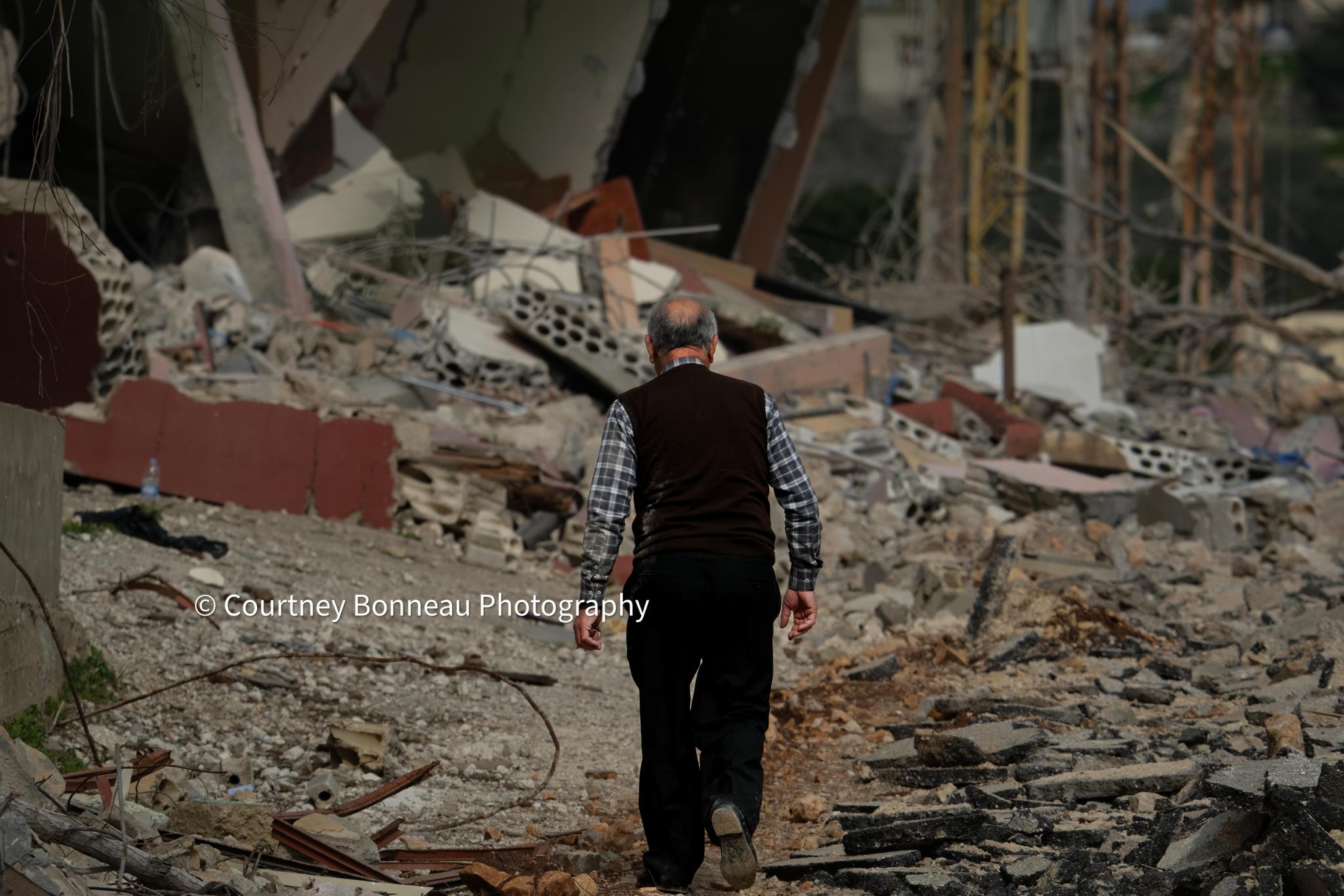
Lebanon was drawn into the latest escalation on the night of March 2, when Hezbollah fired a rocket at Israel—two days after the killing of the Iranian dictator Ali Khamenei. Yet the events of that night explain the current situation only to a very limited degree. The situation along the Israeli–Lebanese border has been extremely tense for some time. Since the ceasefire between Israel and Hezbollah in November 2024, Israel has continued to carry out attacks in southern Lebanon; reports speak of more than 15,000 violations of the agreement. Numerous villages have been destroyed, homes systematically leveled, and agricultural land laid waste to. International observers have described these developments with terms such as “domicide”—the deliberate destruction of homes—and “ecocide,” referring to the devastation of entire landscapes. The use of white phosphorus and glyphosate has damaged soil and vegetation, leaving behind long-term ecological harm. At the same time, Israel had been mobilizing militarily for months and stationed around 100,000 reservists along the border even before Hezbollah fired its rocket.
Israel is now demanding the evacuation of the entire area south of the Litani River as well as the southern suburbs of Beirut. More than 100 villages are to be cleared, while airstrikes are carried out throughout the country. For southern Lebanon this means the evacuation of roughly a quarter of a million people; another half million live in the affected suburbs of Beirut. Within just a few days, more than 95,000 people have been officially registered as displaced—the actual number is likely much higher. More than 200 people, including children, have been killed and around 800 injured.
The Litani as Strategic Line
The Litani River is not merely a geographical line. It marks a political boundary within a space that has been repeatedly measured and re-measured as regional powers redraw the map of West Asia. The Litani is the longest river that runs entirely within Lebanon and a crucial water resource for agriculture, drinking water supply and energy production. At the same time, it has long functioned as a strategic line in the Lebanon–Israel conflict—not least since Israel’s “Operation Litani” in 1978, which first explicitly turned the river into a militarily defined security line.
When Benjamin Netanyahu addressed the UN General Assembly in September 2024, he spoke of the “blessing” of economic integration between Israel and the states of West Asia, contrasting it with the “curse” of Iranian influence in the region. In that speech he also outlined how he envisioned the region’s economic development—and pointed to the attractiveness of the Litani River region in southern Lebanon.
The Measuring of West Asia
Such remarks must be understood in the context of broader plans to redraw the region militarily, politically and economically. One of the central frameworks for this is the India–Middle East–Europe Economic Corridor (IMEC), announced at the G20 summit in September 2023. The corridor aims to connect India with Europe via the Gulf states, Israel and the Mediterranean through railway lines, ports, energy infrastructure and digital networks.
Projects of this kind do more than establish infrastructure and transport routes—they also measure and reorder geopolitical space in imperial terms.
IMEC stands in competition with China’s Belt and Road Initiative, which has been expanding global trade routes for years. In both cases, infrastructure functions as an instrument of geopolitical power: whoever controls corridors controls trade flows, and whoever controls trade flows shifts the balance of power. The eastern Mediterranean is therefore not a peripheral region but a strategically important hub.
Lebanon, marked by its position as a geopolitical node where competing interests intersect, repeatedly becomes an arena in which larger conflicts play out. Civil war, military interventions, regional power politics and international interests have left behind a fragile state whose political institutions are repeatedly shaken. This, in turn, deepens social inequality, class conflict and the unequal distribution of political power.
Hezbollah and the Limits of the Lebanese State
These inequalities were a decisive factor in the Lebanese civil war from 1975 to 1990 and in the developments that followed. Many of its front lines ran along confessional affiliations. But to describe it simply as a religious conflict—as is often done—is highly reductive. The Shia population, for instance—long the country’s largest but also its most politically and economically marginalized community—was particularly affected by these structural tensions. While segments of Sunni, Druze and especially Maronite Christian elites exercised disproportionate influence over the state, economy and administration, many Shia communities in southern Lebanon, the Bekaa Valley and later the rapidly expanding suburbs of Beirut lived under conditions of persistent state neglect. For decades these regions suffered from poor infrastructure, weak state presence and limited economic prospects.
It was from this social and political context that Hezbollah built its social base. Following the Israeli occupation of southern Lebanon in 1982, it initially emerged as a resistance movement and eventually developed into the most powerful military and political actor in the country. At the same time, it became an important instrument of Iranian regional policy and an actor that has significantly limited the political agency and sovereignty of the Lebanese state.
Accordingly, Hezbollah’s role within the Lebanese state remains deeply contested. While its supporters view it as a resistance movement against Israel, its critics within Lebanon have long argued that the organization does not act in the interest of a sovereign Lebanese state but rather in the strategic interest of Iran. In this way, it has become part of a regional power structure that repeatedly draws Lebanon into wider geopolitical conflicts.
These opposing assessments do not arise in a political vacuum. Experiences of war, occupation and repeated attacks on Lebanese territory are part of the country’s collective memory—and make the desire for retaliation or deterrence, particularly among those most affected, understandable. Yet this poses a danger for an already fragile country: the logic of retaliation repeatedly pulls Lebanon into cycles of escalation that further undermine its political stability. Many Lebanese therefore wish for a state capable of making decisions independently of regional power blocs.
State capacity, however, is not limited only by Hezbollah’s military autonomy. It is also repeatedly undermined from the outside by military interventions, attacks and occupation. It would therefore be misguided to respond to Lebanon’s reality with simplistic answers—for example the notion that a political solution could be reduced to the disarmament of Hezbollah. The entanglement of internal political conflicts, regional power interests and military escalation makes the situation far more complex.
Lines of Power
Today, the whole of Lebanon has once again become an arena of war. Airstrikes no longer hit only the border regions but cities and infrastructure across the entire country. The events cannot be reduced simply to the confrontation between Israel and Hezbollah. Rather, Lebanon now lies at the center of several intertwined conflict lines within a broader attempt to reorder the geopolitical map of West Asia.
One of these conflict lines follows the strategic confrontation between Iran and the United States. For Tehran, Hezbollah is a key component of its regional deterrence strategy against Israel. For Washington and its allies, this very connection is viewed as a security threat. At the same time, debates in Israel about territorial expansion have emerged that cannot be explained solely in terms of security interests. In this context, references—most recently by Yair Lapid—have also been made to the historical notion of a “Greater Israel.”
Recently, the Israeli newspaper Haaretz reported on a children’s book titled Alon and Lebanon, aimed at children aged two to six. The story is meant to teach children that Lebanon actually belongs to Israel. According to Haaretz, the book was partly financed by the far-right settler movement Uri Tzafon (“Awaken, O North”). The group openly advocates Israeli settlement in southern Lebanon. Maps and promotional materials depict areas south of the Litani River—including cities such as Tyre, Bint Jbeil and Marjeyoun—as part of an expanded Israeli territory. Lebanese place names are replaced with Hebrew ones. Notably, recent evacuation orders issued by the Israeli army follow the maps promoted by this movement: the areas designated for evacuation correspond to the regions marked as future settlement zones.
Projects of this kind recall a political pattern long familiar in the region: buffer zones, security belts or military control areas that are initially introduced as temporary measures but later solidify into permanent territorial realities and form the basis for unlawful territorial expansion.
Alongside this struggle over territory—often framed in the language of security policy—there is another conflict line: the geopolitical race for infrastructure corridors, trade routes and strategic spheres of influence in West Asia.
Lebanon itself is also attempting to find its place within this newly measured geopolitical landscape. Leading Lebanese politicians have begun openly discussing the possibility of the country’s participation in IMEC. President Joseph Aoun has stated that Lebanon would be ready to take part in such initiatives if they serve national interests and strengthen the country’s logistical role in the region. Prime Minister Nawaf Salam likewise emphasized that integrating the ports of Beirut and Tripoli into new trade routes could represent a strategic opportunity for the economically battered country.
What remains unclear, however, is how a country that exists in almost permanent conflict with Israel could practically participate in such a project. This question alone illustrates how geopolitical planning often moves ahead of the political realities of individual states—for instance the fact that the Lebanese state itself does not possess the capacity to militarily disarm Hezbollah or fully enforce its territorial sovereignty. Perhaps this reveals the double meaning contained in the measuring of West Asia: it refers not only to the measuring of territory, but also to the political hubris with which the territories of other states are treated as potential spaces of expansion.
For Lebanon, the existential question is how a state that for decades has served as an arena for regional conflicts can regain room to maneuver politically. Normalizing relations with Israel and making security concessions may appear to be among the few remaining options to avoid being crushed between the interests of regional and global powers. Yet even this path would be less an expression of sovereignty than of coercion.
What one might wish for Lebanon is something different: the possibility of once again deciding its own political future—without proxy wars fought on its territory, without recurring external interventions and without being treated as a geopolitical transit corridor.
Hope begins precisely here: in the utopian imagination of what might become possible if Lebanon were no longer the object of this measuring.
Sources and Background Material
The arguments developed in this text draw on reports by international media outlets, investigations by human rights organizations, analyses by regional research institutes, as well as background conversations with government representatives.
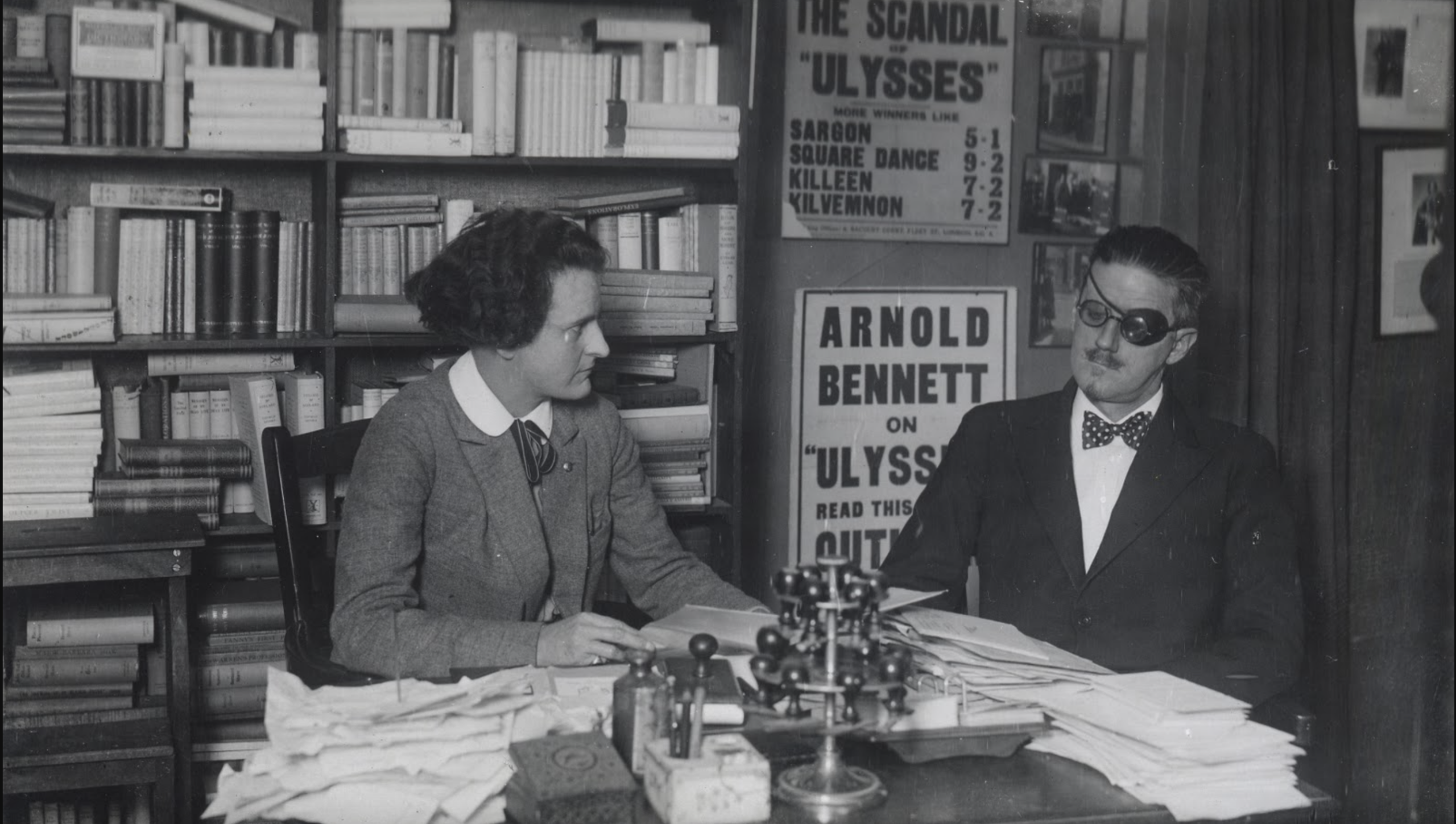
James Joyce and Sylvia Beach in front of a wall of books, posters, and pictures that one can dream of in prison. CC0 1.0 Universal, www.archive.org
Daniel, an Irish citizen, has been in pretrial detention at Ulm Prison, Frauengraben branch, since the beginning of September last year. He is one of the so-called “Ulm 5,” who, according to their lawyers, “ are accused of breaking into the Ulm site of the German branch of Israeli arms manufacturer Elbit Systems on September 8, 2025, and causing property damage there”, with the specific aim of preventing genocide in Gaza. The criminal proceedings, in which the 5 are accused of “membership in a criminal organization, among other things” are political, and have been transferred to the State Security Chamber of the Stuttgart Regional Court. The trial (and thus pretrial detention) is expected to last until the end of July, meaning that Daniel will spend eleven months in solitary confinement: in a single cell, 23 hours a day, with no contact with the outside world except for a television, handwritten letters, and a half-hour visit every two weeks. Furthermore, no books may be sent to Daniel. Nor may books be donated to the prison library, not even via any online retailer. Daniel himself is not allowed to buy fiction or poetry. The prison permits only non-fiction books for study and training purposes, but has declined, despite requests from Daniel’s lawyer, to define these parameters – or even to facilitate ordering such non-fiction books other than the three he has received in 6 months to date. Complaints have been rejected, and appeals to the prison administration have gone unheard. The only way to send Daniel books is in photocopies or print-outs, distributed across letters. He wanted to read Ulysses by James Joyce. The printout from Project Gutenberg weighed 1.3 kg; a letter must not weigh more than 100 grams; that makes 13 letters.
If the prison administration has its way, Daniel will have to be content with maximum five books per week from the prison library. The prison administration cites “security reasons (possibility of manipulation, introduction of illegal substances such as synthetic cannabinoids, etc.)” that make purchasing or accepting book donations “fundamentally impossible” and considers the inventory of its library to be sufficiently “diverse and appropriate.” If the prisoner considers that the available English-language books are not sufficient, then they believe that defendant ought to content himself with the books in German. (Daniel speaks some German due to his mother’s German family.)
Daniel’s lawyer filed a court motion “to no longer prohibit him from purchasing the books Lone Wolf by Adam Weymouth, Ulysses by James Joyce, and The Prison Letters by Nelson Mandela, or to no longer refuse him the assistance necessary for their acquisition.” At the end of January, the State Security Chamber of the Stuttgart Regional Court rejected the motion. (File number 18 KLs 36 Js 123125) One might recommend that the State Security Division re-acquaint itself with Kafka (not available in the Ulm prison library), as it wrote in its reasoning: “Access to literature is of such existential importance to interested prisoners that a discretionary refusal of access to a library is hardly conceivable; but how borrowing works is up to the prison, so there is no right to access an open-access library.“ The court echoed the prison’s argument that prisoners buying books themselves, or having them sent to them, isn’t “possible for security reasons” and that it would be unreasonable to expect prison social workers to assist in such matters .
Daniel has long since finished with the English-language collection available in the prison library. Most of these approximately 70 books were apparently purchased in the early 1970s and mid-1980s: a children’s book about a widowed mouse (1971), a study on the reading skills of people with learning disabilities (1969), a novel about an artist and one about a frustrated career woman, Wild West knockoffs, crime novels, spy novels, love stories, and thrillers from the Cold War, three volumes of Harry Potter, Orwell’s Animal Farm, a volume of Hemingway, Jack Kerouac’s Desolation Angels, The Last of the Mohicans, not by James Fenimore Cooper, but by someone with the name Watson Brown (probably a children’s book adaptation), Kim by Rudyard Kipling, a volume of Mark Twain, the 1974 debut novel by Native American Renaissance author James Welch (interesting!), a history of Germany, two books about the Vietnam War, a humor book, a biography of Reagan, three Bibles. The gem of the collection are Toni Morrison: Beloved, and indeed also Joyce’s A Portrait of the Artist as a Young Man. A volume by Kurt Vonnegut is also listed, but it’s in Serbo-Croat. In addition to the 70 English-language titles, there are over 600 titles in all kinds of other languages, in particular a large collection of Turkish books that were donated at some point.
So we copy or print out Ulysses, Moby Dick, and other books of world literature, fold up pages, and divide them between small envelopes in the permitted size. Most recently we have even carved up books and sent pages detached from their bindings.
The German-language collection with which the prison believes Daniel – a philosopher and neuroscientist who works on AI/machine learning projects on ecology, social and colonial justice – should content himself, comprises around 3,000 fiction titles and around 1,300 non-fiction books: general advice books and guidebooks, particularly on personal care and nutrition, Guinness World Records and animal books, encyclopedias, the house book of good manners, popular history, biographies, Deutschland Deine Sachsen (Germany Your Saxons), Erinnerungen eines Frauenarztes (Memoirs of a Gynecologist), a great deal of Christian literature, plus around 50 Korans and Islamic books, which are categorized under the strange heading “state religion,” countless puzzles, board and card games (a cruel irony for someone in solitary), four guitars “from Pastor Mayer,” six Olympia typewriters, and, darkly fitting for prison: Denken Sie sich frei! (Think Yourself Free!) by H.M. Glogger, Slow Down Your Life by Kai Romhardt, and Albert Speer’s Spandau Diaries.
Of the fiction titles, Daniel’s mother writes that the list, though it may be just right for some people, and that’s fine, makes her “sad,” and this feeling of sadness, also concerning our own reading history, grips us as well. How much rubbish we read in the 1980s! Gwen Bristow, lots of Pearl S. Buck, Felix Dahn: Ein Kampf um Rom (A Battle for Rome), Michael Ende, Ludwig Ganghofer, Gone with the Wind, Don Camillo and Peppone, Arthur Hailey, Daphne du Maurier, endless Karl May. Then all the school reading material by post-war German and Swiss-German men: Grass, Walser, Frisch, Dürrenmatt, Handke, Böll, lots of Siegfried Lenz, and many others whose names are forgotten today; no Uwe Johnson, no Ingeborg Bachmann. The following authors luckily passed us by in our youth: the 18 titles by Ulm local author Manfred Bomm (Notbremse – “Murder on the ICE train on the Ulm-Stuttgart line”), 29 books by Marie Louise Fischer, countless works by Uta Danella, C.C. Bergius, Josef Müller (Das Leben will dir Beine machen! – Life wants to get you going), a good dozen by Willi Heinrich: (Schmetterlinge weinen nicht – Butterflies don’t cry – about the “intoxicating love of an older man for a young girl”), 53 Konsaliks and 30 Simmels. There are, ironically, an awful lot of crime novels. Are John Grisham and Donna Leon must-reads? Manfred Bieler, Michael Crichton, A.J. Cronin, Eva Demski? Hans Herlin sounds quite interesting: Der letzte Frühling in Paris (The Last Spring in Paris) – “Paris 1944: The last spring for German soldiers in Paris. Power is crumbling, the Gestapo and Abwehr are rivals.”
Of those 3,000 German fiction titles, we can really recommend just under 30 to Daniel: first and foremost, a volume of Brecht poems, whose piercing observations of Germany in the 1930s provide many uncomfortable echoes in the world today. Then there are some classics that our grandparents also read (Ivo Andric: Viziers and Consuls, The Bridge on the Drina, Stories from Bosnia, Lampedusa’s The Leopard, Flaubert’s Madame Bovary, Maupassant’s Bel Ami, Pasternak’s Doctor Zhivago, Annette Droste-Hülshoff’s Selected Stories, Roger du Gard: The Thibaults, selected stories by Stifter, Musil’s The Man Without Qualities, Effi Briest and Stechlin by Fontante, a volume of Tolstoy, two volumes of Dostoevsky, even Anna Seghers’ The Seventh Cross, Hans Fallada’s Little Man, What Now?, Marlen Haushofer’s The Wall, Kempowski’s Dog Days). There is Peter Härtling, Ingo Schulze, Jenny Erpenbeck, and Kruso by Lutz Seiler. We would immediately borrow Elias Canetti’s autobiography, Arthur Koestler’s The Gladiators (“written in 1939 immediately after his break with communism”), Gustav Meyrink’s Der Golem and Walpurgisnacht, and by Fritz Rudolf Fries: Das Luftschiff, as well as by Jurek Becker: Amanda Herzlos.
But it’s understandable that even this selection is saddening. Having to read the one volume of Susan Sontag in German translation would, we expect, make Daniel even sadder. It’s painful when the state determines what you’re allowed to read, and in which language, whether that’s in a school library or a prison. No one should be allowed to prevent you or your fellow prisoners from buying or receiving donations of Ulysses, Nelson Mandela, Kafka, or even Palestinian literature.
The legal situation is actually on the side of the prisoners. Prisoners, whether unconvicted of any crime and in pre-trial detention, like Daniel, or serving a sentence, continue to enjoy fundamental and human rights other than the right to personal freedom (of movement). The right to access books is part of freedom of expression and information (Art. 5 (1) GG; Art. 10 (1) ECHR; Art. 19 (2) ICCPR). Prisoners also have a right to education (Art. 2, 1st Additional Protocol to the ECHR; Art. 13 IPWSKR) as a cultural right that is indispensable for human dignity and the free development of personality. In 1989, the Committee of Ministers of the Council of Europe issued recommendations on “Education in Prison” (R (89) 12). According to these recommendations, prisoners’ educational opportunities should be comparable to those in the outside world, the range of learning opportunities should be as wide as possible, and prison administrations should facilitate and support education as much as possible. In 2006, these recommendations were supplemented by the European Prison Rules – also in the form of recommendations from the Committee of Ministers (R (2006) 2). They stipulate that all prisons should have a library for use by all prisoners, which should be adequately equipped with a wide range of leisure and educational resources, books, and other media (Rule 28.5). If possible, the prison library should be organized in cooperation with public libraries. It appears that this may even have been done in Ulm, suggested by the loving little clips describing most of the books in the catalogue.
In 2015, the United Nations General Assembly adopted minimum standards for the treatment of prisoners, known as the Nelson Mandela Rules (UN GA Res. 45/111). Rule 117 states that prisoners awaiting trial shall be allowed to obtain books, newspapers, and writing materials at their own expense or at the expense of third parties, insofar as this is compatible with the interests of the administration of justice and the security and order of the institution. The fact that the “security” reasons claimed by the prison and echoed by the court are illogical is evidenced by the fact that ordering books, or having them sent, via online retailers is permitted in many other prisons across the Federal Republic, presumably without constant threats to their security.
German prison law also contains provisions on access to books. The relevant law for remand prisoners in Ulm Prison, Code II on the Prison System in Baden-Württemberg, stipulates in § 39 sentence 1 that remand prisoners must be given the opportunity to “occupy themselves in their free time.” And in sentence 2: “In particular, sports facilities, leisure groups, community events, continuing education events, and the use of an institution library shall be offered.” However, setting aside the fact that leisure activities and community events are almost impossible in 23-hour solitary, the very focus of that provision raises concerns that German lawmakers have not really understood the meaning of cultural rights. Eric Steinhauer noted years ago that library services in prisons are “conceptually the stepchild of both prison and library legislation” (E. Steinhauer, Bibliotheken und Büchereien in den Justizvollzugsgesetzen [Libraries and Book Collections in Prison Laws] in: Petra Hauke, Andrea Kaufmann, and Vivien Petras (eds.), Bibliothek – Forschung für die Praxis, 2017, p. 511). The prison administration at Ulm Prison, Frauengraben branch, is simply unaware of the cultural right to read Ulysses, even though they could probably look it up somewhere in their non-fiction books in the “PhilPsyPäd” category and see that learning constitutes more than just technical training and entertainment. For German prison law and German prisons, the “institutional library” is on a par with the tennis table, the weights room, and the television. Yet in accordance with human rights, the regulations governing the prison system must be interpreted in such a way that they take into account the recommendations of the Council of Europe, which in turn are to be understood as implementing the rights of prisoners guaranteed in the ECHR: prisoners have a right to their own personality, to education and dignity, and to books of their own choice.
According to these provisions, access to books, their provision and possession, may be restricted if this would jeopardize the security and order of the prison. However, prison authorities must determine this with regard to specific content – they must make a “fact-based risk assessment” (KG, decision of 17 November 2017 – 2 Ws 99/17 Vollz). Before completely refusing access to certain texts, it must examine whether a measure that less severely impairs prisoners’ rights could be applied – for example, whether it would be sufficient to remove certain “dangerous” pages (see ECtHR Mehmet Çiftci v. Turkey, judgment of November 16, 2021, Chamber II, Bsw. No. 53.208/19). There have been a few German court decisions that found it lawful to deny prisoners access to the book Wege durch den Knast (Ways Through Prison). The fact that the prison authorities classified the entire book as potentially dangerous was considered permissible because of “statements hostile to the prison system” and “destructive instructions for action” that were “scattered throughout the book” (KG, decision of November 17, 2017 – 2 Ws 99/17 Vollz; OLG Nuremberg decision of March 9, 2017 – 1 Ws 26/17).
This is a non-fiction book that is critical of prisons, not literature. However, Daniel and his fellow prisoners in Ulm are being denied books, not because of their content, but because of a repeatedly asserted security risk posed by their materiality. Could one theoretically bribe someone at Amazon or Thalia to smear synthetic drugs on the pages of a book or hide a weapon in the spine? This is too far-fetched to be taken seriously. Given the stubbornness with which state authorities are now denying political prisoners the right to order or receive works of world literature, another suspicion arises: Literature, art, and the freedom of personality once again appear potentially dangerous. Art itself is a disturbing factor in the prison library – that also becomes evident in how poorly the genre of poetry is represented at the Ulm Prison. Apart from that volume of Brecht poems, there are only “festive poems,” German poems “for everyone,” Robert Gernhardt’s 555 funny poems from 5 centuries, the “cheerful, thoughtful, and ironic verses” of Franz Walter Leyh, and by Heinz Ludwig Arnold: Komm. Zieh dich aus (Come. Take your clothes off).
Ulysses was banned in the US in 1921. One judge at the time ruled that it seemed “like the work of a disordered mind”, suggesting that the courts may not be ideal arbiters of the value of literature. Art and literature confront readers with other possible worlds – with the possibility of freedom. When reading, one can easily conclude that the world we live in is fundamentally wrong, perhaps especially if you are in prison. But banning reading is, in the end, more likely to fuel such thoughts rather than to silence them.
The right-wing authoritarian changes in society are also evident in the abolition of academic centers for Disability Studies: At the turn of the year, funding for the Center for Disability Studies (ZeDis) in Hamburg was terminated; the only German university chair for Disability Studies at the University of Cologne as well as the funding for bidok, a digital, barrier-free library on disability and inclusion based at the University of Innsbruck, were also discontinued on December 31, 2025, due to massive cost-cutting measures. This deprived DS in German-speaking countries of key centers for research into central social issues, albeit the Disability Studies professorship at Alice Salomon University and the representation of DS in various other university departments continue to exist.
The resistance of the German- and English-speaking Disability Studies community to the announced closure of the internationally renowned center was comparatively strong. There were numerous statements and press releases, and the director of the Centre of Disability Studies at the University of Leeds (UK), Prof. Dr. Miro Griffith (UK), protested to the Hamburg Senate and the University of Cologne against the closures of both locations.
The current situation of DS‘s lack of funding and institutional affiliation clearly contradicts the state’s obligations to implement the UN Convention on the Rights of Persons with Disabilities (Art. 24 in conjunction with Art. 4). This seems to have little significance for government action. Moreover, the lack of support from cooperating university and academic institutions outside the DS community (with the exception of the Landes-Asten-Konferenz Hamburg and the AWO-Fachstelle für Migration und Behinderung) also points to a problem within the sciences and research. Deficit-oriented perspectives on disability still dominate there: disability is still understood as an individual flaw that must either be cured or contained and brought under control.
The continued prevalence of a deficit-oriented approach, which is particularly evident in the preservation or even expansion of special education degree programs, is closely linked to the rejection of socially critical perspectives. Learning to critically understand disability as part of society is a task undertaken in interdisciplinary fields of research such as disability studies, gender studies, queer studies, and postcolonial studies. These also call for the practical implementation of social equality. Insofar as they have been able to establish themselves institutionally at all, socially critical perspectives are currently losing more and more political support and are increasingly threatened in their institutional existence. The right-wing extremist discourse that excludes minorities is also prevailing in the deliberate termination of funding for emancipatory research positions.
As the Disability Studies Working Group (AGDS) points out, disabled scientists, activists, and artists are conducting their own research. The AGDS is an association of disabled scientists, activists, and artists from Germany who do not see disability as a problem requiring treatment, but rather examine it as a category of social difference. With the Zeitschrift für Disability Studies (ZDS – Journal for Disability Studies) and other publications such as the conference proceedings “Disability Studies in German-speaking Countries: Between Emancipation and Appropriation” (2018), disability studies had established itself alongside gender, queer, and post-/decolonial studies in German-speaking countries.
The interdisciplinary theoretical perspective of DS was elaborated in 2014 in a short and concise article entitled “Was sind eigentlich Disability Studies? Wechselspiel von Beeinträchtigung und Barrieren” (What are Disability Studies? The interplay of impairment and barriers) in the journal Forschung & Lehre. Alles was die Wissenschaft bewegt, 21(7), which took a clear stance against the widespread traditional, individualistic, deficit-oriented view. The article was republished in 2017 on bidok for open access and made available to a wider public. Essentially, it is about analyzing the social processes of attribution and exclusion that cause people with impairments to become disabled. The key here is the understanding of disability as a deviation from social expectations of normality and thus as a social construct. These interdisciplinary studies, which emerged from political disability movements, aim to examine not only the construction of disability, but also the constructions of normality and non-disability that shape social exclusion processes.
Disability studies criticize the dominant, deficit-oriented, and essentializing discourse on disability in the social, human, and medical sciences, and emphasize a shift in the focus of research: research is conducted not about, but with and from the perspective of people with disabilities, in line with the demand of the emancipatory disability movement, “Nothing about us without us.” The historical perspective is also central to DS, for example, the analysis of the historical development of categorizations and their close connection with exclusion and the (forced) institutionalization of disabled people in homes. DS respond to essentializing categories and exclusion by providing basic scientific knowledge about life and learning opportunities with chronic illnesses and disabilities.
While disability and non-disability are traditionally constructed as clearly separable phenomena, Disability Studies argues that every person can acquire an impairment in the course of their life and that people are only temporarily non-disabled, using the term “temporarily able-bodied.” With increasing age, the likelihood of acquiring various impairments, encountering related barriers, and becoming disabled increases. It follows that the issue of disability and the examination of the discriminatory strategy of ableism can affect all people sooner or later, and that Disability Studies as a field of science is therefore relevant not only to one group, but to everyone.
It is crucial to challenge the power of the category of non-disability, constructed as normality. This requires more than just critical discourse; it also requires negotiation processes with the dominant actors in the field—such as special education practitioners, special institutions, and other representatives of traditional notions of disability. The obligation to guarantee human rights is of central importance here. All states that have ratified the UN Convention on the Rights of Persons with Disabilities and thus incorporated it into their own national law are obliged to implement the full, effective, and equal participation of persons with disabilities in society—Germany since March 26, 2009. These achievements must be defended and fought for again and again: against the backdrop of neoliberal and increasingly right-wing extremist and also (neo)conservative social discourses, as well as economic “constraints” against the rise of ableist and eugenic social discourses.
Thus, after the spirit of optimism of the 2010s, we are now in a state of resistance and defense against the state and political-social forces that want to reduce and ultimately prevent critical research on non-disability and its academic anchoring in the form of emancipatory disability studies.
Editor’s note: Here is the link to a letter of protest to the Minister of Science of North Rhine-Westphalia and the University of Cologne, co-initiated by KriSol, regarding the planned elimination of the professorship for Disability Studies and the International Research Center for Disability Studies in Cologne.
Leyla Dakhli: Étudier les mondes arabes et musulmans, un métier à risque?, in: Le Club de Mediapart, 18 Novembre 2025, https://blogs.mediapart.fr/leyladakhli/blog/181125/etudier-les-mondes-arabes-et-musulmans-un-metier-risque.
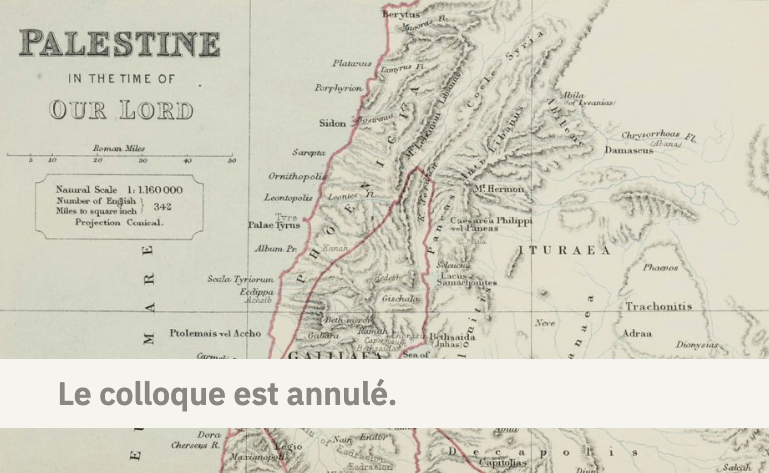
The cancellation of the colloquium on Palestine and Europe, organized by the Chair of Contemporary History of the Arab World at the Collège de France and the Centre Arabe de Recherches et d’Études Politiques de Paris (CAREP) on November 13-14, is, we are told, a matter of academic freedom. That is true, but what does it mean in this specific case?
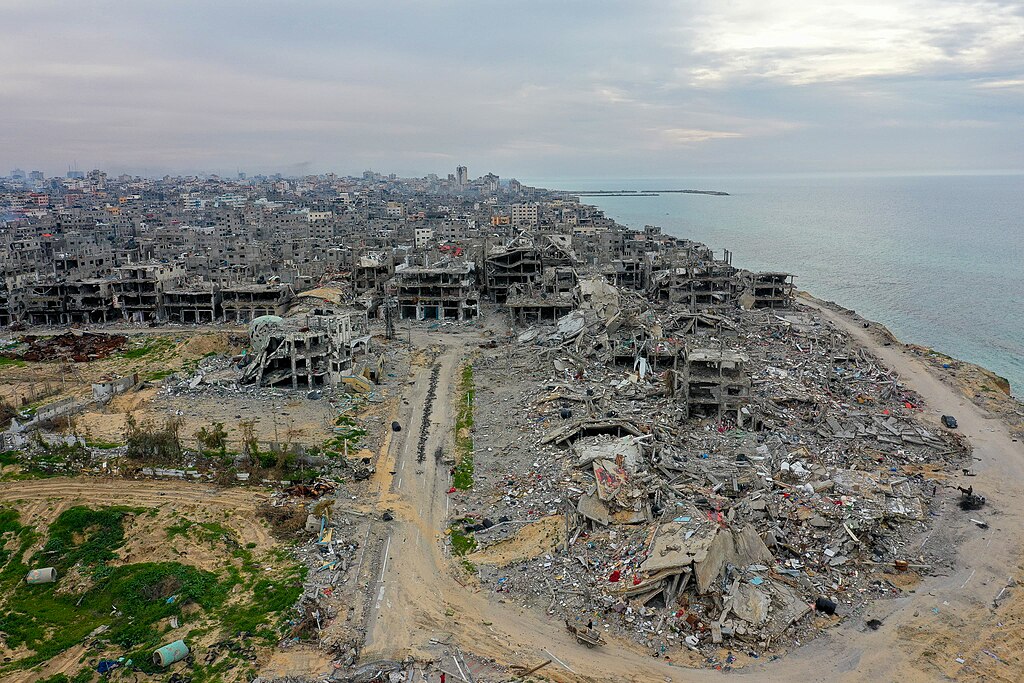
Reducing this debate to a question of academic freedom causes me, and perhaps some of my colleagues, a certain amount of frustration. Because it allows us to sidestep another, more fundamental question, namely that of the limits within which it is possible at all to address the current situation and history of the contemporary Arab world. What is being discussed today in connection with the war against Gaza, the settlement of the West Bank and the Golan Heights, and the numerous attacks by the Israeli army on sovereign territories is nothing new.
For us “specialists in the region,” dealing with the media is often an exercise in bewilderment, in the face of the self-assurance coupled with ignorance of our journalistic interlocutors—and I’m not even talking about our numerous academic colleagues who specialize in other topics and want to explain to us that we are concealing or exaggerating aspects of the region’s history just because they have read something about it somewhere. Far be it from me to be a know-it-all, but I note that the same journalists show more openness and curiosity when it comes to other regions of the world and other periods of history. It is as if the channel of communication between the production of verified, proven, and validated knowledge and the general knowledge available in society and public opinion has been disrupted; as if something has fundamentally gone awry in science communication.
For us “experts on the region,” dealing with the media is often an exercise in bewilderment, given the self-assurance coupled with ignorance of our journalistic interlocutors—and I’m not even talking about our numerous academic colleagues who specialize in other topics and want to explain to us that we are concealing or exaggerating aspects of the region’s history just because they have read something about it somewhere. Far be it from me to be a know-it-all, but I note that the same journalists show more openness and curiosity when it comes to other regions of the world and other periods of history. It is as if the channel of communication between the production of verified, proven, and validated knowledge and the general knowledge available in society and public opinion has been disrupted; as if something has fundamentally gone awry in science communication.
After all, it cannot be said that people do not talk and write about the Middle East. And perhaps that is why everyone thinks they know what is going on. Nor can it be said that there are not many specialists on the Arab world, including some of the highest caliber, for example in France. These specialists do indeed debate among themselves, and the debates reflect some of the tensions that are stirring up the world of research and French society. However, they are about establishing the truth; about methods and research questions. (Here, academic freedom is exercised in the strict sense, within the limits of scientific review and objection.) These scientific discussions also make it possible to reach agreement. In the academic sphere, the Israeli occupation and Israeli colonization are simply established facts and not a subject of polemic. Here, it is possible to discuss the connection between Zionism and European colonialism, or to use the term apartheid to describe how Jewish and non-Jewish societies are separated from each other in the spatial unity of Israel-occupied territories. Here, it is permissible to describe the armed wing of Hamas as armed resistance. Saying this does not mean denying the nihilistic violence of jihadist groups or putting everything on the same level. But it also allows for a comparison between situations of occupation and responses to occupation worldwide. Focusing on peaceful movements is one option, but the reality on the ground is different and confronts us with the fact that armed struggle has always been part of the history of resistance, in Palestine as elsewhere. In a discussion, one can highlight differences between the armed Ukrainian resistance fighters, the Kurdish resistance forces in Rojava, and the jihadist groups. But it is not honest to categorically reject any comparison between them, to banish terms such as “resistance” in the case of Hamas and reserve them only for experiences elsewhere. Yet this is one of the boundaries that is impossible to cross in public debate.
So what happens to us, who are accused of wrongdoing simply because we reported on the state of research and the current scientific consensus? What are we supposed to understand? That every word we say is now to be the subject of a court case?
Observing what has been happening for months and years, it seems to me that a few lessons can be learned from the many controversies:
First, we are told that not everyone is entitled to participate in the production of this scientific consensus discourse. The same analysis produced by a Palestinian or Arab researcher from the region will often go unheard until it has been validated by a European or Israeli researcher. This was the case with the investigations into the massacres of 1948, which were documented and described by Palestinian historians and witnesses, but only became acceptable thanks to the work of so-called revisionist Israeli historians. This also applied, of course, to the use of the term “genocide” to describe the massacres in Gaza, first denounced by Palestinian witnesses and journalists, then by international NGOs, and finally by Israeli figures and Western specialists in genocide studies. Why are Palestinians not considered worthy of determining and naming what is happening to them? Would this situation be understandable if a European society were affected by the crimes?
Then we are told, and perhaps this is where the academic question is most central, that the truth does not really matter. What matters is balance. A somewhat strange notion, when you think about it. In fact, whenever we describe and explain what we have studied about a sociological or historical reality, we should always consult someone who holds the opposite view. This is something I experienced regularly myself when I occasionally spoke in the media about Syria in the 2010s. When I explained how power or the Syrian society work based on the available research, I was contradicted by pseudo-experts who spouted nonsense about “confessionalism” and “radicalization” and who knows what else, all in the name of balance and confrontation of viewpoints. And, of course, without any distance, without attributing this view of society to what it was, namely the regime’s propaganda. When I hear today how cautiously my colleagues are questioned on the subject of Ukraine and Russia, even if nothing is perfect, I can gauge the distance.
So is it really academic freedom that is at stake here when the scientific nature of a colloquium at the Collège de France is called into question? Or is it rather the recognizable ultimate, undisguised (and thankfully scandalized) contempt with which scientific work produced in this cultural area is viewed? This work is certainly not all perfect, but it is based on knowledge, on skills that have often been painstakingly acquired, on familiarity with often difficult and demanding fields to which the researchers sometimes also have a personal, emotional connection. And this is the final point that I draw from observing the controversies: For researchers working on the Arab world, having strong ties to their “field of research” arouses suspicion. Yet it is this familiarity that constitutes one of the riches on which French and European research can draw. Empathy is a necessary quality for good research, as much as criticism, reading sources in their original language, and deduction. These different qualities, which are in tension with each other in the pursuit of scientific truth, are precisely those that ensure the only meaningful balance. Once again there are numerous examples from other fields that underscore the importance of proximity to the field of research. Would we be surprised if a French researcher specializing in Germany (or vice versa) spent extended periods of time there, established collaborations and friendships, and sometimes even made their lives there?
If research as a whole is threatened today by all kinds of relativism and attacks on truth, when it comes to scientific production on the Arab world, these attacks are exacerbated by the suspicion of “collaboration” with an internally constructed enemy, of which we are supposedly the fifth column. The name of this enemy varies: Islam, “Muslim Brotherhood,” new anti-Semitism, wokism… Or a combination of all of these, which literally tramples on our work, the establishment of facts and investigation of mechanisms, and casts suspicion on the very foundation of our libido sciendi, i.e., our desire to understand these societies, to describe them and make them familiar, with all their complexities and contradictions.
Both in internal KriSol debates and, for example, in an interview with Omer Bartov in German-language Jacobin, it has recently become clear that there are considerable reservations about the term “war” within movements in solidarity with Palestine. Instead, the preference is to link the moral and political assessment of the mass violence against Gaza and its population to the legal concept of genocide—even though for some time now, members of the German federal government have been deliberately using this term as an opportunity to avoid drawing any conclusions from the violence. They point out that the courts have yet to decide whether genocide has actually been committed, or they ignore journalistic inquiries about consequences of genocide altogether. The latter was the case, for example, at a government press conference shortly after the fragile ceasefire began in October 2025, which dealt, among other things, with the German chancellor’s considerations regarding the resumption of unrestricted arms exports to Israel. Obviously, the term “genocide” alone is not enough to build political pressure. Moreover, it is by no means certain that the courts will actually rule in a few years’ time that the Israeli government has committed genocide in Gaza.
There is therefore ample reason to fear that a discursive narrowing to the term genocide could be used not only now, but especially in the future, to ward off responsibility and deny mass violence. Against this background, we advocate the strategic revaluation of an empirical-analytical concept of war that refers to observable reality, thereby emphasizing the political significance of empirical evidence and not making itself dependent on legal judgments.
Genocidal war is no less cruel than genocide
The term “war” is often considered inappropriate, especially by those who strongly condemn the mass violence against Palestinians and urgently demand political consequences. They criticize that “war” implies symmetry—a conflict between sides with at least roughly equal capacity to act—and thus could enable both-sidesism in the assessment of mass violence against Gaza (this is also roughly the reasoning behind the rejection in the interview with Bartov linked above). We share the criticism of both-sidesism. At the same time, as peace and conflict researchers, we disagree with the impression that wars are symmetrical per se. Empirically, this is definitely not the case.
“War” primarily refers to the circumstance that violence is exercised and suffered on a massive scale. Admittedly, in quantitative research, the term is indeed mainly attached to the number of battle-related deaths, suggesting that war consists primarily of combat between opposing sides. The idea here is that armed actors (at least one of them a state army) fight each other and that both combatants and (unintentionally or acceptably) civilians are killed in the process (see, for example, the Uppsala Conflict Data Program). However, such definitions have long been criticized within peace and conflict research and are considered overly simplistic and insufficiently reflective of the actual dynamics of war. The concept clearly does not apply to Gaza, for example, where civilians and civilian infrastructure were directly and immediately attacked, killed, and destroyed. Direct attacks on the civilian population also occur in wars for which no genocidal logic can be empirically identified, i.e., wars that do not specifically destroy the living and survival conditions of members of a national, ethnic, racial, or religious group, to stay close to the Genocide Convention. Examples of non-genocidal violence against civilian populations can be found, for example, in the context of military interventions – think of the US drone wars and the unspeakable term “collateral damage” – and also in civil wars, where non-state armed actors sometimes use violence against the civilian population to obtain food, labor, and forced recruits.
When we nevertheless speak and write of “war” in such situations, this takes into account the fact that, from a global and historical perspective, mass violence has rarely been symmetrical and that it has very often been and continues to be directed against civilian populations. All forms of colonial, and often genocidal, violence since the 16th century could serve as examples here. In this respect, unilateral mass violence is not actually a special case. Rather, the symmetrical struggle between uniformed armies, which has mistakenly (only thanks to Eurocentrism) shaped the image of war in Western minds, should be considered to be a special case.
We therefore propose not rejecting the concept of war outright, but using it free of Eurocentric assumptions of symmetrical violence in order to bring the relevance of empirically proven violence to the fore. The advantage of such a term is that it can be used to characterize mass violence in very different forms as morally and politically relevant—because “war” is a man-made catastrophe, and the term signals that action is needed here. The second step is to empirically clarify the central characteristics of the war in question. One suggestion for the empirical description of mass violence in Gaza is “genocidal war”: that is, mass violence that, based on empirical observations, can plausibly be interpreted as an intent to destroy. Compared to genocide, “genocidal war” has the advantage that it does not have to be confirmed by courts, but is based solely on extensively documented empirical observations – which in politics is usually sufficient as a basis for decision-making and action! The use of the term “war” can and should therefore be used to counter arguments that court proceedings must be awaited before decisions can be made about consequences in relation to the Israeli government. Whatever the courts decide, the empirical evidence alone should be proof enough that a genocidal war has been waged and that this is just as unacceptable as genocide established by a court of law.
This brings us finally to the de facto hierarchization of suffering, which also concerns Dirk Moses and is undoubtedly a core problem of the legal concept of genocide. This concept is intended to describe the worst of all crimes, but is so narrowly defined that the vast majority of mass violence cannot be covered by it and is thus inevitably labeled as “less serious.” Here, too, the concept of war could have a corrective effect in the long term by counteracting such a hierarchy.
Taking a multi-pronged discursive approach
Of course, it still makes sense to use the concept of genocide, especially to demand the application of international law. Our central point is only that it is unwise for movements in solidarity with Palestine to put all their political and moral eggs in one basket—especially in the case of international law, which is known to be selectively effective and permeated by colonial logics! We should pursue a multi-pronged discourse in order to escape a situation in which key actors deny responsibility for the most serious crimes and in which moral and legal condemnation are so closely intertwined that future acquittals would, in the worst case, amount to whitewashing. The term “genocidal war” allows us to do this.
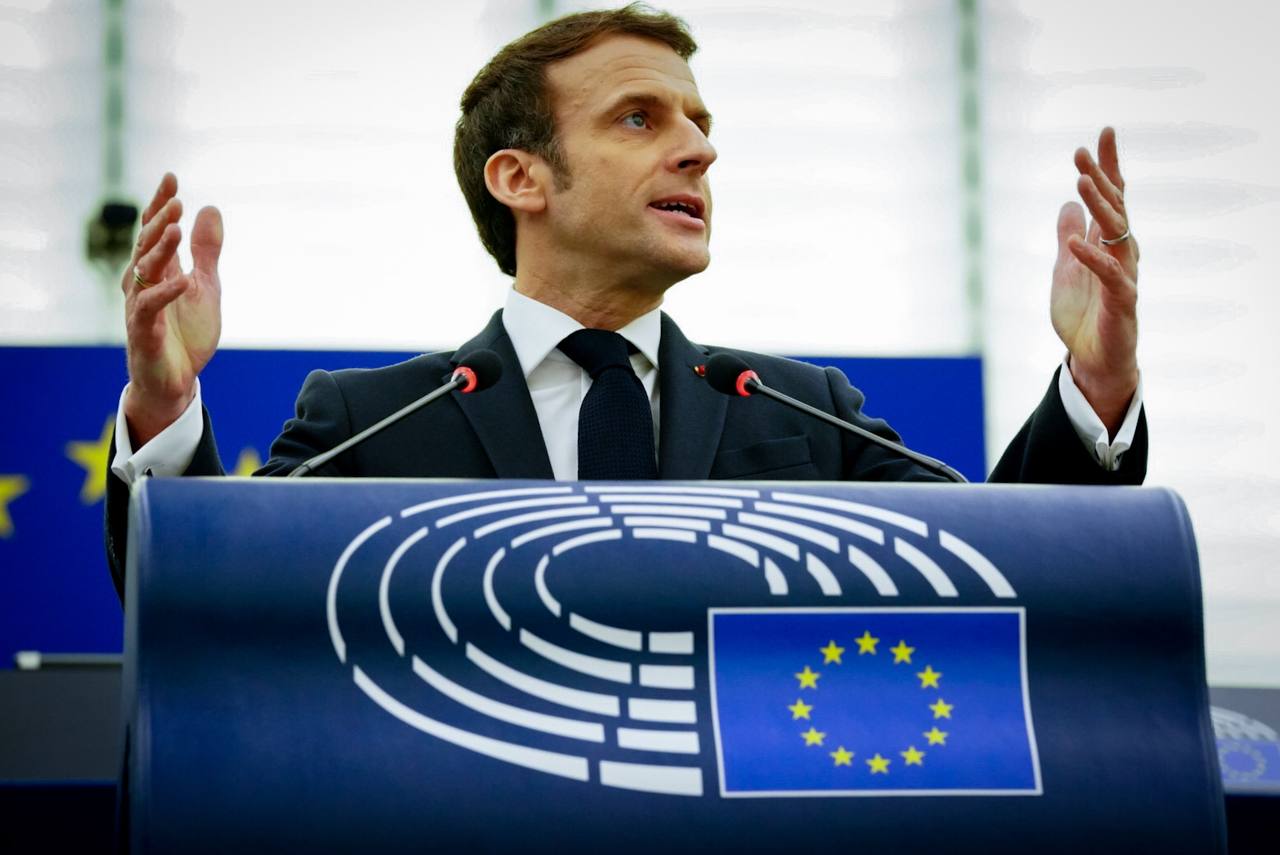
The wave of recognition of Palestine by Western states, in which Germany did not participate, owes itself to France’s initiative. President Macron is isolated domestically, has failed in many respects and is unpopular, but his foreign policy shows diplomatic leadership. That has also contributed to the discourse in France once again being broader and more open than in Germany. In France, it is already possible to criticize something that has not yet been achieved in Germany. A group of lawyers and professors, most prominently Rafaëlle Maison, professor of international law at the University of Paris-Saclay, is concerned with the potentially negative consequences that threaten to arise from the purely symbolic recognition of a de facto non-existent state—the state’s territory is eroded by Israeli settlements, its authority is undermined, and its people are exposed to genocide. Rafaëlle Maison published an article on September 11 spelling out the pitfalls of recognition, and gave an interview to the Le Média platform on September 13 to shed light on the “shadow zones” of Macron’s plan. Any policy of recognition should be measured by whether it serves or harms the right of peoples to self-determination, which is fundamental to international law.
In the interview, Maison quotes from the letter Macron wrote to Netanyahu on August 25, 2025. Macron justifies his decision : “Our determination to ensure that the Palestinian people have a state is rooted in our conviction that lasting peace is essential for the security of the State of Israel.” The Palestinians’ right to self-determination is not mentioned in the letter. The horse is being put before the cart: the rights of the Palestinians are understood only as a function of the security of an ethnically and nationally defined Israel; not as an end in itself, but as a means to an end. Diplomatic restraint towards Netanyahu alone cannot explain this. In his speech to the UN General Assembly on September 22, Macron explicitly acknowledged, unlike in the letter, the “legitimate rights of the Palestinian people” and spoke of “a people who draw strength from their history, their roots and their dignity.” And yet, here too, he cited French loyalty to Israel as the main reason for recognition: “Precisely because we are convinced that this recognition is the only solution that can bring peace to Israel.”
Macron’s speech suggests that recognition should lead to an end to genocide aka war. But if the rights of Palestinians are always viewed as merely instrumental, then there can be no lasting peace. Maison exposes Macron’s recognition and his commitment against violence as lip service. The “normalization” he desires for Israel, which continues to violate (mandatory) international law, is to be imposed violently, with or without a Palestinian state. This is already evident in the first half of the letter, where Macron refers at length to France’s official acceptance of the IHRA definition of antisemitism. The adoption of the IHRA definition, “which condemns anti-Zionism as a form of anti-Semitism,” was one of his first official acts in 2017 and forms the basis for his policy of recognition. Macron’s interpretation of the IHRA definition, equating any opposition, however legitimate, to an exclusionary and ethnically defined state with hostility toward Jews as Jews, must automatically declare all Palestinians who have been expatriated and expropriated by Israel, and who naturally have a problem with this statehood, to be enemies of the Jews (not to mention that this equation itself is anti-Semitic). Macron’s letter to Netanyahu shows that the violent instrumentalization of the fight against anti-Semitism and the blanket defamation and exclusion of Palestinians as anti-Semites is far more than just a side effect or collateral damage of the current policy of recognition; it is inherent to it.
But Rafaëlle Maison is interested in recognition primarily from the perspective of international law. She analyzes the “New York Declaration” of July 29, initiated by France and Saudi Arabia and also signed by Germany, as well as the “New York Call” issued on the same day by the foreign ministers of 15 Western states (Germany was not among them) as a reaction and a kind of diversionary tactic to distract attention from the opinion of the International Court of Justice “on the legal consequences of Israel’s occupation policy.” Exactly one year earlier, the ICJ had ruled that Israel’s occupation of the Palestinian territories was illegal, that Israel must withdraw from the territories and pay reparations. On September 18, 2024, the UN General Assembly then adopted Resolution ES-10/24 by a large majority (with Germany abstaining), which stipulates a halt to arms deliveries if they are used in the occupied territories and calls for a boycott of goods from Israeli settlements. Instead of following the ICJ opinion (which everyone, including the German Foreign Office, claims to respect), France and Saudi Arabia convened the UN conference on the recognition issue for July 2025.
Rafaëlle Maison sees the results as “potentially in violation of international law as outlined by the ICJ in 2024.” The Palestinian state should, in the unlikely future that it is actually allowed to materialise, only exist under certain conditions: under the conditions that Hamas surrenders its weapons to the Israeli-controlled Palestinian Authority, which would effectively mean demilitarization (para. 11 of the declaration), the respect of anyone standing for election for the “international obligations” of the PLO (para. 22), the exclusion of Hamas, and the pursuit of a liberal reform agenda. On the latter, Maison writes: “These recipes sound a lot like a free-market program, compromising the sovereign choices of the state-to-be and requiring—incongruously in appearance, but in reality quite significantly—control over freedom of expression.” Lip service is paid to the right of return guaranteed under international law, but in fact they envision a “just solution” to the refugee problem through a “regional and international framework” (para. 39). And the future state would have to work on security arrangements that were “beneficial to all parties” (para. 20) – which, given the unequal power relations, could only mean that Israel would once again assume police and military power and authority in the weak state structure. The outcome would be a state without sovereignty, an “entity under control.”
According to Maison, the “New York Call” in particular makes it clear what is really at stake: normalizing relations between all states and Israel despite the ongoing crimes – and not, as the ICJ actually prescribes, finally responding to these crimes with consequences. Thus, conditional recognition while the genocide continues is “indeed the latest stage in the ‘war against Palestine,’ as chronicled by historian Rashid Khalidi.”
In fact, the situation will not be pacified, no matter what “solution” the international community finds to show Israel the “red lines” so that it abandons its annexation plans and finally ends the genocide; certainly not under a transitional governor Tony Blair in Gaza. Nevertheless, voices have been raised in France in recent days arguing that we should not stop at Rafaëlle Maison’s despairing analysis, but make the best of the new situation. The ongoing genocide, the daily mass deaths, killings, and murders must end immediately, and recognition facilitates the willingness to intervene. On Médiapart, Ilyes Ramdani credits the French initiative with at least putting enormous pressure on the US; the “Riviera” plans seem to be finally buried.
On September 24, Ardi Imseis, professor of international law at Queen’s University in Canada, spoke to French MPs at the initiative of lawyer and member of the French National Assembly Gabrielle Cathala, and gave a lecture at the Sorbonne the following day. He advocates a “realistic,” “pessimistic” stance, insisting that both the legal fact of recognition and the fact of continuing legal obligations established by the ICJ opinion can be used to make demands on governments. It is a bitter reality, he says, that almost all countries in the world do not care about the survival and right to self-determination of the Palestinian people. The Palestinians themselves have no resources to defend themselves against the occupation. But when it comes to statehood, Imseis sees the glass as half full, where others see it as half empty. Almost independently of the situation on the ground, international law has also created its own reality over the years and decades. “It is clear that today, the State of Palestine already exists as a matter of both state practice and law, with or without recognition by France and other Western states.” Palestine was already recognized by 160 states before France’s initiative, was admitted to UNESCO as a full member in 2011, and can be a party to multilateral treaties. Precisely because attaching conditions to recognition conflicts with international law, it is possible to fight against these conditions. Recognition would make it easier to put pressure on states to correct their relationship with Israel and to respond to the occupation, apartheid, and war crimes with sanctions. In his analysis of the New York Declaration, Imsais thus comes to a very different conclusion than Maison: The Western governments that have recognized Israel are well aware that states are sovereign and that it is not possible to impose conditions on statehood; accordingly, their statements are formulated in a soft and ultimately non-binding manner. “Sovereignty is a curious thing. But as France so intimately knows (…), states have the perfect right to do whatever is not prohibited by international law.”
Maison concluded her text with the fear that governments would use the UN General Assembly “under cover of the recognition of a Palestinian pseudo-state” to further undermine international law by disregarding the ICJ opinion, and that international law as a whole would be buried here. Imrais’ realism, on the other hand, sees “the contingency and disenfranchisement of the Palestinian Arabs” as enshrined in UN law itself, together with the “so-called two-state framework” of the 1947 partition plan. In the absence of other resources, the Palestinians could and must now work with this law.
On Monday (September 29, 2025), Ardi Imseis and Rafaëlle Maison will talk to each other in the Jean Jaurès amphitheater in Paris. In Germany, one should listen carefully. Admittedly, the discourse has shifted in Germany as well, with the federal government distancing itself significantly from Netanyahu’s government. It is now even almost possible to say “genocide” without being slandered as anti-Semitic. But the totalitarian “Staatsräson” and the media’s windmill battles in its shadow still obscure the actual lines of conflict. The fruitless pros and cons of German provenance basically revolve around whether Israel should be allowed to do as it pleases or whether it should be forced to do what is best for it; whether the failure of Oslo gives Israel carte blanche or whether Israel must be brought back on the path of Oslo toward “peaceful coexistence.” And whether Germany is isolating itself internationally or whether the world “understands” Germany’s Sonderweg. What is still hardly debatable is the question of recognition in light of the failure of Oslo, from the perspective of what is right and just. In retrospect, Oslo was a serious mistake—a policy of appeasement that ignored all the important issues, shirked international legal obligations, and, in the long term, shifted the balance of power increasingly to the detriment of the Palestinians. This applies to the settlements, it applies to apartheid, it applies to the right of displaced Palestinians to return and to compensation for stolen property.
Germany has decided against recognizing Palestine and, as always, will try to compensate for its lack of responsibility with financial payments. But it is also paying another price: that of ignorance, in Arendt’s sense. In the end, there might even be a case for saying that international law itself, through the partition plan, makes lasting peace impossible. But this discussion is also more likely to take place in France than in Germany.
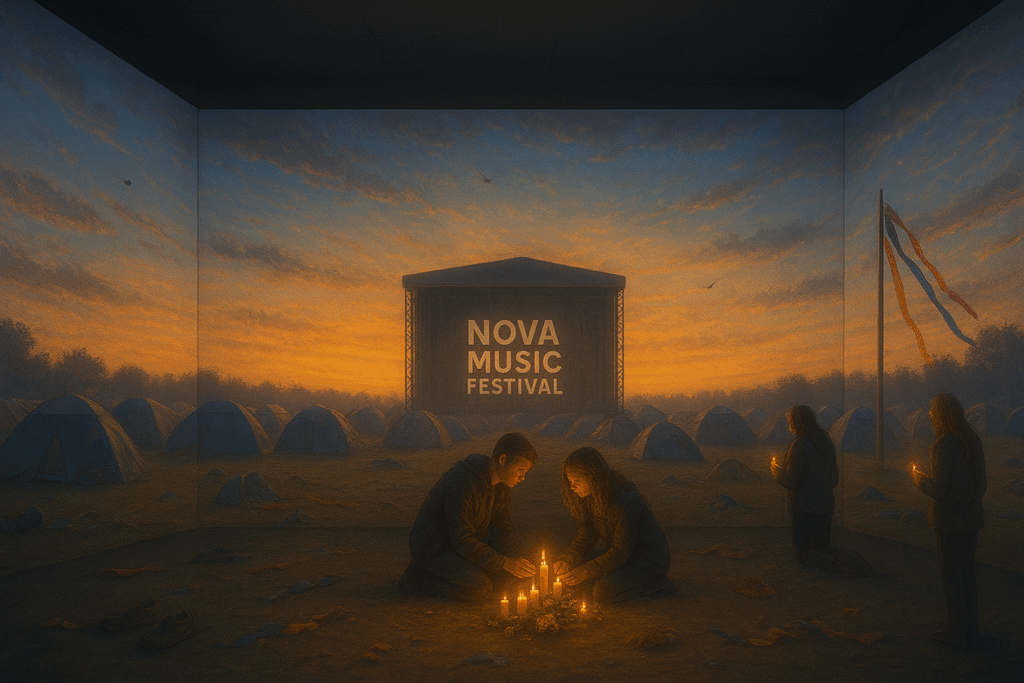
Naomi Klein: „How Israel Has Made Trauma a Weapon of War“, The Guardian, 5. Oktober 2024, https://www.theguardian.com/us-news/ng-interactive/2024/oct/5/israel-gaza-october-7-memorials.
Ben Ratskoff: „Prosthetic Trauma at the Nova Exhibition: Holocaust Memory, Reenactment, and the Affective Reproduction of Genocidal Nightmares”, Journal of Genocide Research, 2. September 2025, https://doi.org/10.1080/14623528.2025.2551946.
There are no public domain images of the exhibition’s immersive performance, but ChatGPT suggests this one.
The traveling exhibition “The Nova Music Festival Exhibition” (motto: “06:29 –The Moment the Music Stopped”) has been touring the world since the end of 2023. Previous stops were: Tel Aviv, New York, Los Angeles, Miami, Toronto, Boston. According to the website of exhibition and theme park designers Breeze Creative, it “reconstructs” the massacre of Palestinian combatants among the participants of the open-air trance party near Kibbutz Re’im on the morning of October 7, 2023 (in which an estimated 378 people died and another 44 were taken hostage), “using authentic objects collected shortly after the events — including burned cars, bullet-riddled portable toilets, abandoned camping tents with personal belongings inside, and the possessions of those murdered or kidnapped. Alongside these are gripping visual media: survivor testimonies, videos, and images capturing the horror.” “The Nova Music Festival Exhibition” was produced by the founders of the Nova Music Festival and the companies of Israeli cultural event organizer and festival founder Yoni Feingold. The Israeli government provided support from the outset, as did politicians in the host cities and many Jewish organizations. However, large sections of the Israeli population and the families of the hostages were and remained less unanimous. It is all too obvious that the Nova exhibition is enlisted as part of the Israeli government’s public diplomacy work, which it itself refers to as Hasbara, or Zionist propaganda. On the other hand, the exhibition is set in a context in which propaganda, information, documentation, and serious research are often difficult to distinguish from one another.
Now “The Nova Music Festival Exhibition” is coming to Berlin-Tempelhof, to the former airport building, under the patronage of Governing Mayor Kai Wegner, as announced in the local press on September 5. The announcement and the media coverage that is expected to be following makes it seem sensible to prepare by taking a closer look at the history, ideological implications, and curatorial strategies of this enterprise. Two texts are particularly recommended: “How Israel Has Made Trauma a Weapon of War” by Naomi Klein, published last year in The Guardian, and the essay “Prosthetic Trauma at the Nova Exhibition: Holocaust Memory, Reenactment, and the Affective Reproduction of Genocidal Nightmares,” published in early September of this year by Ben Ratskoff, a researcher in memory culture and the politics of the past. Klein and Ratskoff situate the exhibition project in the broader context of historical politics and memory culture activities in response to the Hamas attack of October 7, 2023, both within and outside Israel. Plays, films, a television series, VR online videos (such as the “Gaza Envelope 360 tour”) and themed tours of the dark tourism variety transform the traumatic events into various forms of visceral, immersive entertainment. Most of these products aim to draw views and visitors emotionally into the events of that day. The primary goal is to identify with the victims, to empathize with their suffering and death. At the same time, the effort involved in detailed documentation is often very impressive, and there are also more nuanced attempts to respond to the events of that day and its aftermath. However, as Klein argues, these products and the discourse surrounding them, consistently fail considering the research conducted in recent decades on the “ethics of memorializing real-world atrocity” and its eminently political dimension. Instead, the memory industry seeks to unilaterally dissolve the “difference between inspiring an emotional connection and deliberately putting people into a shellshocked, traumatized state, ” namely in the direction of “immersion”: “offering viewers and participants the chance to crawl inside the pain of others, based on a guiding assumption that the more people there are who experience the trauma of October 7 as if it were their own, the better off the world will be.” Another, similar yet crucial difference is that between “understanding an event, which preserves the mind’s analytical capacity as well as one’s sense of self” and “feeling like you are personally living through it.” The latter can be called “prosthetic trauma,” using a concept introduced by the historian Alison Landsberg (Prosthetic Memory: the Transformation of American Remembrance in the Age of Mass Culture) and the sociologist Amy Sodaro (Exhibiting Atrocity: Memorial Museums and the Politics of Past Violence).
Ben Ratskoff likewise draws on the concept of “prosthetic trauma.” His meticulous description and analysis of the Nova exhibition leads to the conclusion that Klein’s criticism of the historical-political instrumentalization of October 7 is just as valid as her objections to the breakdown of reflective distance in the mode of immersion: “Offering the pain and suffering of real victims as a simulated experience for public consumption, the Nova Exhibition underscores concerns that reenactment as a discursive mode and exhibitionary strategy obliterates the critical distance necessary for ethical reflection and contextualized understanding while nourishing destructive (and self-destructive) narrative panics and existential anxieties.” Ratskoff further emphasizes that such treatment of the memory of atrocities tends to reproduce rather than prevent genocidal nightmares, especially when the rhetoric and formats of Holocaust remembrance are transferred to the events of October 7, 2023: “Tropes and patterns drawn from Holocaust memory and the memorial museum form construct a powerful apparatus of emotional identification that blurs the figurative and the real, and memory and actuality.”
Wherever individual and collective acts of violence and experiences are “commemorated” institutionally, a gap has been widening for decades. State agencies and private-sector companies, often operating in public-private partnerships (as in the case of the Nova exhibition), that are involved in (trans)national remembrance and political education are torn between, to put it simply, education and explanation on the one hand, and emotionalization and identification on the other. Increasingly, the decision is being made in favor of the latter, of immersion. Since renowned historical museums such as the Imperial War Museum in London began staging the trenches of World War I and the bombing nights of the Blitz like ghost trains, hardly any major institution believes it can do without gamified exhibition concepts. Museums and memorials dedicated to the Holocaust, above all Yad Vashem in Jerusalem, have long been confronted with these expectations of immersive re-experiencing of the trauma and are giving in to them.
Regardless of the particularly charged events of October 7, 2023 and their commemoration, one might therefore ask: What are the functions and effects of the methods and technologies aimed at immersion and reenactment, which are increasingly being used in various contexts of memory culture, education, and therapy? When does the offer of identification turn into propaganda, empowerment into mobilization? How may the collapse of (critical) distance brought about and practiced in this way affect entire societies? For the making-immersive of history and politics, as practiced (not only) in the Nova exhibition, entails a deceptive unambiguity. Immersion has become the default mode of remembrance, the formula for political communication that rhymes participation with passivity, agitates by staging trauma. Now, “The Nova Music Festival Exhibition” will be open to visitors in Berlin. Where else but in this city would there be an opportunity to reflect on the fact that the aestheticization of violence and the instrumentalization of trauma have already had devastating effects in the past?
The Science Council of Japan (SCJ) was founded in 1949 as Japan’s national academy. Despite being a state institution, it operates independently of the government and maintains autonomy in its administration and its activities.
Its working principles were a result of the bitter experience of wartime Japan when scientists had been mobilized for military purposes. Against this historical background, the SCJ was established “under the consensus of the entire scientific community, with the mission to contribute to the peaceful reconstruction of Japan, the welfare of human society, and to academic progress, in coordination with the global academic communities”, as the preamble of the current Act on the SCJ reads. The SCJ’s duties are: to deliberate important issues concerning science and to help to implement them; to promote and to improve the efficiency of coordination of scientific research; to respond to governmental consultation on academic policies and important policies that require special examination by expert scientists; and to provide scientific recommendations and suggestions to the Japanese government and society.
Ever since its inception the SCJ has played an active role, for example, by issuing hundreds of reports and recommendations to the public. It consists of 210 scientists, each serving a six-year term, and encompasses all academic fields. Faithful to its sobriquet, “the Scientists’ Parliament”, the members were initially elected by Japanese scientists, until reforms were made in the 1980s and 2000s upon the government’s initiative, and a co-optation system was introduced. Thereby, current members nominate the next members, as most national academies do. While it is the Prime Minister who appoints the members, this procedure was just a formality, comparable to the British monarch’s appointment of the British Prime Minister upon nomination by Parliament. This consensus was upheld by all Japanese governments until the Japanese Prime Minister in 2020/2021, Mr. Yoshihide Suga, quite unlawfully broke it and refused to appoint the new candidates that had been nominated by the SCJ in 2020.
The SCJ’s Executive Committee has emphasized five requirements indispensable for a national academy: the status as an institution representing the country academically; granting public qualifications for that purpose; a stable financial base through national financial expenditure; independence from the government in terms of activities; and autonomy and independence in membership selection. As a reaction to the bill, the SCJ’s General Assembly passed a resolution and issued a statement, expressing serious concerns and demanding substantial amendments from the Legislature.
Background to the introduction of the bill
But the present crisis cannot be understood without the conflict in 2020 and Prime Minister Suga’s refusal to appoint the nominated new candidates, in violation of the consensus of the Act. When Akahata, the Communist Party’s daily newspaper, broke the news, hundreds of academic associations and societies, as well as numerous civil society organizations, protested and issued statements asking Mr. Suga to withdraw his decision and to explain his refusal. The International Science Council supported them and sent an official letter expressing concern to the SCJ president. Mr. Suga and his successors, however, continued to refuse to provide any explanations on the grounds that it was “a personnel matter”.
Meanwhile, the ruling party, the LDP, changed the subject as if the SCJ’s organizational form had been the issue and had caused the incident. In December 2020, a task force within the LDP published a proposal that suggested the SCJ’s transformation into a corporation to allegedly ensure its independence from the government. But when the government set about to revise the Act on the SCJ in December 2022, the SCJ started fighting back. Its General Assembly demanded the government to suspend the revision and to establish a forum for open consultation in order to review the entire Japanese academic system comprehensively and fundamentally (see here and here). As a result, the government gave up on the bill, for the time being.
It did not, however, abandon its plan to reorganize the SCJ. In August 2023, it established an “Advisory Panel” on the role of the SCJ in the Cabinet Office, the executive office under the Prime Minister that supports him and the other ministers. The panel consisted of representatives from pro-government academic circles, from the Cabinet Office, from the business community, and some SCJ ex-members, and others. The SCJ president was asked to attend, but not as an official member. The panel released an interim report on December 21, 2023, which proposed that the SCJ should cease to be a state institution and become an organization with a separate legal personality. Based on this report, the State Minister for Special Missions declared, on December 22, 2023, that it was the government’s policy to incorporate the SCJ.
Evaluating the panel’s interim report and the Minister’s decision, the SCJ General Assembly issued a statement on April 23, 2024 expressing concern about the incorporation of the SCJ. Former SCJ presidents, as well as dozens of academic societies and associations, issued a statement demanding that the government cancel the submission of the bill. However, the government did not withdraw the decision, and the bill was finally submitted to the Legislature in March 2025.
Suspected purposes of the bill– Shadow of the military-industrial complex
Why does the Japanese government insist in making the SCJ a corporation? The official explanation is still to “strengthen the independence of the SCJ”. However, many suspect that the real, hidden aim of the bill is to help and to promote the military-industrial complex in Japan.
The Japanese government has been pursuing, for some decades, a “science, technology, and innovation policy” (STI) aimed at economic growth. The main organization to promote this policy is the Council for Science, Technology and Innovation (CSTI), an agency in the Cabinet Office chaired by the Prime Minister. It’s clear that SCJ has been pushed further and further to the sidelines. However, while the SCJ no longer has real power to set the STI policy, it still has a strong influence on Japanese scientists’ code of conduct. Also, its recommendations to the government and its scientific proposals to the public still have a social impact. The government expects the SCJ to cooperate with or to implement the STI policy, while not meddling with its contents. Therefore, in the eyes of the government it is indispensable that its influence and that of industry and business over the SCJ should be enhanced, to make science contribute more to what is euphemistically called “innovation”. Not only the government, also the business community has for a long time demanded the incorporation of the SCJ. As early as in 2015, the Japan Business Federation (Keidanren) proposed that the SCJ should be “diversified”, i.e. that the number of researchers from industry, business managers, and attorneys should be increased.
The second hidden, suspected purpose of the incorporation apparently is to remove obstacles to the promotion of military and dual-use research. After the Second World War, most Japanese scientists never wanted to be involved in military research anymore, due to the detrimental utilization of science to serve the war of aggression. The fact that the current Constitution of Japan, put into effect in 1947, renunciates war and military force also supports the aversion against military research among Japanese scientists. The SCJ, since its establishment, has always clearly opposed scientific research aimed at war and for military purposes, most recently with its Statement on Research for Military Security in 2017.
However, against the background of “changes in the security environment” over the past decade, the tendency towards collaboration between the military and academia has increased. The National Security Strategy (NSS), which the Cabinet adopted without substantial discussion in the Legislature in 2013, emphasized strengthening technological capabilities, including the so-called “dual-use” technology, and advocated collaboration between industries, academia, and the government. The new NSS in 2022 and the Defense Building Program further advanced this policy. Business circles, such as Keidanren, keep demanding that the government should foster collaboration with industry and academia for military technology research, as well as enhance defense capabilities and export defense equipment.
Putting the NSS in practice, the Acquisition, Technology & Logistics Agency (ATLA), an external bureau of the Ministry of Defense, started a research fund for defense technologies in 2015. Many scientists were concerned about this new policy. The SCJ organized a task force to examine the possible effects of ATLA’s research fund on academic freedom and university autonomy. The SCJ’s Statement on Research for Military Security, issued in 2017, pointed out that ATLA’s fund “has many problems due to these governmental interventions into research”. It also recommended that universities and academic institutions should establish a system to critically review proposals for research that can be used for military security research as for their appropriateness, both technologically and ethically. The statement endorsed previous statements issued by the SCJ on military research (from 1950 and 1967) as well. Thus, although the statement did not directly call for the prohibition of military research, it certainly frustrated the government, as well as right wing parties and politicians. The SCJ, in their eyes, is a serious obstacle to the promotion of military technology research. In the legislative deliberation of the bill, a minister in charge of the Cabinet Office answered to a right-wing populist party member that the bill “would allow for the exclusion of members who repeat certain ideological or partisan positions”.
Similar constellations can be found worldwide. All over Europe and also in Germany, there has been growing pressure on universities to participate in military research. The European Commission is increasing spending on dual-use research in response to a “more threatening geopolitical context”. While German universities and institutes have long adopted the principle of restricting research to peaceful purposes, parts of the German government would like them to abandon this principle.
Incorporation as a means of controlling academia
In Japan, the “incorporation” has not only been limited to the SCJ. National universities were already incorporated in 2004 as a part of new public management reforms, and for the past two decades Japanese scientists have been experiencing difficulties caused by the accompanying budget cuts and enhanced government interference. Universities face numerous predicaments. For example, they cannot replace retired faculty members, are compelled to rely on part-time staff, the research budget for teachers has been cut, and tuition fees have increased. University autonomy has constantly been weakened. They are obliged to draw up a medium-term “management, academic and educational achievement plan” and detailed key goal indicators (KGIs) every six years. Since the Ministry of Education, Culture, Sports, Science and Technology (MEXT) reviews the plan and the KGIs, and the result of this review is directly linked to the grants that universities depend on, universities seemingly voluntarily bow to the government’s direction and policy.
Furthermore, the university faculty gets less and less involved in decision-making. The power is concentrated in a small number of people, mainly the university presidents and executive committee members, that include also corporation executives and former MEXT bureaucrats. The president used to be elected by the faculty’s vote, but nowadays, a “president selection committee,” consisting of both members and non-members of the university, decides who will be the president. The faculty council was deprived of all decision-making power, including faculty’s employment and promotion, and has now been reduced to a mere liaison council.
As a result, Japan’s position in international science is declining, based on criteria such as the number and quality of articles published in international journals. Students who witness the current situation of universities and professors are not attracted to Japanese academia when choosing their career. The number of students enrolling in PhD programs is decreasing. An ex-Minister of the MEXT, Dr. Akito Arima, a nuclear physicist and also ex-president of the University of Tokyo, admitted in a newspaper interview in 2020 that the “incorporation of national university was a mistake.” Many scientists express concern that incorporating the SCJ would now repeat the same mistake.
Protest movement against the bill
Worried scientists and citizens campaigned against the bill. They held mass rallies around the Parliament and lobbied Parliamentarians. Around 65,000 people have signed an online petition. More than a hundred academic societies and associations, citizen organizations, trade unions, and lawyers’ associations issued statements against the bill. As a result, in the House of Representatives, not only progressive or democratic parties, but also centrist or center-right parties, who had initially been undecided or in favor, voted against the bill. Only the ruling coalition and a right-wing populist party voted in favor of it. The bill, however, was passed without any amendments in the House of Councillors and enacted on June 11. The law will take effect, and the “new” SCJ, with new membership and new regulations, will commence on October 1, 2026.
Against the crisis of academic freedom and the promotion of military research
The bill was passed although the government’s representative during the Legislative deliberations had repeatedly assured the opposition parties that the government would respect the SCJ’s independence and autonomy. As many as 11 and 14 supplementary resolutions were adopted in the House of Representatives and House of Councillors, respectively. These legally non-binding resolutions ask the government to take SCJ’s independence and autonomy into account and to provide adequate financial support. They may be a reflection of the fact that the government and the ruling coalition could not ignore the campaign against the bill and the many opposing voices. We are not powerless. To prevent these assurances and resolutions from becoming empty promises, it is essential that scientists and citizens continue to monitor the government and SCJ closely, and take immediate action if the SCJ’s independence and autonomy are threatened again. Moreover, a new campaign and the amendment of the law will be needed to restore genuine independence and autonomy to the SCJ as the national academy.
Finally, it is critical to take precautions against academia’s further involvement into military research. The day after the bill was passed, the Ministry of Defence announced the establishment of a new organisation, the Defence Science Technology Board, whose mission is to contribute to the ministry’s planning of policies and measures related to science and technology. Eight of 16 board members are university professors. To prevent further military research in academia, taking action not to permit the “new” SCJ to overturn the “former” SCJ’s policy is crucial. If we fail, military research in academia will accelerate.