Tag: academic freedom

  • The President of the German Association of University Presidents warns

    Nicola Kuhrt, Markus Weisskopf: Interview with Walter Rosenthal: “The science system is facing its greatest test since reunification,” Research.Table, February 4, 2026.

    Rosenthal’s interventions in this interview can be read as a warning based on institutional theory: In his role as president of the German Rectors’ Conference, he does not talk about science as a pure idea, but as infrastructure, as a structure of legal norms, financial flows, procedures, and self-governing bodies. His statement, “We must secure science in such a way that it can withstand illiberal times,” is programmatic and marks a shift: freedom does not appear here as a normative postulate, but as a construction task.

    When Rosenthal speaks of the “greatest stress test since reunification,” he is not referring to a singular conflict, but to the simultaneity of structural tensions: geopolitical shifts, growing authoritarian movements, and a growing discourse of mistrust toward expertise. In such a constellation, science is not only criticized but also politically instrumentalized. Its autonomy is not a matter of course but a contested status.

    Rosenthal’s reference to structural vulnerability is central. Academic freedom depends on concrete arrangements. Where funding is fragmented on a project basis, where planning horizons are shortened, where responsibilities remain diffuse, political dependence arises. Autonomy is then formally asserted, but materially relativized. In this sense, the demand for reliable basic funding is not a detailed budgetary issue, but a condition of epistemic sovereignty.

    At the same time, Rosenthal does not understand resilience as isolation. Science should not retreat into the role of a misunderstood collective of experts. It must explain itself, prove its ability to engage in discourse, and not allow itself to be reduced to populism. Trust is not created by gestures of authority, but by transparent procedures and comprehensible communication. This is precisely where the tension lies: science depends on the public, but must not become dependent on it.

    Essentially, Rosenthal advocates conscious institutional precaution. If illiberal dynamics operate not through abrupt breaks but through gradual shifts, then science does not need hectic alarmist rhetoric, but robust structures. In this context, safeguarding means a clear distribution of competences between the federal and state governments, strong self-administration, long-term financing, and international networking as a counterweight to national narrow-mindedness.

    Rosenthal’s position could therefore be read as a reaffirmation of democratic politics: Science does not stand outside society, but is part of the political order – and for this very reason it depends on specific protective mechanisms. In this understanding, freedom is not a state that is achieved once and then preserved. It is an ongoing institutional process. In a nutshell: science remains free only if its freedom is produced organizationally and desired politically – even and especially when political majorities change.

    https://table.media/research/analyse/walter-rosenthal-im-interview-wissenschaftssystem-steht-vor-groesster-belastungsprobe-seit-der-wende?utm_source=share&utm_medium=social&utm_campaign=article_share

  • Dishonest honesty law in North Rhine-Westphalia

    North Rhine-Westphalia State Parliament, 18th legislative period: Draft bill of the state government. Law on the Strengthening of the University Landscape (University Strengthening Act), Publication 18/16798, November 25, 2025, https://www.landtag.nrw.de/home/dokumente/dokumentensuche/gesetzgebungsportal/aktuelle-gesetzgebungsverfahr/hochschulstarkungsgesetz.html.

    The draft bill, which was initiated by the CDU-led Ministry of Science and referred to the Science Committee after its first reading on December 18, 2025, remains a threat to academic freedom and freedom of expression at universities in North Rhine-Westphalia, even after revision. On the surface it seems harmless: it aims to reduce shortage of skilled workers “through an attractiveness campaign for the higher education sector,” to reform lifelong learning at universities, to foster digitalization, to introduce quarter parity in senates as a standard model, – and to create “instruments to protect university members from assaults and hostility, discrimination, and the abuse of positions of power within the framework of university self-administration.”

    Indeed, there is a pressing need to curb the abuse of power at universities. But this legitimate demand is being exploited to make it easier for the government to expel unwelcome students and sanction university faculty, staff, and leadership under the guise of protecting diversity at universities.

    The addition of a “security right” and “integrity right” or “honesty right” (Redlichkeitsrecht) to disciplinary law in academia opens the door to exploitation for political purposes. Political exploitation is very likely if the new regulations and contact persons are designed and operate in such a way that academic freedom and freedom of expression are not prioritized. Science Minister Ina Brandes (CDU) openly stated in the state parliament’s science committee on January 21 that she was “extremely frustrated” that her hands had been tied in dealing with uncooperative university administrations such as that of the Düsseldorf Art Academy. Her hands might not be tied anymore with the amendment. It is imperative to recognize that the regulation excess of the new law, in those passages that do not concern abuse of power, is an attempt to interfere with university autonomy and academic freedom. Protection against abuse of power must be clearly separated from interference with fundamental freedoms.

    https://www.landtag.nrw.de/home/dokumente/dokumentensuche/gesetzgebungsportal/aktuelle-gesetzgebungsverfahr/hochschulstarkungsgesetz.html

  • Countering intimidation

    Benjamin Schütze, “Deutsche Israelpolitik: Die Truppen der Staatsräson” [German policy on Israel. The troops of raison d’état], guest commentary, taz January 20, 2026, https://taz.de/Deutsche-Israelpolitik/!6146623/.

    Benjamin Schütze experienced an attempt at censorship by the antisemitism commissioner at the University of Erlangen. The commissioner had informed the Bavarian chief public prosecutor that Schütze had used the term “genocide” in a lecture at the 35th German Orientalists’ Day. The title of his lecture was “Supporting (plausible) acts of genocide: Red lines and the failure of German Middle Eastern Studies,” and the anti-Semitism commissioner demanded that it be “adjusted.”

    Although this attempt at censorship was successfully repelled, it did not fail to have an intimidating effect. Schütze therefore takes this experience as the starting point for his article on the increasingly authoritarian anti-antisemitism in Germany and the “troops of raison d’état” who established it and continue to expand it. This anti-antisemitism, he argues, does not serve to combat antisemitism at all, but rather aims to institutionalize German support for genocide in Gaza, normalize anti-Arab racism, and defame researchers who show solidarity with Palestine. Respect for international law and freedom of science and assembly has become collateral damage of raison d’état. While the government is thus opposing the Basic Law and international law, society must now ask itself whether it wants to continue to support or submit to this decision, or whether it will fight back.

    https://taz.de/Deutsche-Israelpolitik/!6146623/

  • Eight measures that universities and academics can take

    Ilyas Saliba: “Academic freedom under pressure Erosion of a pillar of open society”, Wissenschaft & Frieden [Science & Peace], 4/2025, pp. 43-45.

    Academic freedom is considered a cornerstone of democratic states, yet it is coming under pressure worldwide. Authoritarian regimes are massively targeting universities, but political interferences, economic constraints, and repression are also on the rise in consolidated democracies such as Germany. This article analyzes global trends and shows how attacks on university autonomy and academic spaces in this country are jeopardizing the foundations of free science and critical debate. What dynamics are driving this development—and how can science and institutions respond? The article proposes eight concrete measures that all universities and academics should take to heart.

    https://gppi.net/2025/12/02/wissenschaftsfreiheit-unter-druck

  • Knowledge under general suspicion

    Knowledge under general suspicion

    Leyla Dakhli: Étudier les mondes arabes et musulmans, un métier à risque?, in: Le Club de Mediapart, 18 Novembre 2025, https://blogs.mediapart.fr/leyladakhli/blog/181125/etudier-les-mondes-arabes-et-musulmans-un-metier-risque.

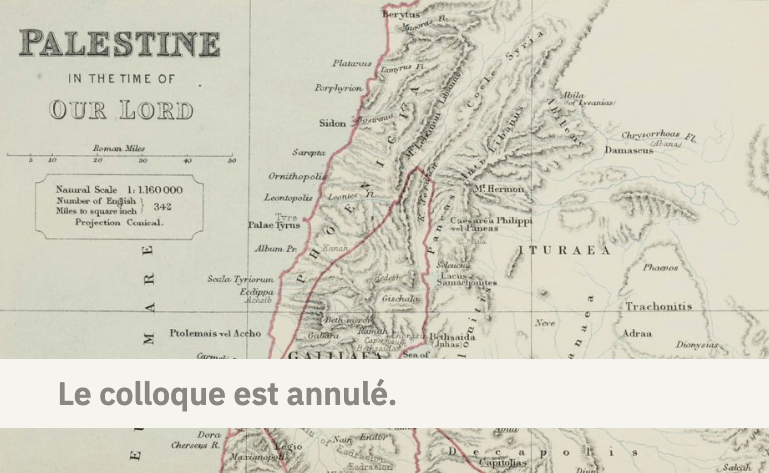
    The cancellation of the colloquium on Palestine and Europe, organized by the Chair of Contemporary History of the Arab World at the Collège de France and the Centre Arabe de Recherches et d’Études Politiques de Paris (CAREP) on November 13-14, is, we are told, a matter of academic freedom. That is true, but what does it mean in this specific case?

    Reducing this debate to a question of academic freedom causes me, and perhaps some of my colleagues, a certain amount of frustration. Because it allows us to sidestep another, more fundamental question, namely that of the limits within which it is possible at all to address the current situation and history of the contemporary Arab world. What is being discussed today in connection with the war against Gaza, the settlement of the West Bank and the Golan Heights, and the numerous attacks by the Israeli army on sovereign territories is nothing new.

    For us “specialists in the region,” dealing with the media is often an exercise in bewilderment, in the face of the self-assurance coupled with ignorance of our journalistic interlocutors—and I’m not even talking about our numerous academic colleagues who specialize in other topics and want to explain to us that we are concealing or exaggerating aspects of the region’s history just because they have read something about it somewhere. Far be it from me to be a know-it-all, but I note that the same journalists show more openness and curiosity when it comes to other regions of the world and other periods of history. It is as if the channel of communication between the production of verified, proven, and validated knowledge and the general knowledge available in society and public opinion has been disrupted; as if something has fundamentally gone awry in science communication.

    For us “experts on the region,” dealing with the media is often an exercise in bewilderment, given the self-assurance coupled with ignorance of our journalistic interlocutors—and I’m not even talking about our numerous academic colleagues who specialize in other topics and want to explain to us that we are concealing or exaggerating aspects of the region’s history just because they have read something about it somewhere. Far be it from me to be a know-it-all, but I note that the same journalists show more openness and curiosity when it comes to other regions of the world and other periods of history. It is as if the channel of communication between the production of verified, proven, and validated knowledge and the general knowledge available in society and public opinion has been disrupted; as if something has fundamentally gone awry in science communication.

    After all, it cannot be said that people do not talk and write about the Middle East. And perhaps that is why everyone thinks they know what is going on. Nor can it be said that there are not many specialists on the Arab world, including some of the highest caliber, for example in France. These specialists do indeed debate among themselves, and the debates reflect some of the tensions that are stirring up the world of research and French society. However, they are about establishing the truth; about methods and research questions. (Here, academic freedom is exercised in the strict sense, within the limits of scientific review and objection.) These scientific discussions also make it possible to reach agreement. In the academic sphere, the Israeli occupation and Israeli colonization are simply established facts and not a subject of polemic. Here, it is possible to discuss the connection between Zionism and European colonialism, or to use the term apartheid to describe how Jewish and non-Jewish societies are separated from each other in the spatial unity of Israel-occupied territories. Here, it is permissible to describe the armed wing of Hamas as armed resistance. Saying this does not mean denying the nihilistic violence of jihadist groups or putting everything on the same level. But it also allows for a comparison between situations of occupation and responses to occupation worldwide. Focusing on peaceful movements is one option, but the reality on the ground is different and confronts us with the fact that armed struggle has always been part of the history of resistance, in Palestine as elsewhere. In a discussion, one can highlight differences between the armed Ukrainian resistance fighters, the Kurdish resistance forces in Rojava, and the jihadist groups. But it is not honest to categorically reject any comparison between them, to banish terms such as “resistance” in the case of Hamas and reserve them only for experiences elsewhere. Yet this is one of the boundaries that is impossible to cross in public debate.

    So what happens to us, who are accused of wrongdoing simply because we reported on the state of research and the current scientific consensus? What are we supposed to understand? That every word we say is now to be the subject of a court case?

    Observing what has been happening for months and years, it seems to me that a few lessons can be learned from the many controversies:

    First, we are told that not everyone is entitled to participate in the production of this scientific consensus discourse. The same analysis produced by a Palestinian or Arab researcher from the region will often go unheard until it has been validated by a European or Israeli researcher. This was the case with the investigations into the massacres of 1948, which were documented and described by Palestinian historians and witnesses, but only became acceptable thanks to the work of so-called revisionist Israeli historians. This also applied, of course, to the use of the term “genocide” to describe the massacres in Gaza, first denounced by Palestinian witnesses and journalists, then by international NGOs, and finally by Israeli figures and Western specialists in genocide studies. Why are Palestinians not considered worthy of determining and naming what is happening to them? Would this situation be understandable if a European society were affected by the crimes?

    Then we are told, and perhaps this is where the academic question is most central, that the truth does not really matter. What matters is balance. A somewhat strange notion, when you think about it. In fact, whenever we describe and explain what we have studied about a sociological or historical reality, we should always consult someone who holds the opposite view. This is something I experienced regularly myself when I occasionally spoke in the media about Syria in the 2010s. When I explained how power or the Syrian society work based on the available research, I was contradicted by pseudo-experts who spouted nonsense about “confessionalism” and “radicalization” and who knows what else, all in the name of balance and confrontation of viewpoints. And, of course, without any distance, without attributing this view of society to what it was, namely the regime’s propaganda. When I hear today how cautiously my colleagues are questioned on the subject of Ukraine and Russia, even if nothing is perfect, I can gauge the distance.

    So is it really academic freedom that is at stake here when the scientific nature of a colloquium at the Collège de France is called into question? Or is it rather the recognizable ultimate, undisguised (and thankfully scandalized) contempt with which scientific work produced in this cultural area is viewed? This work is certainly not all perfect, but it is based on knowledge, on skills that have often been painstakingly acquired, on familiarity with often difficult and demanding fields to which the researchers sometimes also have a personal, emotional connection. And this is the final point that I draw from observing the controversies: For researchers working on the Arab world, having strong ties to their “field of research” arouses suspicion. Yet it is this familiarity that constitutes one of the riches on which French and European research can draw. Empathy is a necessary quality for good research, as much as criticism, reading sources in their original language, and deduction. These different qualities, which are in tension with each other in the pursuit of scientific truth, are precisely those that ensure the only meaningful balance. Once again there are numerous examples from other fields that underscore the importance of proximity to the field of research. Would we be surprised if a French researcher specializing in Germany (or vice versa) spent extended periods of time there, established collaborations and friendships, and sometimes even made their lives there?

    If research as a whole is threatened today by all kinds of relativism and attacks on truth, when it comes to scientific production on the Arab world, these attacks are exacerbated by the suspicion of “collaboration” with an internally constructed enemy, of which we are supposedly the fifth column. The name of this enemy varies: Islam, “Muslim Brotherhood,” new anti-Semitism, wokism… Or a combination of all of these, which literally tramples on our work, the establishment of facts and investigation of mechanisms, and casts suspicion on the very foundation of our libido sciendi, i.e., our desire to understand these societies, to describe them and make them familiar, with all their complexities and contradictions.
  • Federal Ministry of Education and Research ignores expert opinions when awarding funding

    Stella Hesch: “Despite criticism: Ministry of Research funds controversial project against anti-Semitism”, Correctiv, October 30, 2025.

    Stella Hesch’s investigation at Correctiv reads like a political tragedy: The Federal Ministry of Research has awarded nearly nine million euros in funding to a project run by Ahmad Mansour’s company MIND, based on political considerations and without adhering to scientific standards and award criteria. This decision reveals a highly problematic understanding of academic research among the leadership of the responsible ministry and across all parties involved in the Bundestag committee’s decision. The fact that the funding decision was supported despite negative expert opinions from three science ministers from different parties—Bettina Stark-Watzinger (FDP), Cem Özdemir (Greens), and Dorothee Bär (CSU)—speaks to a broad cross-party consensus on circumventing quality standards in the allocation of funding.

    Mansour’s company was awarded extensive funding from the ministry, although the unanimous conclusion of the experts commissioned by the ministry was that Mansour’s project was “not eligible for funding”. This was explicitly communicated to the ministry in several negative expert reports, and both the experts and the ministry’s technical staff had expressed considerable doubts about the scientific quality and ethical implications of the project.

    The political awarding practices documented in the investigation are unworthy of a federal ministry. They ignore the peer review process necessary for quality assurance and violate the scientific standards inherent in the awarding of funding. This undermines confidence in good and ethical scientific practice and awarding procedures.

    Moreover, this approach is reminiscent of the funding scandal in the summer of 2024, when the then minister, Bettina Stark-Watzinger, had it examined whether funding could be withdrawn from undesirable scientists. Here, too, political positioning seemed to be more important to the ministry than scientific standards.

    https://correctiv.org/aktuelles/integration-gesellschaft/2025/10/30/antisemitismus-mansour-foerderprojekt/

  • Academic freedom – for whom, for what, and to what end?

    Köppert, Katrin: “Für eine radikale Imagination von Wissenschaft” [For a radical imagination of scholarship], Zeitschrift für Medienwissenschaft, 17 (2025), Nr. 2, pp. 140-144, http://dx.doi.org/10.25969/mediarep/24183.

    Peters, Kathrin: “Kritik der Wissenschaftsfreiheit” [Critique of academic freedom], Zeitschrift für Medienwissenschaft, 17 (2025), Nr. 2, pp. 135-139, http://dx.doi.org/10.25969/mediarep/24182.

    What does it mean when there is so much talk about academic freedom at the moment? Who uses the term and for what purposes? To whom does this freedom apply? Who is not being considered, what is not being thought about? In the Zeitschrift für Medienwissenschaft (Journal of Media Studies), Katrin Köppert and Kathrin Peters have published contributions to the debate that take the reactions of universities to the genocidal war in Gaza as a starting point for problematizing the discourse on academic freedom.

    Katrin Köppert argues that responding to the curtailment of academic spaces by defending academic freedom is futile. Against the backdrop of Black Radical Thought, the call for freedom must first acknowledge the problem of a real existing lack of freedom. Rinaldo Walcott has described Black emancipation as something that has not yet happened. Following Walcott’s thinking, the plea for academic freedom should be replaced by the demand for a radical imagination of scholarship.

    https://mediarep.org/server/api/core/bitstreams/ddba5814-7f36-486e-b0cb-7745e6a735ca/content

    Kathrin Peters also takes issue with focusing solely on academic freedom. She sees the relationship between scholarship and politics as intertwined since the dawn of science. The call for academic neutrality is therefore political in itself, as it ignores the fact that even the perception of a problem as a problem can never be neutral. Against this backdrop, the debate on academic freedom that has erupted in response to protests in solidarity with Palestine at universities is proving to be a deflection. As justified as doubts about whether academic freedom has always been protected by the state may be in individual cases, these debates also serve to divert analytical attention away from pressing questions—questions about where racism and anti-Semitism begin and end, or about the so-called German culture of remembrance. Above all, however, the debates obscure the situation in Gaza, which is what the protesters want to draw attention to in the first place.

    https://mediarep.org/server/api/core/bitstreams/f29c8fb2-cd66-40d5-8301-efa6d8336fa5/content