Debatte aims to share knowledge – generously and critically, resisting the authoritarian drift with nuance. It draws on ideas and discussions from the Alliance for Critical Scholarship in Solidarity (KriSol). It offers three genres: Picks are short, introductory texts or commentaries on articles by other authors and published elsewhere, which we consider important and want to share with a wider public. Drops recommend publications by KriSol members. Posts are longer contributions that we write ourselves or ask others to write – reflections, reports, reviews, letters, short reports, comments, interviews …
-
Does the fixation on the term “genocide” desensitize us to new genocides?
The abridged version of Dirk Moses’ work “Problems of Genocide” (2021), published in German in 2023, must be read in light of the events in Gaza and offers an interpretation that leads out of the dilemma that genocides are always only recognized when it is too late. But instead of reading the book, Dirk Moses is being slandered in Germany for allegedly trivializing the Holocaust.
-
Wrong signals: State visit to Israel in sight of genocide
In this short guest commentary, published at short notice in the taz newspaper, Krisol members protest against the German government’s courting of the Israeli government and denounce the complete denial of reality in German policy towards Israel, after Krisol’s appeal to the German President went unheard.
-
Statement from peace and conflict research against German raison d’état and self-censorship
Claudia Brunner was one of the initiators of this statement against the threat to academic freedom posed by the discourse on raison d’état, which was discussed controversially but with broad approval at a general meeting of the AFK, the umbrella organization for peace and conflict researchers in German-speaking countries, on March 20, 2025.
-
The controversy surrounding the memorial to the Sinti and Roma of Europe murdered under National Socialism
In Forum Wissenschaft, the quarterly journal of the Federation of Democratic Scientists, Alexandra Senfft describes the failure of the German culture of remembrance with regard to the crimes committed against the Sinti and Roma. It is now important to see this failure as part of the overall problem of the culture of remembrance.
-
Peter Beinhart in conversation with Karen Attiah about being Jewish
Peter Beinhart is a journalist and columnist in the United States who is well known to anyone interested in Jewish life, Israel and the genocide in Palestine. He recently published a very personal book called “Being Jewish after the Destruction of Gaza. A Reckoning”.
-
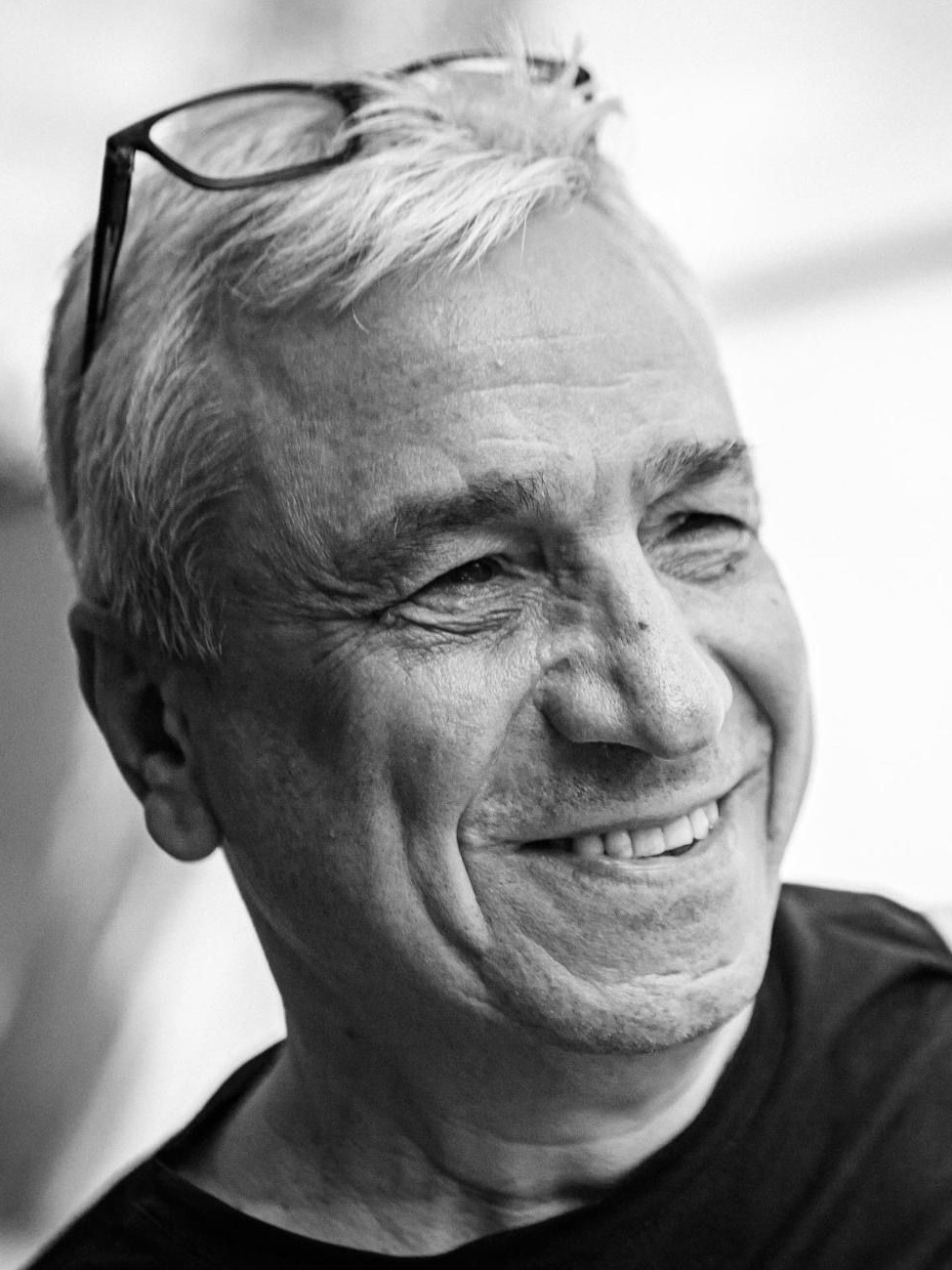
Torture state, kleptocracy, Salafism, and the crisis of representation
Hannah Arendt’s thinking revolved around what is worse than death: torture. In his book “Darstellung des Schrecklichen. Versuch über das zerstörte Syrien” (Depiction of the Horrible: An Essay on Destroyed Syria), Syrian author and journalist Yassin Al-Haj Saleh, who lives in exile in Berlin, describes Assad’s system of torture and draws conclusions that remain relevant even after Assad’s demise and beyond Syria’s borders.
-
Life-affirming lessons from Rosa Luxemburg’s herbarium
In this article, published in the Journal of Visual Culture, Agata Lisiak draws a connection between Rosa Luxemburg’s herbarium and contemporary women artists who engage with plant life to think relationally about liberation struggles from different geographies and temporalities.
-
Statement by the CCC editorial collective on the ongoing genocide in Gaza
The Editorial Collective of Communication, Culture and Critique issued a statement in January 2025, calling „for ceasefire and divestment against Israeli apartheid“. Due to the increasing repression on US university campuses, it was taken down from the US university website where it had been published for open access. A website with open access versions in different languages is now being prepared by Canadian members of the collective.
-
The new “Antisemitism” motion of the parliament intends to censure research and teaching
Dörthe Engelcke writes for die tageszeitung what she considers the main problem with the Bundestag resolution on “Anti-Semitism and hostility towards Israel at schools and universities”: that it gives the impression that research and teaching on ongoing Israeli war crimes should be deliberately suppressed.
-
India as a lesson
In a study booklet published by the Association of Democratic Scientists and Intellectuals (BdWi) Britta Ohm describes how universities in India have been attacked and undermined since 2014 under the pretext of “anti-Indian propaganda”. We should learn from the protest experiences of Indian students and faculty.
-
The rise and continuity of the anti-migrant left
In The Left Berlin, Vinit Ravishankar argues against the current formation of an anti-migrant left in Europe and the US. He points to the long history of this supposedly new trend and deconstructs the arguments of Sarah Wagenknecht and others.
-
Neo-liberal release of fascism?
To what extent do the theories of fascism available to us help us to understand today’s phenomena of fascization? As early as 2020, Zeynep Gambetti’s theoretical explorations of the origins of contemporary fascist tendencies were published. But perhaps the focus on the dynamics of neoliberalism misses something. By Julia Eckert.
-
The German silence about the protests in Serbia
Snežana Stanković picks an article in the Guardian about the student protests in Serbia, which challenge not only the corrupt Serbian government but also the interests of Western and German states with their non-violent resistance.
-
A smokescreen for an authoritarian turn?
In the daily Neues Deutschland, Marion Detjen recommends a close reading of the Bundestag resolution on “Anti-Semitism and hostility towards Israel at schools and universities”; only then do the contradictions and the to be expected negative effects become apparent.
-
Universities are not “hotbeds” of antisemitism
In this guest article in Spiegel, Ilyas Saliba questions the premise of the Bundestag that another resolution dictating to universities how they should work is helpful in the fight against antisemitism.
-
Reason of state OR constitutional state
Andreas Engelmann writes in a guest article on etos.media about the “astonishing comeback” of the German “reason of state” (Staatsräson), a pre-democratic concept that places the interests of the state above the law, disregards the law and the constitution, and does not want mature citizens but loyal followers.
-
Palestine protests at universities: the police is not needed!
A guest commentary by Ilyas Saliba and Ralf Michaels in the taz on the decision of the president of the Alice Salomon University of Applied Sciences in Berlin to keep the police out.
-
Antisemitism resolutions lead to the erosion of constitutional standards
Florian Meinel writes on the Verfassungsblog about the legal tool of the Parliamentary resolution and the already visible consequences in administrative practice.
Selected and offered by KriSol – A Space for Debate
The Editorial Collective currently consists of Marion Detjen, Julia Eckert, Isabel Feichtner und Christian Strippel.